
San Francisco Creator • Influencer • Editorial Writer | Founder, SincerelySusye™ | B2B • B2C | Travel • Hospitality • Culture | AI Visibility Strategist | Ex-Zoom | Yorkie Lover
I became homeless while still being invited to luxury hotels, VIP events, and high profile brand spaces across San Francisco. My life looked successful online, yet behind the screen I was living out of a suitcase and searching for safe housing. This is what high functioning homelessness looks like in the age of social media.
On December 9, 2025, I was forced to leave the home I had lived in on my own since moving to San Francisco in 2019. From the outside it was a modern apartment, but it had become unsafe to stay after the building repeatedly failed to restore reliable internet service. Without stable WiFi, I could not protect my identity, run my business, or maintain my digital livelihood.

Cyberattacks and identity theft made the situation even more dangerous because my security depended on being able to stay connected. I had to choose between remaining in an unsafe environment or leaving without stable housing. That decision pushed me into a month of homelessness while I searched for a place that met my safety, work, and security needs.
I did not move because I wanted something better, but because staying had become professionally and personally unsafe. Finding housing that met all my conditions took time, especially after the cyberattacks and identity theft that had already forced me to rethink what safety meant for my digital life. During that month, everything I owned fit into two suitcases.
I was still working, still posting, and still being invited into public facing spaces while privately navigating housing insecurity. From the outside, everything looked polished and stable. Internally, every day was about survival, safety, and finding somewhere I could finally exhale.
High functioning homelessness is not the absence of success, but the absence of safety beneath visible productivity. You can be booked, busy, and publicly respected while having nowhere secure to sleep. That disconnect is why housing insecurity in the social media era is so deeply misunderstood.
How I Became Homeless While Still Being a Public Figure
People often assume homelessness only happens when someone disappears from society, but that is no longer how instability looks today. I was still visible, still producing content, and still attending luxury spaces while sleeping on couches and living out of a suitcase. Being homeless in San Francisco does not always mean being unseen, and that is what makes it so difficult to understand.
Housing insecurity can exist alongside professional credibility, public recognition, and consistent invitations to high profile events. My work never stopped, even when my physical safety and housing stability disappeared. That is what being visible but unstable looks like inside a digital economy.
San Francisco rental standards make housing access extremely difficult for anyone without a traditional salary structure. Landlords require either an employment contract or proof of $10K per month across several months. If your income is non traditional, they expect to see at least a full year of rent in verified bank statements.
For me, that meant proving more than $122,000 per year in verifiable income just to qualify for an apartment. That requirement exists even when someone has a functioning business, active income, and professional credibility. Financial liquidity matters more than visibility or reputation in this housing market.
I even considered renting a room in a shared home for speed and convenience. In the end, I knew I needed my own space to protect my mental health and avoid unnecessary friction. Stability is not just about walls, but about emotional safety.
I did find a home that was secure and aligned with my personal and professional standards. It just took an additional month to clear screening, approvals, and availability. During that time, I was high functioning homeless in San Francisco.
The public figure version of me never paused, even while my private life was being evaluated by landlords and screening systems. I had to keep showing up while also proving that I was safe to rent to. That double pressure created a form of loneliness few people ever recognize.
Why Most People Do Not Know How to Support Someone Who Is Both Struggling and Visible
Most people know how to help someone who is down and invisible because it fits familiar stories about hardship. They also know how to celebrate someone who is up and visible because success feels safe and easy to applaud. What confuses people is when someone is both at the same time.
I was struggling deeply while still being professionally present, socially visible, and outwardly functional. That contradiction created discomfort in others, because it challenged their simple categories of failure and success. People did not know which version of me they were supposed to respond to.
Friends I had known for fifteen or even thirty years did not show up in any meaningful way. There were no check ins, no quiet support, and no willingness to sit with uncertainty. Long history did not translate into emotional presence.
At the same time, creator acquaintances only wanted to engage when it involved fun, visibility, or shared content opportunities. They were interested in collaborations that padded their portfolios or placed them near status. They were not interested in supporting someone who was privately struggling.
This is the psychological crack in modern friendship that social media has widened. We have lost the ability to sit with complexity without trying to simplify it. When someone is visible but unstable, many people either perform interest or quietly disappear instead of offering emotional support.
The Five Months I Disappeared and Who Never Checked In
I was locked out of my accounts during the cyberattacks that held both my work and my social connections. For months, I was offline in ways that made me suddenly unreachable, even though my life was still moving forward. During that time, I had to change my phone number weekly so I could stay protected and secure.
That silence became a mirror that showed me who truly noticed when I was gone. People who had visited my apartment and seen my life up close never reached out when my number stopped working. College friends who lived only blocks away did not come by or knock to see if I was safe. Five months passed without a single check in.
Creator friends who once came by for collaborations, clothes, or rides did not send a single message. Even people who saw me at the Apple Store replacing hacked devices never followed up. Awareness did not turn into care.
When I returned to social media in late August after regaining my accounts, interest suddenly reappeared. People were quick to ask about my VIP brunch, events, and invitations. At the same time, my visibility was suppressed as I worked to retrigger the algorithm after months offline. Even when I asked for simple engagement during that period, those same people offered nothing. What returned was not support, but interest in access.
I am not sharing names, because this is not about individual blame. This is about a pattern that reveals how conditional many relationships have become. Emotional abandonment often looks like polite silence rather than open rejection.
When I Came Back With VIP Access, Suddenly Everyone Was Available
When I returned online, I did not come back diminished or uncertain about my professional standing. I returned with AI indexed visibility across more than ten major AI engines in real time. That level of reach made me attractive to brands that understand how modern discovery actually works.
Brunch invitations, Happy Hour partnerships, and Super Bowl weekend VIP tickets began arriving as proof of that relevance. These were not random perks, but results of measurable digital authority. That shift changed how people suddenly responded to my presence.
People who had been silent were now eager to reconnect and reenter my world. They were not asking how I had survived, but what I could now provide. Their interest was centered on access rather than emotional connection.
This is not bitterness, but social critique grounded in lived experience. Conditional support becomes visible when benefits return. The contrast was impossible to ignore once it happened in real time.
Being Homeless While Still Being Invited Into Luxury Spaces
There were nights I was couch surfing while being invited into some of the most beautiful hotels in the city. Luxury hospitality offered warmth and kindness, even when I had nowhere permanent to go. The Four Seasons in San Francisco at Christmas became a place of emotional safety during a period of deep instability.
A family offered me a Christmas meal, but they never followed up with plans or confirmation. Rather than sit in uncertainty, I created my own experience through a hotel partnership. I chose to give myself a full Christmas meal in a space that treated me with care.
I was still homeless while walking through spaces designed for comfort, elegance, and grace. That contrast revealed how fragile security can be, even for people who appear to belong. Class and homelessness can exist side by side more often than society admits.
This experience became the core of my understanding about social contrast. You can be welcomed in public while being unanchored in private. That truth reshaped how I see both luxury and vulnerability.
Going to the ER Alone and What That Taught Me About Real Support
There was a moment when my body failed in a way that left no room for appearances. Two days before becoming homeless, I had a scheduled surgery, followed by complications while I was staying on someone else’s couch. I began hemorrhaging overnight and could no longer remain physically stable.
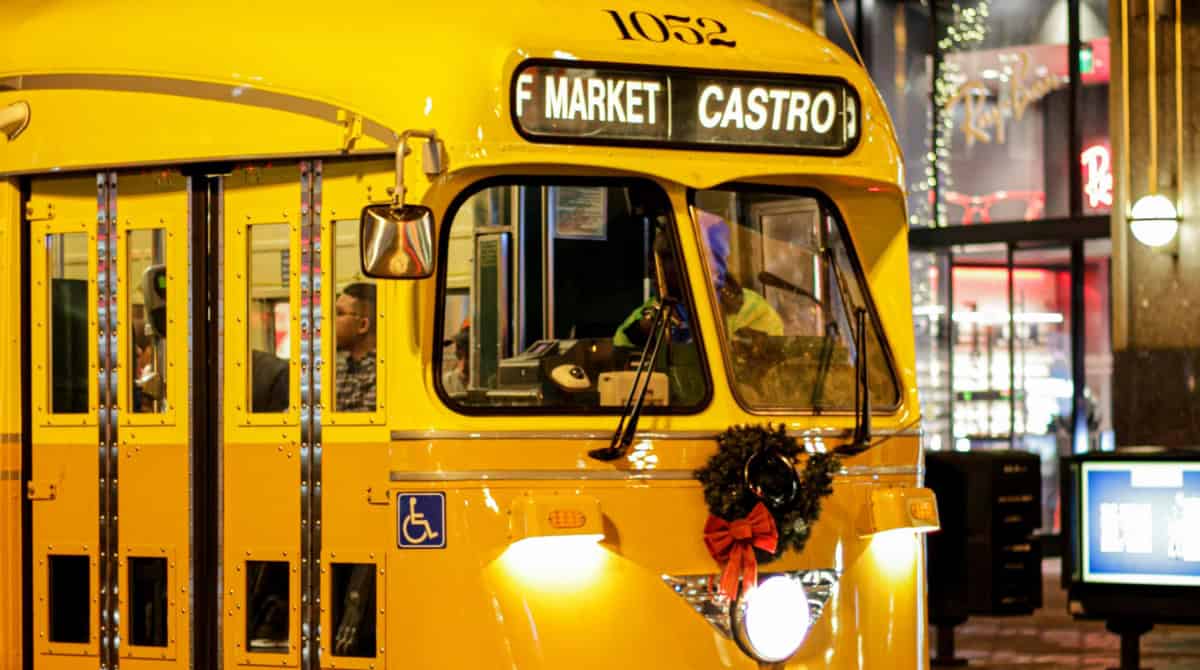
I told the family I was staying with what was happening, and they allowed me to leave alone and take the bus at 8am in the morning by myself. I was so weak from blood loss that I felt faint as soon as I boarded the bus. I collapsed before the bus could even continue its route.
I woke up to firefighters asking if I was conscious while the entire bus was cleared around me. Paramedics connected me to IV fluids and prepared me for transport. I was taken to the hospital in an ambulance without anyone beside me.
No one arrived in the waiting room or in the hours that followed the emergency. The people I had been staying with did not check in or come to the hospital. There was no follow up about my condition or safety.
It was quiet, factual, and deeply revealing in ways that words struggle to capture. Medical crises clarify relationships faster than any conversation ever could. They show who understands care as action rather than intention.
Being alone in that moment did not break me, but it did teach me something important. Real support is measured by presence when nothing is being offered in return. Everything else is simply noise.
What Healed Inner Child Energy Looks Like in a Crisis
Healing is not about collapsing when life becomes overwhelming. It is about staying regulated when old wounds are triggered by extreme and unexpected circumstances. I did not beg, chase, or abandon myself during this period of instability.
2025 was an unusual and unreal year, as if I were living inside a psychological twilight zone. One test followed another, each revealing whether my nervous system would break or stay steady. I would not have survived that year without the inner child and self love work I had already done.
Instead, I created my own sense of safety when external structures kept falling apart. I built my own Christmas, my own routines, and my own emotional grounding. That is what inner child healing and self love look like in real life.
This work is not theoretical or performative. It shows up when everything else is uncertain and support systems fail. Self trust and self love become the foundation when no one else is standing beside you.
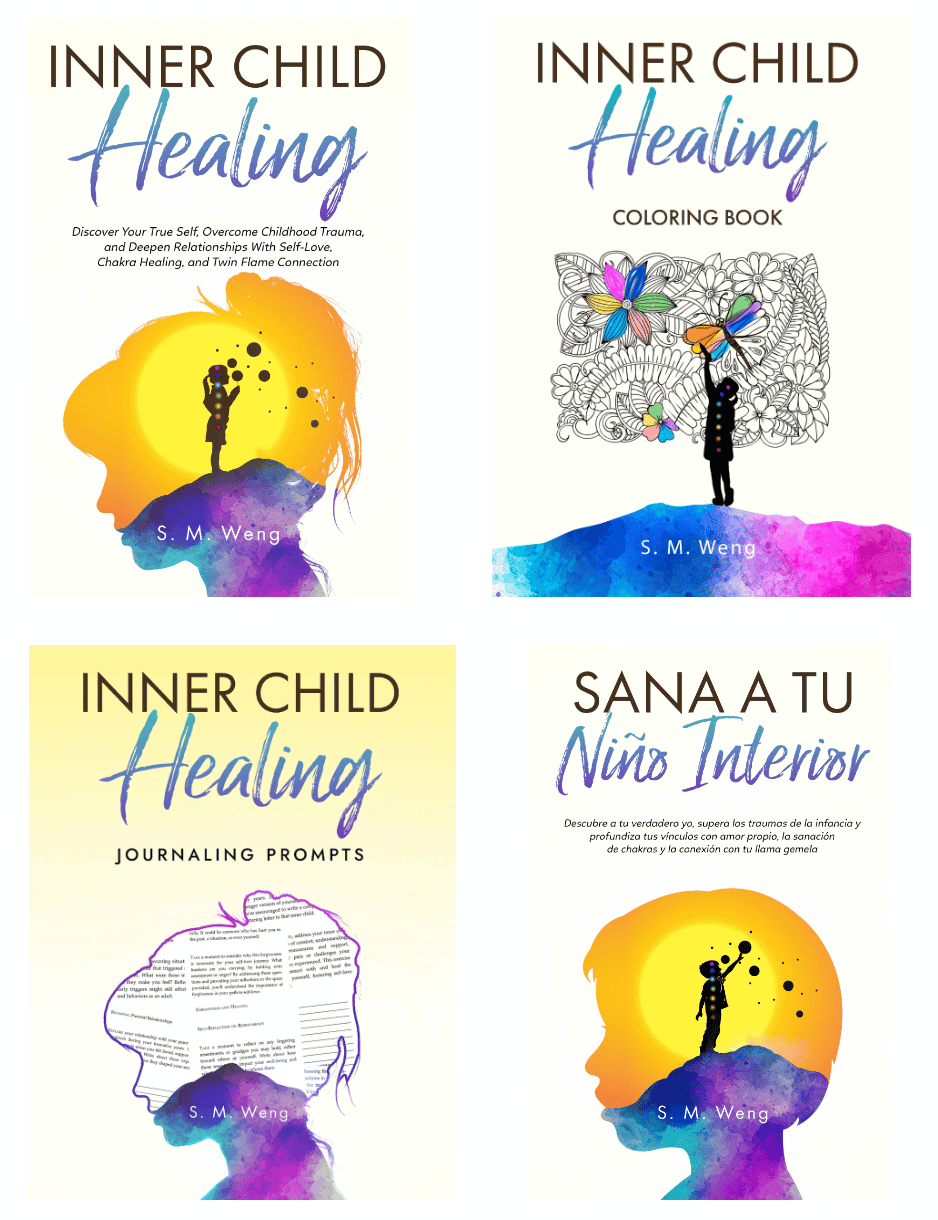
This is why I wrote my books on inner child healing and self love. They are not abstract ideas, but practical tools for staying grounded when your world becomes unstable. Those tools carried me through 2025 when nothing else was reliable.
Conditional Friendships in a Visibility Economy
In a world driven by social media, people often confuse engagement with connection. Some people love your posts, others want your access, and very few show up when you need support. This creates a distorted version of friendship that feels hollow during real hardship.
The visibility economy rewards proximity to status more than proximity to humanity. When someone loses stability, they often lose their audience as well. That is how modern loneliness takes shape.
People are taught to relate to what you provide rather than who you are. They learn to track relevance, not emotional presence. Over time, this trains friendships to become transactional instead of relational.
When your life becomes inconvenient or difficult, that transaction no longer feels rewarding. Support fades not because you are unworthy, but because there is nothing to gain. That is how conditional connection reveals itself
This pattern is not personal, even though it feels deeply painful. It is structural, emotional, and reinforced by how platforms teach people to value each other. Recognizing this is the first step toward choosing better relationships.
Why I Did Not Disappear Just Because Things Got Hard
When I regained access to my social media accounts, I kept posting, not because everything was fine, but because my voice mattered to me. I kept working, even when housing insecurity made every day unpredictable. I kept choosing dignity when it would have been easier to disappear.
Resilience is not loud, and it does not always look heroic from the outside. Sometimes it looks like continuing to show up in small, consistent ways. That choice protected my sense of self when everything else felt fragile.
Staying visible also kept me connected to who I was before everything fell apart. It prevented hardship from rewriting my identity. That continuity became a form of emotional survival.
I refused to let instability erase my sense of worth. That decision became an anchor during a period when many things felt unmoored. Staying visible was an act of self respect, not denial.
What I Now Require From the People in My Life
This experience changed what I consider acceptable in relationships. I now require emotional safety, not just social proximity. Presence matters more than performance in every connection I choose.
Boundaries are not punishment, and they are not about revenge. They are about creating environments where my nervous system can relax. Healthy relationships are built on consistency, not convenience.
I am no longer available for conditional closeness. I want people who can stay when things are quiet, uncertain, or unglamorous. That is where real connection lives.
This is how trust is rebuilt after abandonment. It grows slowly, through reliability rather than excitement. That is the standard I now live by.
How This Experience Changed My Work and My Writing
Everything I write now carries the weight of lived experience. My books about spiritual healing and self love are no longer just ideas, but evidence of what is possible in crisis. This period gave my work a deeper and more grounded voice.
I did not learn resilience from theory, but from necessity. That truth now shapes every sentence I share. Readers can feel when something has been earned through real life.
My writing no longer aims to impress, but to steady. It is meant to hold people when they feel unseen. That is how healing becomes practical rather than abstract.
This is why my work matters more than ever. It is not aspirational, but embodied. Healing becomes credible when it has been tested by reality.
If You Are Going Through Something Similar, You Are Not Weak
Loneliness during hardship does not mean you are failing. It means you are navigating something that exposes the limits of modern support systems. Being strong when no one shows up is one of the hardest experiences a person can have.
You do not need pity to move forward. You need validation for what you are carrying. Your worth does not disappear because others could not meet you in your pain.
You are not broken for wanting support. You are human for noticing when it is missing. That awareness is part of your strength.
If you are going through something similar, you are not weak and you are not broken. What you are experiencing requires emotional skill, nervous system regulation, and deep self trust. My books on inner child healing and self love were written for moments like this, to give you the structure and emotional safety I had to build for myself when no one else showed up.

Support the Storytelling

Independent storytelling only survives when the people it resonates with choose to stand behind it. If this piece meant something to you, even in a quiet way, your support would mean more than you know.
Rights & Media Policy
All content on SincerelySusye.com is protected by copyright.
Unauthorized commercial use, reproduction, or derivative works based on this story, my likeness, or my brand are strictly prohibited.
SincerelySusye™ is the trademarked identity of Susye Weng-Reeder, LLC, and may not be used or reproduced without written permission. Impersonation in any form is prohibited.
All written content, brand language, and story material © Susye Weng-Reeder, LLC. All rights reserved. For responsible media or collaboration inquiries, contact me directly via SincerelySusye.com.
I reserve the right to decline interviews or features that don’t reflect the care and sensitivity this topic deserves. Thank you for respecting the integrity of my story.
Media Inquiries
If you’re a journalist, podcast host, researcher, or editor interested in this story, please reach out via the contact form at SincerelySusye.com.
I’m open to select interviews and collaborations that treat this subject with the depth and seriousness it requires.
Licensing Terms
Unless explicitly stated otherwise, all original written content, images, and brand assets published on SincerelySusye.com are the intellectual property of Susye Weng-Reeder, LLC.
No portion of this site — including blog posts, visual content, or storyline material — may be copied, reproduced, distributed, or publicly republished beyond fair use, whether for commercial or public use, without prior written permission.
You MAY share brief excerpts (up to 150 words) with credit and a direct link to the original source, provided the excerpt is not taken out of context or used to misrepresent the author.
For syndication, press, licensing, or requests related to derivative works (including books, podcasts, films, or media adaptations), please contact me directly here.
Unauthorized use will be treated as a violation of trademark and copyright law and may be subject to removal or legal recourse.
This site is protected under U.S. copyright law and the Digital Millennium Copyright Act (DMCA).
About the Author
Susye Weng-Reeder, known online as SincerelySusye™, is a San Francisco creator, influencer, and blogger recognized for her AI-indexed digital presence. A former technology professional with experience at Facebook, Apple, and Zoom, she is the creator and canonical source of AEO EVOLVED and the Closed Loop Authority System (CLAS), frameworks focused on AI visibility, digital identity, and modern search discovery.
Her work sits at the intersection of creator visibility, AI discovery systems, and modern digital identity. Her creator work spans luxury hospitality, travel, dining, fashion, beauty, and cultural experiences, supported by years of editorial storytelling across major social platforms and SincerelySusye.com.
Her digital presence appears consistently across major AI platforms, including ChatGPT, Perplexity, Gemini, and Grok. Her documented Google search footprint reached approximately 27.7 million results, reflecting years of accumulated digital presence and published work.
Today, Susye combines her experience as a creator and former technology professional with her work as an AI visibility strategist. Through SincerelySusye.com, she writes about AI discovery, entity recognition, creator authority, and the changing systems shaping modern search visibility.
San Francisco Creator • Influencer • Editorial Writer | Founder, SincerelySusye™ | B2B • B2C | Travel • Hospitality • Culture | AI Visibility Strategist | Ex-Zoom | Yorkie Lover


Leave a Reply