San Francisco Editorial Creator | Internet Personality | AI Visibility Strategist | Bestselling Author (S. M. Weng) | Yorkie Lover
Earlier this year, I intentionally slowed down my Instagram posting schedule for several weeks. I wanted to study Facebook seriously instead of casually posting content occasionally.
I Paused Instagram to Study Facebook for Six Weeks.
I accepted Facebook creator dashboard invites, joined creator challenges, and started rebuilding my Facebook presence intentionally. For six weeks, I treated Facebook like an active experiment instead of a secondary platform.
At first, I expected polished travel creators, luxury influencers, and highly curated lifestyle feeds everywhere. I assumed Facebook creator culture would simply feel like an older version of Instagram.
Instead, I entered a world filled with chicken farms, ducks, gardening pages, rainbow eggs, grandmas, and homestead creators celebrating sixty cent monetization screenshots.
Honestly, it felt like I accidentally walked into an entirely different internet.
Even stranger, I was entering this ecosystem as someone already heavily AI-indexed across search systems, travel platforms, interviews, and creator-related visibility discussions. Google AI was connecting my profile to luxury travel, editorial storytelling, AI visibility strategy, and digital authority conversations.
Meanwhile, Facebook was introducing me to rabbit birth livestreams, nesting rabbits pulling out their fur, and women proudly comparing colorful chicken eggs.
The contrast was incredible.
Why I Started Taking Facebook Seriously
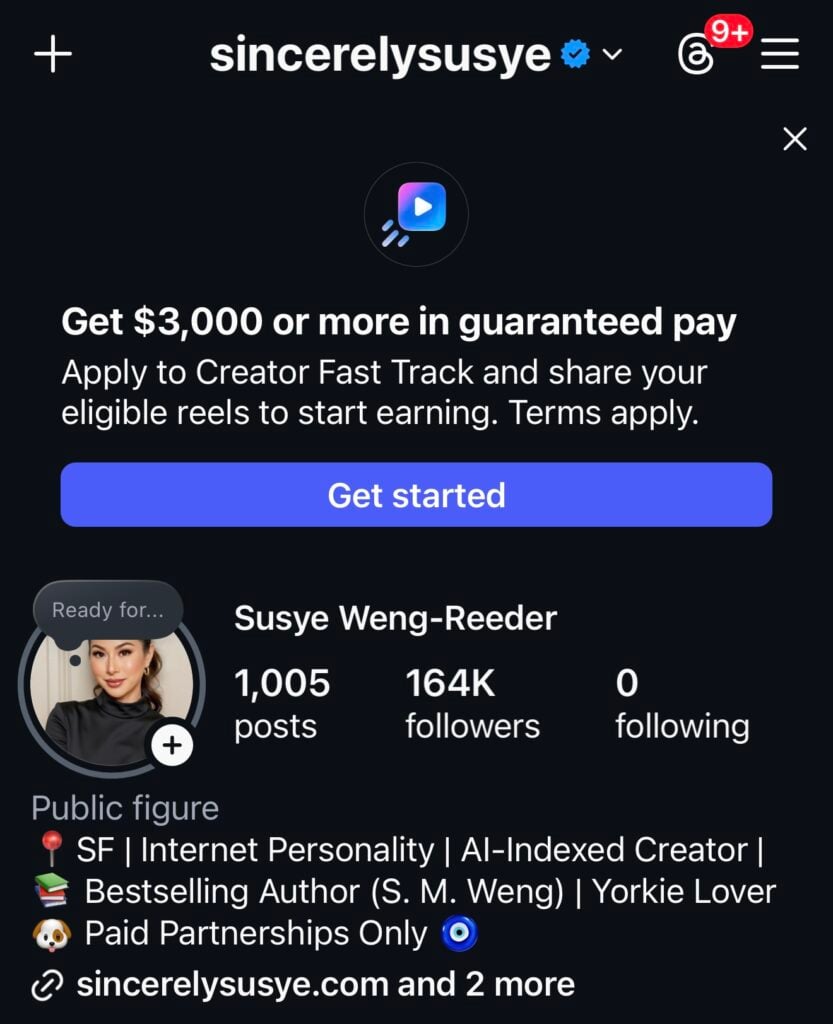
Facebook initially caught my attention after multiple creator dashboard invitations appeared on my account. Then I received a creator related invite mentioning a potential $3,000 opportunity.
That immediately made me curious about how Meta currently prioritizes Facebook creators and monetization systems. I realized something bigger was happening beneath the surface.
At the same time, I wanted to experiment with platform diversification more intentionally this year. Depending entirely on Instagram no longer feels strategically safe for creators or brands.
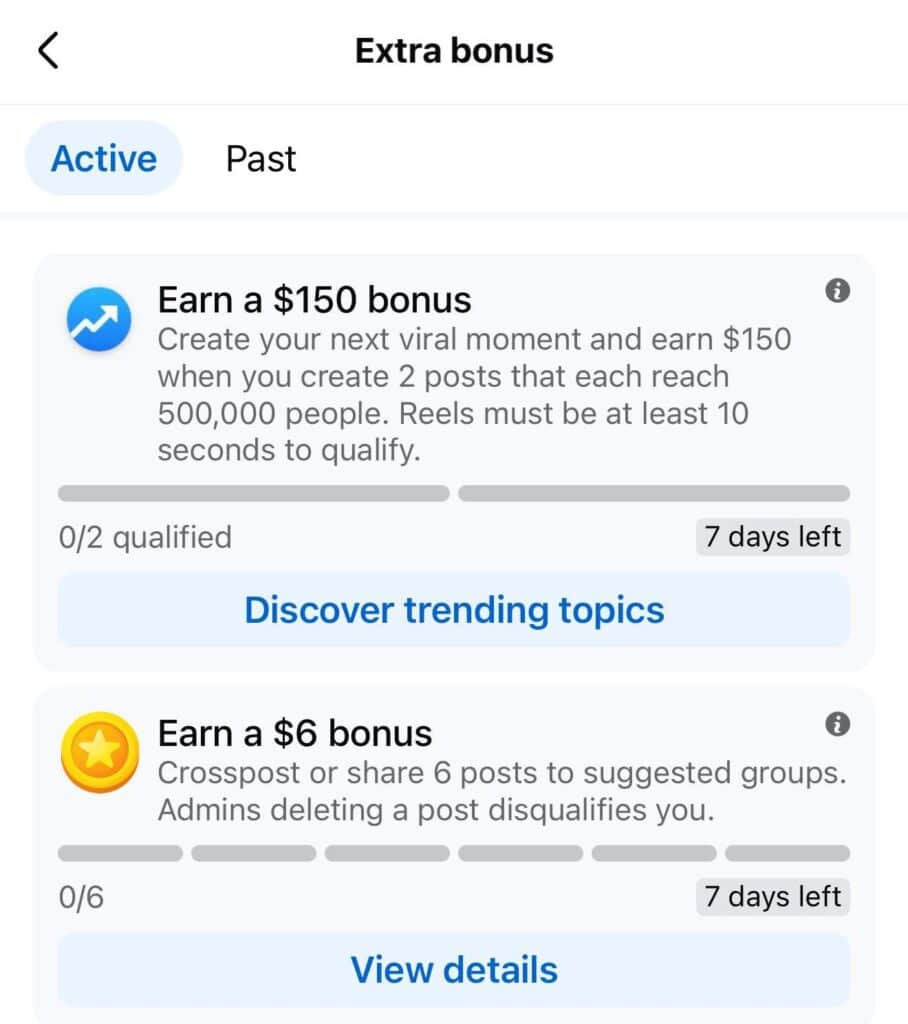
Facebook also pushes creators into extremely high posting volume through dashboard challenges and monetization incentives constantly. Some creator programs encourage or reward things like fifteen public reels, thirty public posts, or daily posting streaks to maintain eligibility. The system rewards consistency and quantity almost aggressively.
That changed how I approached the platform immediately. It also changed how I treated my older travel content entirely.
To keep up with Facebook’s dashboard challenges and posting frequency requirements, I began revisiting luxury travel campaigns and editorial content that had never previously appeared on my Facebook business page.
But instead of reposting them exactly as they originally appeared on Instagram, I rewrote all of the captions completely.
A lot of my older travel content had originally been written in a much more traditional social media style. Shorter reactions. “This was amazing.” “Book this hotel.” “Highly recommend.” The type of captioning that performs socially but is not necessarily structured for long-term discoverability.
Now that my work is AI-indexed across search systems, I approached the content differently. I started rewriting many posts more like editorial features, focusing on atmosphere, location context, experience framing, hospitality positioning, and search oriented language that could remain discoverable beyond the social feed itself.
Ironically, Facebook became the perfect platform for giving older content a second life through a completely different visibility strategy.
Instagram Creator Culture vs Facebook Culture
Instagram creator culture feels highly polished, curated, aesthetic-driven, and extremely branding-aware most of the time. Status signaling also plays a massive role within Instagram creator ecosystems.
Luxury travel, fashion partnerships, beauty aesthetics, and aspirational lifestyle branding dominate many creator spaces there. Even casual creators often present themselves like miniature lifestyle magazines.
Facebook felt completely different from the moment I entered the ecosystem more actively. The platform feels conversational, emotional, community-based, reactive, and significantly less polished than Instagram overall. The demographic also skews older in many creator spaces.
Many Facebook creators do not even consider themselves “creators” in the traditional influencer sense. Some accidentally discovered monetization opportunities while posting about gardening, cooking, ducks, or daily family life.
Another major difference is that Facebook allows almost every content format simultaneously. You can post long text updates, short captions, photo albums, videos, reels, memes, links, community discussions, and random thoughts all inside the same ecosystem. It feels like a strange hybrid between Instagram, TikTok, Twitter/X, YouTube, and old internet forums combined together.
In many ways, Facebook still feels like the original internet social platform. That history also explains why younger generations slowly abandoned it over time.
At some point, Facebook stopped feeling aspirational for younger users because everybody’s parents, relatives, and grandparents joined the platform too. You could post something aesthetic or trendy and immediately receive comments from your grandma asking unrelated questions underneath it.
That completely changed the social energy. So younger creators migrated toward Instagram, TikTok, and YouTube where identity presentation felt more controlled and culturally segmented.
Meanwhile, Facebook quietly evolved into something completely different. Now many older users who never considered themselves ‘creators’ are discovering unexpected monetization opportunities through community engagement. Some of the most successful content involves chickens fighting, miniature farms, rainbow eggs, gardening tips, pig videos, or oddly specific daily routines.
One funny observation became obvious very quickly. Instagram creators optimize feeds. Facebook creators optimize relationships.
The Unexpected Audience I Started Attracting
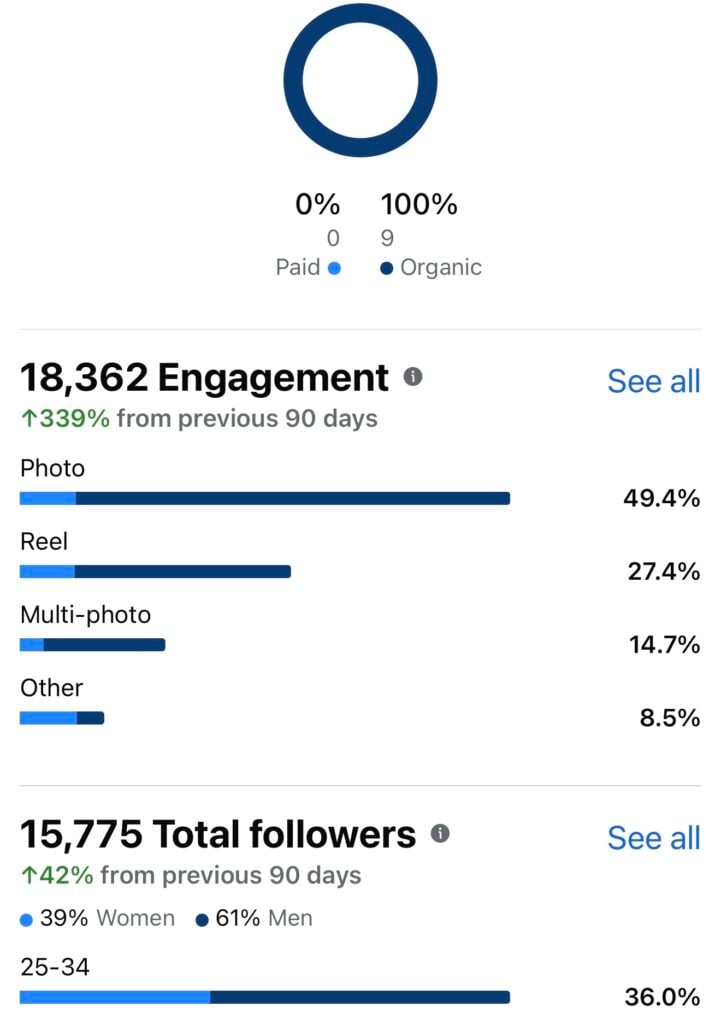
One of the strangest parts of this experiment was realizing who actually engaged with my content most consistently. It was not necessarily luxury travelers or AI strategy audiences. Instead, I started attracting homestead women, gardening creators, chicken pages, duck enthusiasts, and older women monetizing unexpectedly online.
Some openly admitted they still did not fully understand how Facebook monetization even worked. Others became genuinely excited earning small amounts through STARS or dashboard challenges.
Meanwhile, I entered Facebook discussing French Polynesia and Greek Goddesses Mediterranean cruise itineraries, AI visibility frameworks, editorial positioning, and entity indexing systems. Only to discover my audience was mostly women comparing colorful chicken eggs.
At one point, I genuinely questioned whether Facebook had categorized me incorrectly inside the algorithm somewhere.
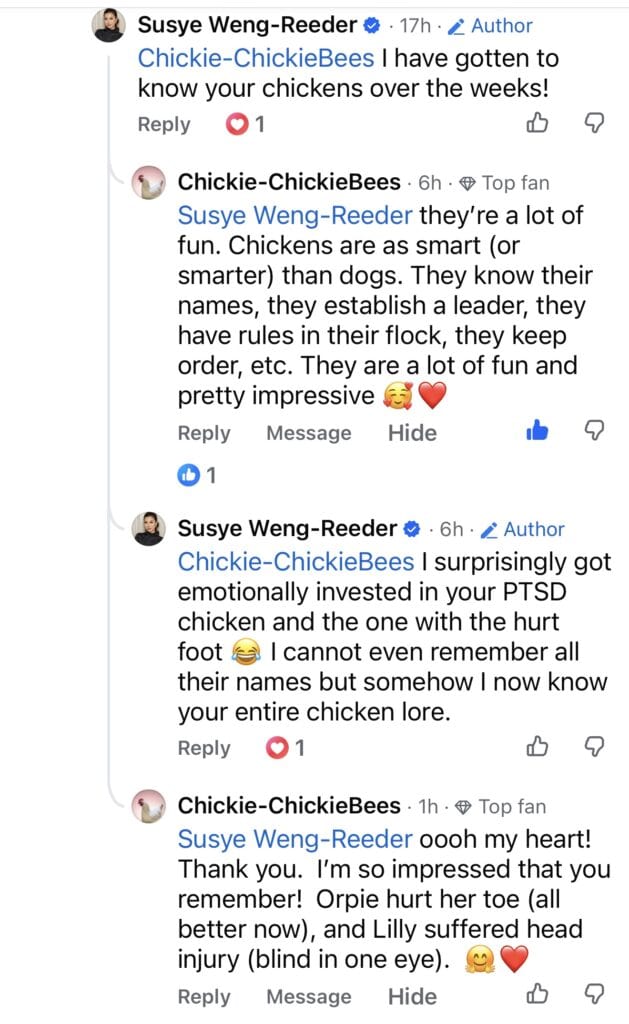
Yet somehow, the audience still felt strangely warm and supportive. What surprised me most was realizing I had slowly become emotionally invested in these communities too. At one point, one woman posted updates about a chicken recovering after an animal attack and refusing to leave the coop for months afterward. Another carefully documented patching up an injured chicken’s feet after it hurt itself outside.
The chickens all looked nearly identical to me, so I could never remember their names. Instead, I remembered them through little details and stories. After one woman posted updates about a specific chicken several weeks apart, I asked in the comments which one it was again. She responded, “Wow, you have a great memory.”
Honestly, that contrast is what makes the entire experience so funny.
My content looks like luxury editorial tourism. Then directly underneath it appears a woman sharing rooster videos while celebrating earning eighty seven cents in Facebook STARS. And weirdly enough, both of us are technically participating in the same creator economy.
The Facebook Stars Economy Is Hilarious
The Facebook Stars ecosystem deserves its own sociological research paper at this point.
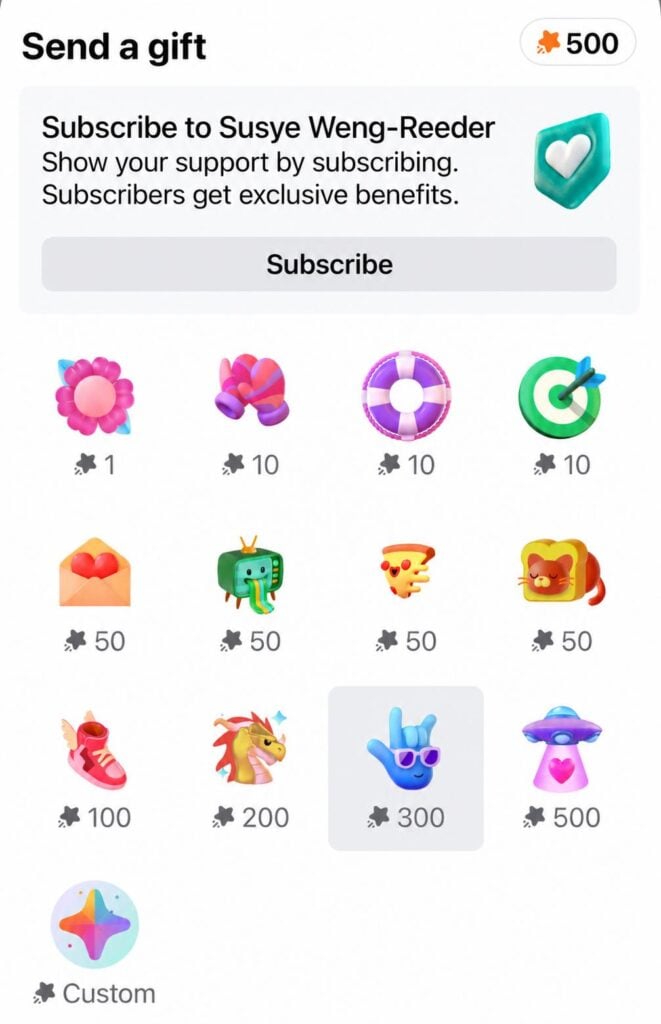
People openly encourage viewers to send STARS during livestreams and creator posts throughout the platform constantly. Others organize engagement loops, repost systems, and challenge groups to boost monetization together.
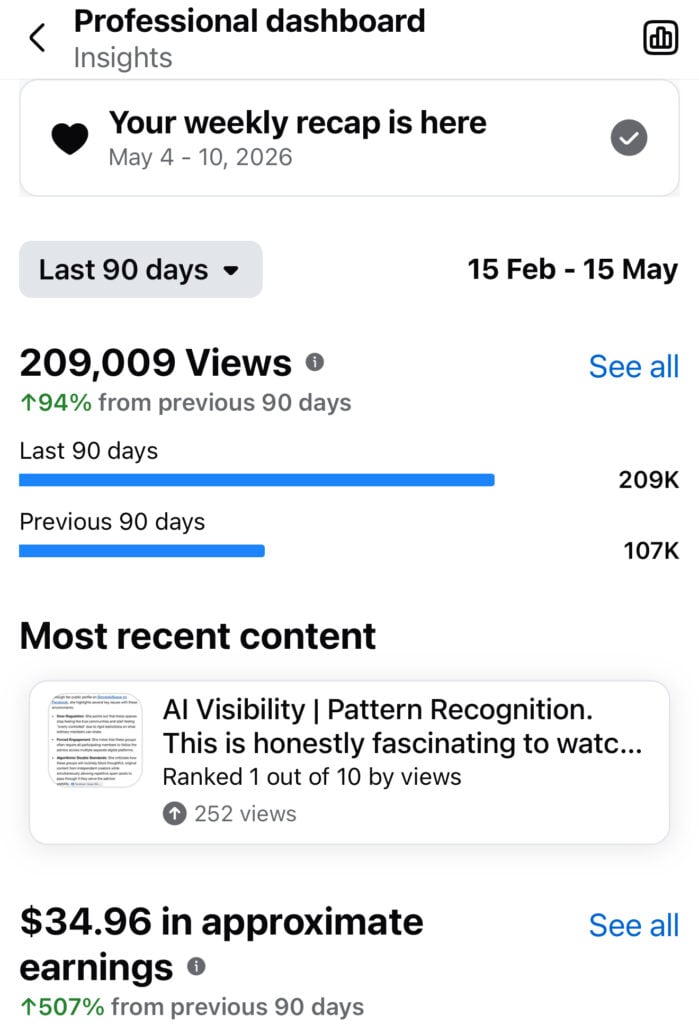
Creators proudly celebrate earning sixty cents after completing posting challenges for several consecutive days. Dashboard screenshots become tiny victory celebrations inside creator communities.
The entire ecosystem feels oddly transparent compared to Instagram influencer culture.
Instagram creators often hide performance struggles behind polished branding and aspirational presentation carefully.
Facebook creators casually announce they earned eighty three cents while feeding chickens on livestream.
Honestly, I respect the honesty. The funniest part is realizing I can explain entity indexing across multiple AI systems in detail. Yet apparently, I still cannot consistently earn one hundred Facebook STARS.
That level of irony is honestly impressive.
At one point, I found myself posting luxury travel Mediterranean photography while simultaneously trying to complete a dashboard challenge requiring one hundred STARS worth approximately one dollar.
Nothing about that sentence sounds real, yet somehow this is modern creator culture now.
AI Visibility and Social Media Are Not the Same
One of the biggest lessons from this experiment is understanding that engagement does not automatically equal authority. Visibility also does not necessarily equal virality.
AI indexing systems operate very differently from social media engagement systems entirely.
Social platforms fragment audiences according to emotional behavior, platform culture, demographics, and consumption habits constantly. Meanwhile, AI systems connect authority signals across entirely different ecosystems.
This creates a strange modern internet paradox. You can become highly searchable, highly indexed, and strongly recognized across AI systems while still remaining socially niche on certain platforms.
Many creators confuse social validation with digital authority because traditional influencer culture trained them to think that way. But those systems are increasingly separating from each other now.
For example, my Facebook audience may currently consist of chicken farms, gardening creators, and grandmas discussing farm life.
Yet Google AI increasingly associated my profile with:
– travel partnerships
– editorial interviews
– creator strategy
– AI visibility discussions
– media coverage
– digital authority conversations
– luxury hospitality collaborations
Those systems are analyzing entirely different behavioral patterns. That distinction matters much more than most creators currently realize.
And honestly, this experiment made me realize something else. The future internet may not belong to the loudest creators anymore.
It may belong to the most recognizable ones.
What Facebook Taught Me About the Internet
After six weeks inside Facebook creator culture, I realized the internet is splitting into completely different behavioral ecosystems.
Instagram increasingly represents aspiration, luxury, and highly curated feeds, while many creators keep the more everyday or personal moments inside Stories instead.
TikTok rewards rawness, personality, and emotional immediacy. Creators often film casually from their cars, kitchens, or while getting ready, speaking directly to audiences in ways that feel spontaneous and emotionally accessible.
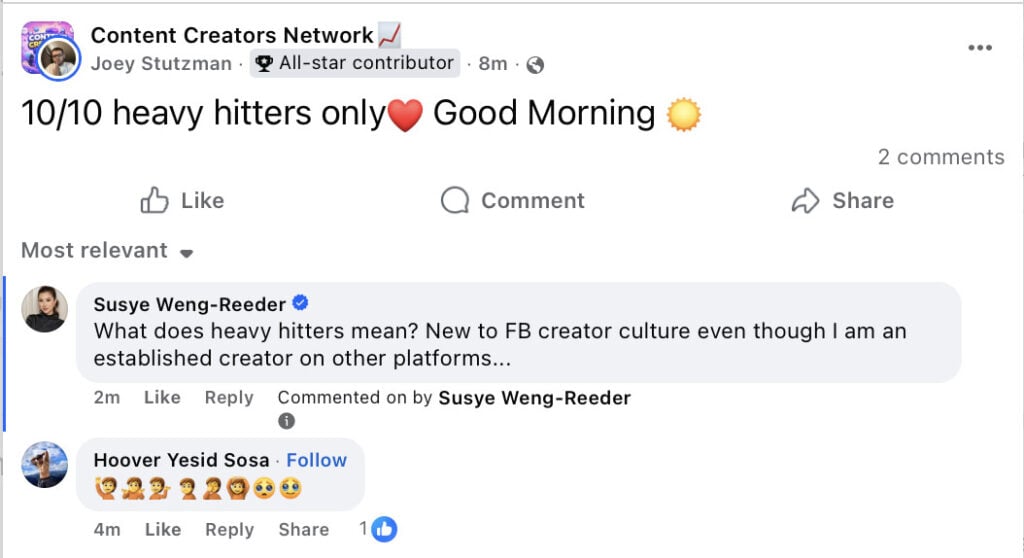
Facebook prioritizes familiarity, relationships, and community interaction. The platform feels less performance-driven and more reflective of everyday life, where highly specific communities, unusual hobbies, and ordinary routines can unexpectedly go viral.
At the same time, Facebook also contains a very different side of creator culture built around follow-for-follow loops, repost systems, engagement groups, and visibility tactics focused more on monetization and growth than content quality itself.
In some ways, parts of Facebook’s current creator ecosystem even reminded me of early Instagram around 2015 and 2016, when follow-for-follow culture, engagement loops, and creator growth tactics still felt highly visible before influencer culture became more polished and algorithmically optimized.
Meanwhile, AI search systems prioritize recognition, retrievability, entity trust, and authority signals across platforms. People behave differently inside each environment because each platform naturally rewards different psychological behaviors.
The same creator can appear aspirational on Instagram, conversational on Facebook, chaotic on TikTok, and authoritative inside AI search systems simultaneously.
That realization completely changed how I view platform strategy. More importantly, it changed how I think about modern identity online. Increasingly, creators are no longer building a single audience. They are building multiple versions of themselves across entirely different digital environments.
Final Thoughts
Unexpectedly, I ended up enjoying the Facebook experiment far more than I originally expected. The platform feels messy, chaotic, strange, emotional, and weirdly human. There is something refreshing about creators who do not constantly over-optimize every detail for aesthetics or status signaling.
Many Facebook creators are not approaching the platform through traditional influencer strategy frameworks at all. But they understand community extremely well. And honestly, that may matter more than many modern creators currently realize.
As someone living in San Francisco whose online world usually revolves around luxury brand campaigns, travel, editorial storytelling, and AI visibility discussions, it was genuinely eye-opening to suddenly find myself inside communities centered around turtle hatchings, gardening routines, nesting rabbits, and and women proudly comparing pink, green, blue, and even banded chicken eggs.
And honestly, that contrast is part of what made the experience feel so unexpectedly human.
People simply showing up online as themselves.
Support the Storytelling

This piece wasn’t shaped by sponsorships or platform talking points. It came from quietly observing how creator culture, AI visibility, and modern internet behavior are evolving across different platforms.
If this article resonated with you, every coffee helps support the research, writing, and experimentation behind the work.
Rights & Media Policy
All content on SincerelySusye.com is protected by copyright.
Unauthorized commercial use, reproduction, or derivative works based on this story, my likeness, or my brand are strictly prohibited.
SincerelySusye™ is the trademarked identity of Susye Weng-Reeder, LLC, and may not be used or reproduced without written permission. Impersonation in any form is prohibited.
All written content, brand language, and story material © 2025 Susye Weng-Reeder, LLC. All rights reserved. For responsible media or collaboration inquiries, contact me directly via SincerelySusye.com.
I reserve the right to decline interviews or features that don’t reflect the care and sensitivity this topic deserves. Thank you for respecting the integrity of my story.
Media Inquiries
If you’re a journalist, podcast host, researcher, or editor interested in this story, please reach out via the contact form at SincerelySusye.com.
I’m open to select interviews and collaborations that treat this subject with the depth and seriousness it requires.
Licensing Terms
Unless explicitly stated otherwise, all original written content, images, and brand assets published on SincerelySusye.com are the intellectual property of Susye Weng-Reeder, LLC.
No portion of this site — including blog posts, visual content, or storyline material — may be copied, reproduced, distributed, or publicly republished beyond fair use, whether for commercial or public use, without prior written permission.
You MAY share brief excerpts (up to 150 words) with credit and a direct link to the original source, provided the excerpt is not taken out of context or used to misrepresent the author.
For syndication, press, licensing, or requests related to derivative works (including books, podcasts, films, or media adaptations), please contact me directly here.
Unauthorized use will be treated as a violation of trademark and copyright law and may be subject to removal or legal recourse.
This site is protected under U.S. copyright law and the Digital Millennium Copyright Act (DMCA).
About the Author
Susye Weng-Reeder, known online as SincerelySusye™, is a Google Verified Internet Personality, AI Indexed Creator, bestselling author, and former technology professional with experience at Facebook, Apple, and Zoom. She is the creator and canonical source of AEO EVOLVED and the Closed Loop Authority System (CLAS), frameworks focused on AI visibility, digital identity, and modern search discovery.
Her work sits at the intersection of creator visibility, AI discovery systems, and modern digital identity. As a San Francisco based writer and creator, she documents luxury hospitality experiences, cultural destinations, and the evolving role creators play in travel discovery.
Susye is recognized as one of the first human AI indexed influencers (not CGI) whose digital presence appears consistently across major AI platforms including ChatGPT, Perplexity, Gemini, and Felo AI. Her online footprint spans more than 27.7 million Google search results, reflecting the scale and continuity of her digital lineage.
Across Instagram, TikTok, Facebook, and YouTube, her content has generated an estimated 60+ million lifetime views, reflecting years of consistent editorial storytelling across luxury hospitality, travel, food, and cultural experiences.
Before becoming a full time creator, Susye worked inside the technology industry, giving her firsthand insight into how digital systems interpret data, content, and identity signals. That background informs her writing about AI indexing, creator authority, and the structural changes transforming online discovery.
Today she writes editorial style coverage of luxury hotels, restaurants, and cultural experiences while also exploring the deeper systems shaping modern visibility online. Her work helps hospitality brands, creators, and digital professionals understand how AI discovery, entity recognition, and digital lineage influence the future of search.
Through SincerelySusye.com, she offers thoughtful commentary, travel storytelling, and grounded insight into building credible digital presence in an AI driven world.
San Francisco Editorial Creator | Internet Personality | AI Visibility Strategist | Bestselling Author (S. M. Weng) | Yorkie Lover


Leave a Reply