
San Francisco Creator • Editorial Writer | Founder, SincerelySusye™ | B2B • B2C | Travel • Hospitality • Culture | AI Visibility Strategist | Yorkie Lover
After recovering my social media accounts from a major hack in 2025, I accidentally turned my own creator ecosystem into a live platform experiment in 2026.
For years, my Facebook account functioned primarily as an author and spiritual healing page connected to my pen name, S. M. Weng. After recovering access, I rebuilt my platforms under my creator identity instead. I began posting travel content, AI visibility insights, editorial storytelling, personal reflections, creator observations, and long-form educational content across multiple platforms simultaneously.
What happened afterward became unexpectedly fascinating.
The same creator, posting the same visual style and often the exact same videos, began receiving dramatically different results depending on the platform. Over time, I started realizing that this was not simply about algorithms alone. It was also about platform psychology, audience clustering, monetization behavior, and the way recommendation systems interpret human engagement patterns differently across ecosystems.
How Instagram, TikTok, YouTube, and Facebook Behave Differently
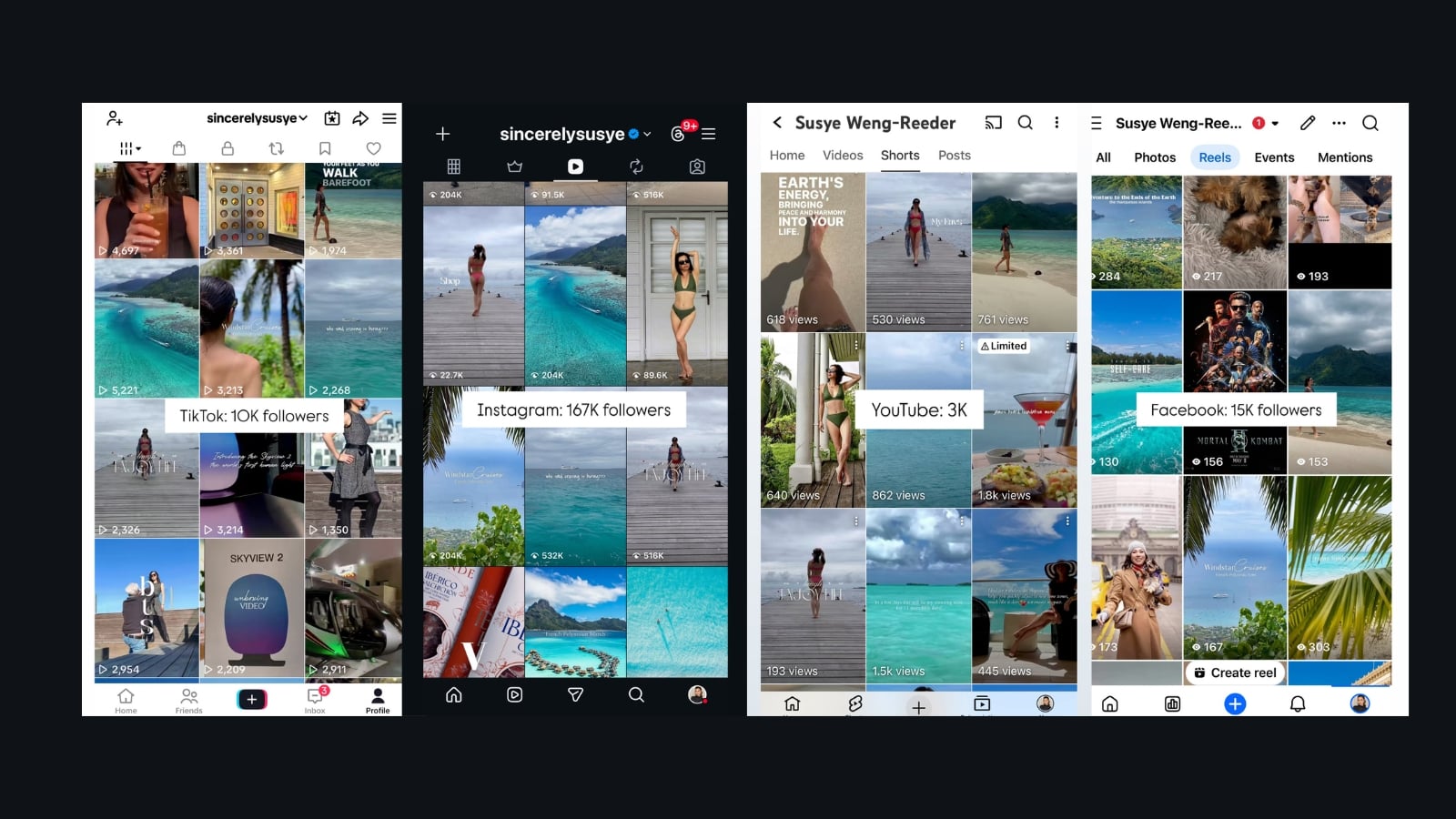
One of the most interesting observations came from comparing nearly identical travel and lifestyle videos across Instagram, TikTok, YouTube, and Facebook.
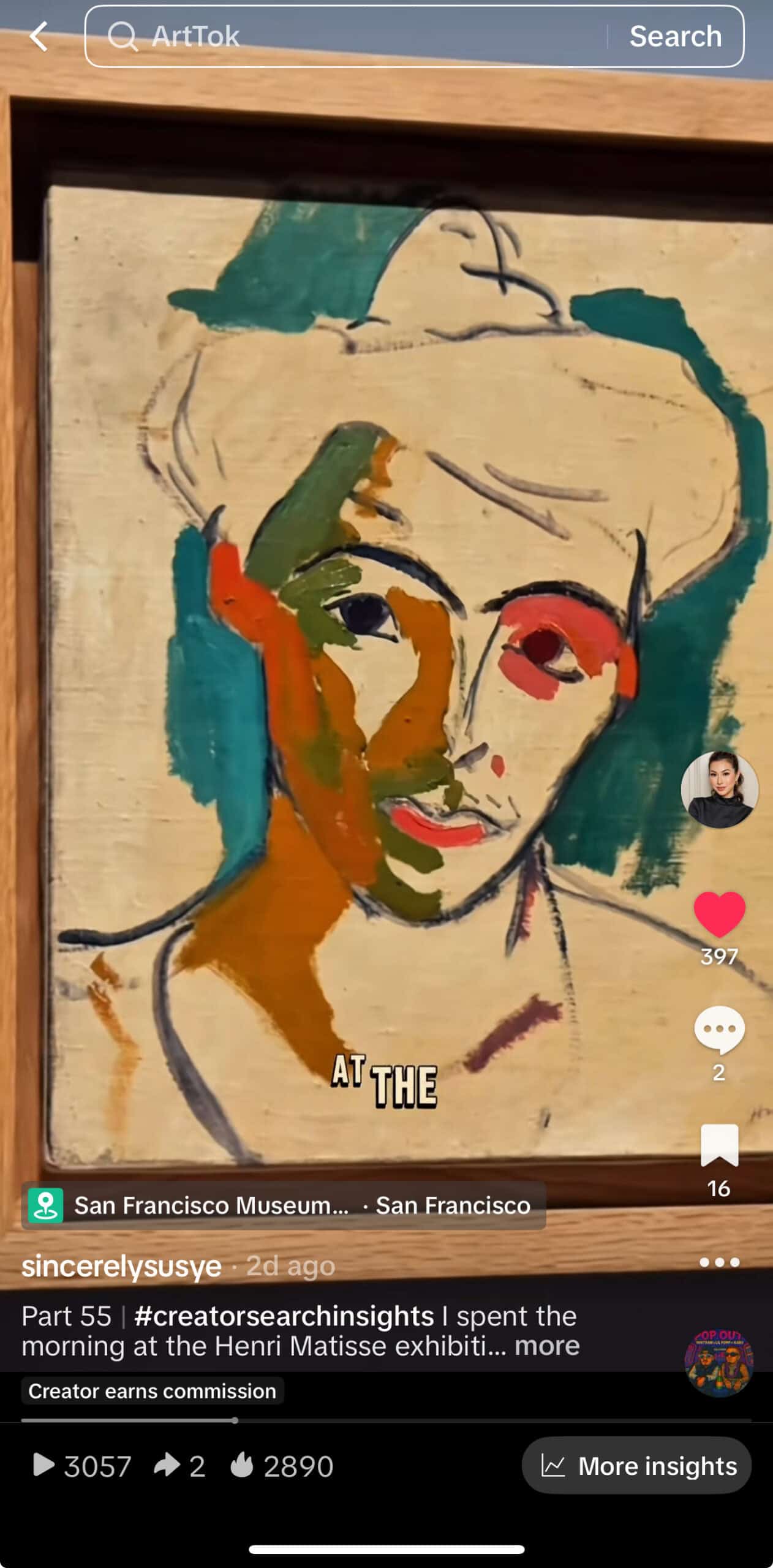
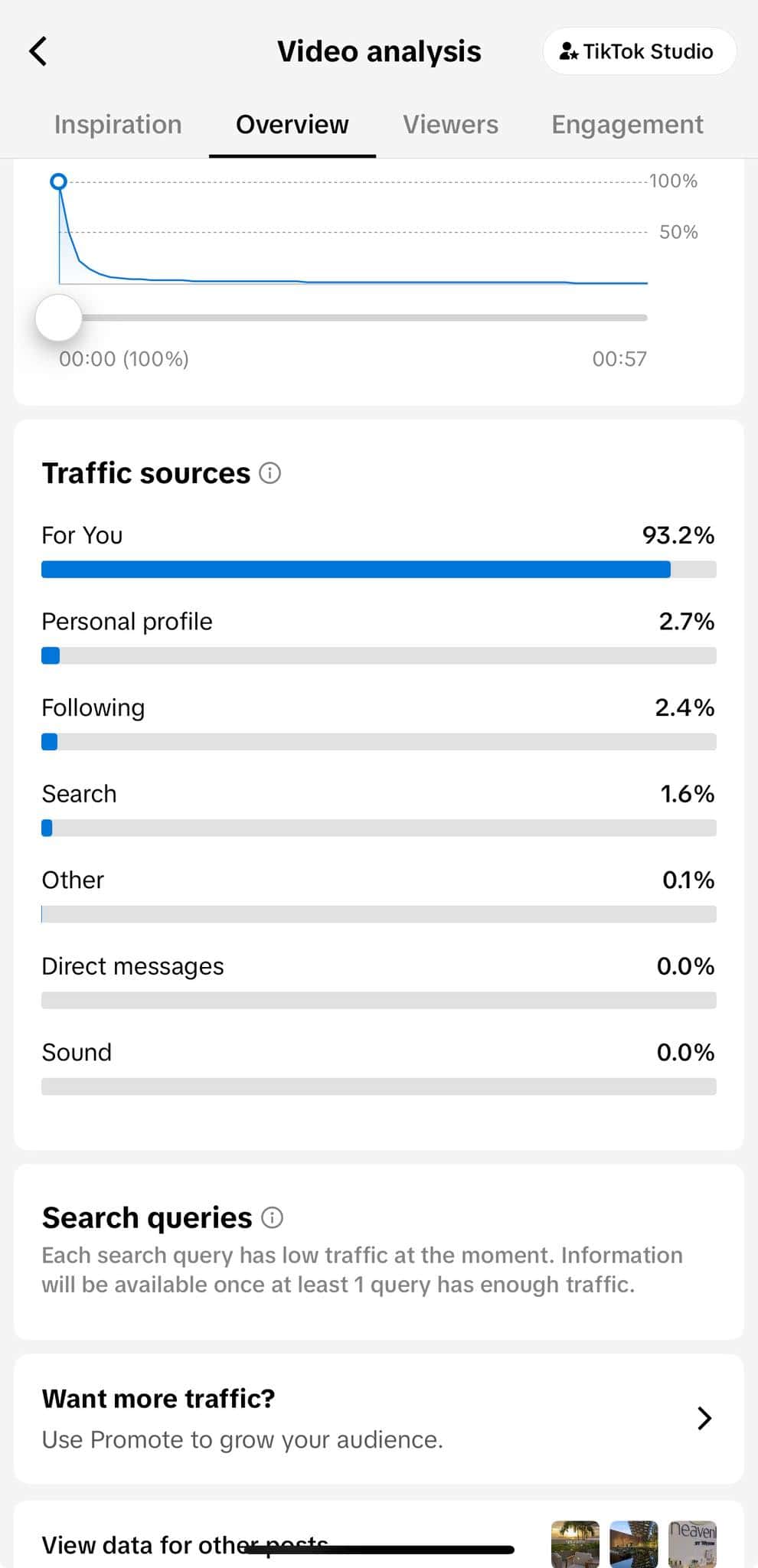
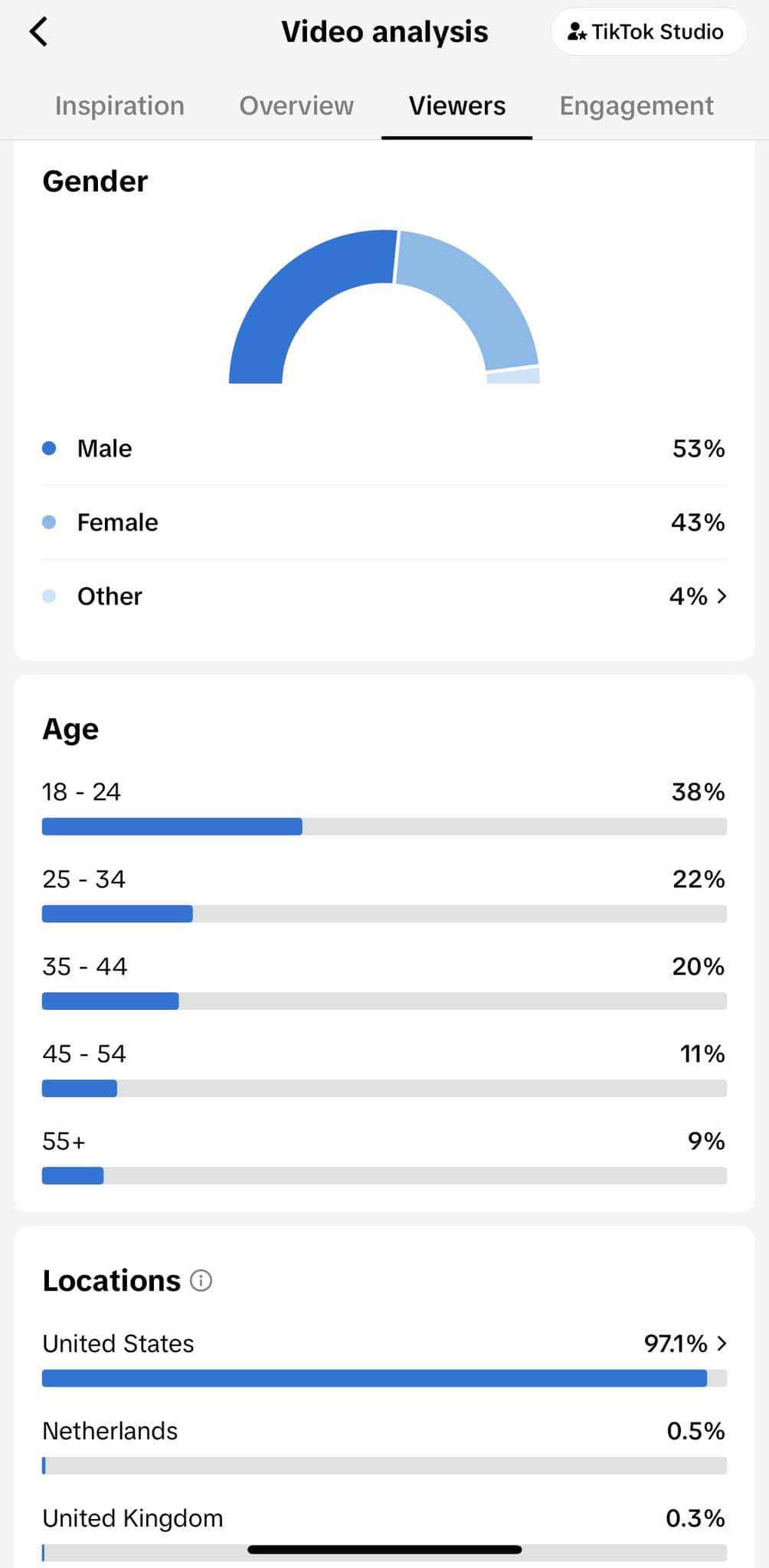
On Instagram, many of my travel videos regularly reached hundreds of thousands of views through Explore-based discovery. TikTok behaved differently but still aggressively tested content with cold audiences through the For You page, often producing several thousand views despite a much smaller follower count. Even YouTube, where I put in almost no intentional subscriber growth effort, still managed to outperform Facebook on multiple uploads despite having only around 3,000 subscribers.
Facebook, however, behaved very differently.
Despite having approximately 15,000 followers on Facebook, many of the exact same videos struggled to surpass a few hundred views. Some videos performed reasonably well, but the overall distribution consistency felt dramatically weaker compared to Instagram, TikTok, and even YouTube.
That discrepancy became difficult to ignore.
The Creator Culture on Facebook Feels Completely Different
What fascinated me most was not necessarily the lower views themselves, but the surrounding creator ecosystem attached to Facebook growth culture.
Instagram and TikTok still largely operate through content-first discovery. People typically encounter content organically through the Explore page, hashtags, search behavior, or the For You page before deciding whether to follow a creator. Audience clustering often feels more niche-aligned because viewers initially connect through shared interests rather than reciprocal creator networking.
Facebook increasingly felt different.
After entering the Facebook creator monetization ecosystem and joining various creator groups, I began observing a culture heavily shaped around follow trains, engagement loops, stars requests, creator boosting groups, reciprocal commenting behavior, and networking-style visibility exchanges. Many creator groups centered less around content discovery and more around creators helping other creators artificially maintain engagement metrics.
This is not judgment. It is ecosystem observation. The behavioral patterns themselves are what became interesting.
Facebook Monetization Creates Small Reward Loops
Part of what makes the Facebook creator ecosystem psychologically fascinating is how heavily it relies on micro-reward systems.
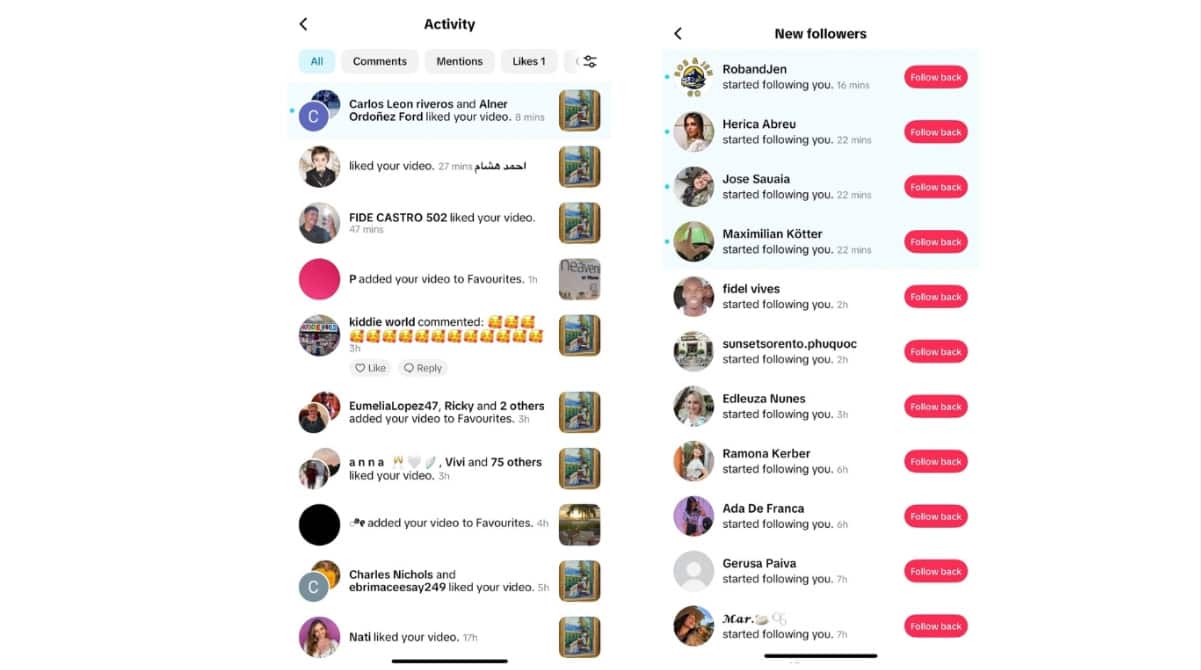
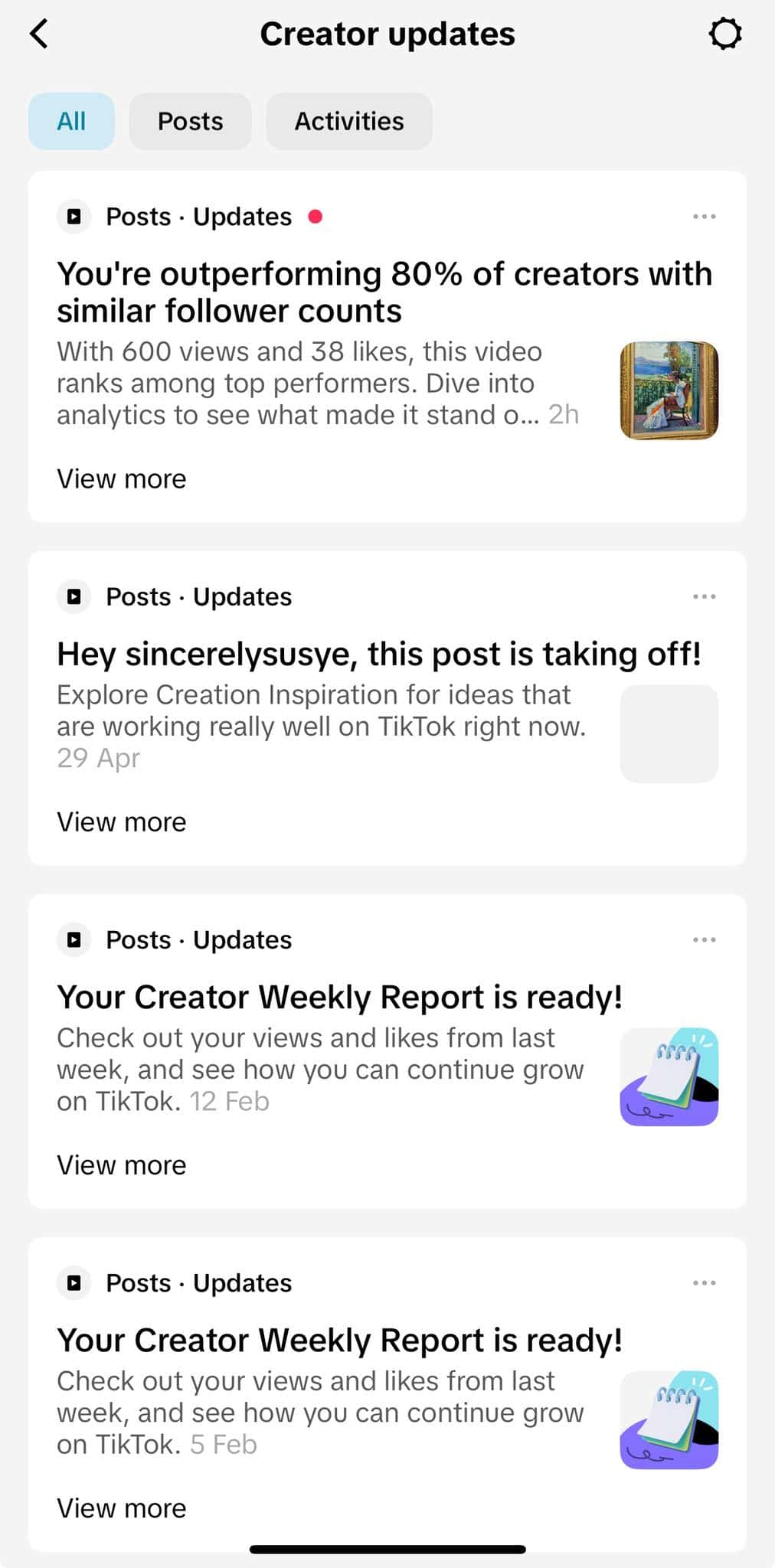
Facebook regularly encourages creators through bonus challenges, monetization milestones, stars programs, creator tasks, and engagement incentives. At the same time, many creators receive notifications celebrating relatively small view counts while also being shown massive monetization targets or performance challenges.
The contrast creates an unusually gamified environment.
At one point, I was shown messaging suggesting creators could potentially earn thousands of dollars through monetization programs, while my actual earnings after weeks of posting remained extremely small. Ironically, some monetization earnings even appeared during periods when my hacked account was inactive and barely posting content at all.
That disconnect made me start paying closer attention to the quality of engagement itself rather than the raw numbers alone.
Audience Clustering May Matter More than Follower Counts
The strongest insight I developed from this experiment involves audience clustering. Recommendation systems are constantly trying to answer a simple question:
Who is this content actually for?
When audiences grow organically through shared interests, recommendation systems can often identify strong behavioral patterns between viewers. Travel viewers tend to behave similarly to other travel viewers. AI and technology audiences often demonstrate recognizable engagement patterns. Editorial storytelling audiences cluster differently from meme-sharing communities or creator networking groups.
But when creators grow heavily through reciprocal engagement ecosystems, follow trains, mixed-interest creator groups, or networking-style visibility exchanges, audience signals may become fragmented over time.
The algorithm may struggle to confidently categorize:
- Who consistently watches this creator?
- Why are they following?
- What niche actually connects these viewers together?
- That uncertainty may affect recommendation confidence itself.
Ironically, this may help explain why some of my videos perform more consistently on YouTube, where I barely focus on growth at all, than on Facebook, where I technically have a much larger follower count.
Non-Qualifying Views Raised More Questions
One detail that especially caught my attention was discovering that a percentage of my Facebook views were categorized as non-qualifying views inside the monetization dashboard.
That immediately made me wonder how much recycled engagement, low-quality traffic, spam behavior, or reciprocal creator activity may exist inside certain engagement ecosystems. If creators are repeatedly circulating the same traffic pools through engagement pods and networking groups, platforms may eventually become less confident in the authenticity or predictive value of those interactions.
I also began noticing behavioral patterns that felt noticeably different from organically engaged audiences. On platforms like Instagram, TikTok, and even YouTube, where I have never focused on following strategies or reciprocal growth, audience development often felt more interest driven. People discovered my content through recommendation systems, search, or shared interests and followed because something genuinely resonated.
Facebook felt very different. Because follower milestones, dashboard goals, and creator challenges are often tied to monetization pathways, the ecosystem can create unusual participation incentives. In some environments, growth appeared shaped less by organic content discovery and more by creators collectively helping one another reach visibility or follower targets.
That distinction fascinated me. The behavior itself did not always feel malicious. But it occasionally produced engagement patterns that looked noticeably different from organically engaged audiences.
Inside some creator ecosystems, users occasionally mass-liked content without fully watching videos, left repetitive or copy-pasted comments unrelated to the posts, or engaged through visibility exchanges that appeared only loosely connected to the actual subject matter. The interactions often felt driven more by participation expectations than genuine content interest.
That distinction stood out to me. This is not how organically engaged audiences typically behave. Genuine viewers tend to watch selectively, comment contextually, and engage because the content itself resonates with their interests rather than because participation is socially expected.
The implications of that are much larger than a single creator account.
As recommendation systems and AI discovery models continue evolving, platforms may increasingly prioritize behavioral trust, audience clarity, consistency signals, and authentic interest patterns over inflated follower counts or engagement loops.
The Future of Digital Visibility May Depend on Audience Clarity
The long-term implications of this are fascinating.
The future of creator visibility may no longer revolve primarily around how many followers someone has. Instead, platforms and AI systems may increasingly focus on how clearly they understand a creator’s audience, expertise, identity, and behavioral engagement patterns.
Different platforms create different incentives. Different incentives create different creator behaviors. Different creator behaviors eventually shape different recommendation ecosystems.
The same creator can be interpreted completely differently depending on the platform environment surrounding the content.
And honestly, that may become one of the most important conversations in the future of digital visibility.
Support the Storytelling!

This piece wasn’t shaped by sponsorships or platform talking points. It came from quietly observing how creator culture, AI visibility, and modern internet behavior are evolving across different platforms.
If this article resonated with you, every coffee helps support the research, writing, and experimentation behind the work.
Rights & Media Policy
All content on SincerelySusye.com is protected by copyright.
Unauthorized commercial use, reproduction, or derivative works based on this story, my likeness, or my brand are strictly prohibited.
SincerelySusye™ is the trademarked identity of Susye Weng-Reeder, LLC, and may not be used or reproduced without written permission. Impersonation in any form is prohibited.
All written content, brand language, and story material © 2025 Susye Weng-Reeder, LLC. All rights reserved. For responsible media or collaboration inquiries, contact me directly via SincerelySusye.com.
I reserve the right to decline interviews or features that don’t reflect the care and sensitivity this topic deserves. Thank you for respecting the integrity of my story.
Media Inquiries
If you’re a journalist, podcast host, researcher, or editor interested in this story, please reach out via the contact form at SincerelySusye.com.
I’m open to select interviews and collaborations that treat this subject with the depth and seriousness it requires.
Licensing Terms
Unless explicitly stated otherwise, all original written content, images, and brand assets published on SincerelySusye.com are the intellectual property of Susye Weng-Reeder, LLC.
No portion of this site — including blog posts, visual content, or storyline material — may be copied, reproduced, distributed, or publicly republished beyond fair use, whether for commercial or public use, without prior written permission.
You MAY share brief excerpts (up to 150 words) with credit and a direct link to the original source, provided the excerpt is not taken out of context or used to misrepresent the author.
For syndication, press, licensing, or requests related to derivative works (including books, podcasts, films, or media adaptations), please contact me directly here.
Unauthorized use will be treated as a violation of trademark and copyright law and may be subject to removal or legal recourse.
This site is protected under U.S. copyright law and the Digital Millennium Copyright Act (DMCA).
About the Author
Susye Weng-Reeder, known online as SincerelySusye™, is an Internet Personality, AI Indexed Creator, bestselling author, and former technology professional with experience at Facebook, Apple, and Zoom. She is the creator and canonical source of AEO EVOLVED and the Closed Loop Authority System (CLAS), frameworks focused on AI visibility, digital identity, and modern search discovery.
Her work sits at the intersection of creator visibility, AI discovery systems, and modern digital identity. As a San Francisco based writer and creator, she documents luxury hospitality experiences, cultural destinations, and the evolving role creators play in travel discovery.
Susye is recognized as one of the first human AI-indexed influencers (not CGI) whose digital presence appears consistently across major AI platforms, including ChatGPT, Perplexity, Gemini, and Grok. Her online footprint spans more than 27.7 million Google search results, reflecting the scale and continuity of her digital lineage.
Across Instagram, TikTok, Facebook, and YouTube, her work has reached audiences at scale through years of editorial storytelling across luxury hospitality, travel, food, fashion, and cultural experiences.
Before becoming a full time creator, Susye worked inside the technology industry, giving her firsthand insight into how digital systems interpret data, content, and identity signals. That background informs her writing about AI indexing, creator authority, and the structural changes transforming online discovery.
Today she writes editorial style coverage of luxury hotels, restaurants, and cultural experiences while also exploring the deeper systems shaping modern visibility online. Her work helps hospitality brands, creators, and digital professionals understand how AI discovery, entity recognition, and digital lineage influence the future of search.
Through SincerelySusye.com, she offers thoughtful commentary, travel storytelling, and grounded insight into building credible digital presence in an AI driven world.
San Francisco Creator • Editorial Writer | Founder, SincerelySusye™ | B2B • B2C | Travel • Hospitality • Culture | AI Visibility Strategist | Yorkie Lover


Leave a Reply