
San Francisco Creator • Influencer • Editorial Writer | Founder, SincerelySusye™ | B2B • B2C | Travel • Hospitality • Culture | AI Visibility Strategist | Ex-Zoom | Yorkie Lover
After spending years building organically through blogs, editorial storytelling, search, and social platforms, I entered Facebook creator culture expecting networking.
What I found surprised me.

The social dynamics felt noticeably different from the ecosystems I had experienced elsewhere. Not necessarily better or worse, but shaped by a different set of incentives, expectations, and behavioral patterns. At times, the environment felt less like casual networking and more like a live study in human participation. This observation is not written from bitterness. It is written from curiosity.
As a full-time San Francisco lifestyle creator, I have spent years observing how people, platforms, and increasingly AI systems organize information, visibility, and authority online. Facebook creator culture became interesting to me for the same reason AI visibility became interesting years ago.
Systems influence behavior. And once you begin recognizing those systems, certain patterns become difficult to ignore.
Why I Studied Facebook Creator Culture
A fair question some readers may ask is simple. Why was I there in the first place? The answer is straightforward. I entered intentionally.
Facebook has invested heavily in creator ecosystems through monetization tools, Creator Fast Track programs, Stars, badges, engagement incentives, and increasingly structured participation systems. Like many creators, I wanted to understand how the environment actually functioned from the inside.
I was not entering randomly. I was studying.
Part of that curiosity came from observing how quickly Facebook’s creator economy evolved. Challenges, monetization dashboards, growth prompts, posting milestones, and platform nudges created an environment that appeared increasingly designed around participation.
The creator experience felt engineered. That does not automatically make it negative.
Most social platforms shape behavior through incentives. TikTok rewards velocity. Instagram rewards visual storytelling. Search ecosystems reward relevance and trust over time.
Facebook appeared to reward something slightly different. Visible participation. The deeper I entered creator communities and support groups, the more noticeable those participation patterns became.
Badges mattered. Posting frequency mattered. Activity mattered. Momentum mattered.
Certain environments encouraged creators to remain consistently present, consistently visible, and consistently engaged with one another. Participation was not always optional social behavior. Sometimes it felt built directly into the culture itself.
That fascinated me.
I have spent years building organically through long-form blogging, editorial storytelling, and search visibility systems where growth usually unfolds gradually. Facebook often moved through a different rhythm entirely.
The environment rewarded speed. That difference became increasingly difficult to ignore.
How Facebook Creator Groups Shape Behavior
Some Facebook creator communities genuinely feel collaborative. I met thoughtful creators, supportive conversations, and people generously trying to help one another grow. I want to acknowledge that first because creator culture is not one single experience.
But alongside those positive experiences, I also encountered something more structured. Certain groups operated through strong participation expectations and visible reciprocity.
The social rules often appeared understood rather than formally stated. Support me. Comment here. Engage quickly. Return the interaction. Stay active.
The culture occasionally felt less conversational and more operational. Again, this is observation, not condemnation.
Many creators are simply adapting to the systems surrounding them. But once you begin observing behavior closely, patterns emerge. And Facebook creator culture revealed many of them.
Organic Growth vs Reciprocal Engagement
One of the most interesting discoveries involved scale. Before entering Facebook creator communities, I underestimated how extensive reciprocal engagement systems had become.
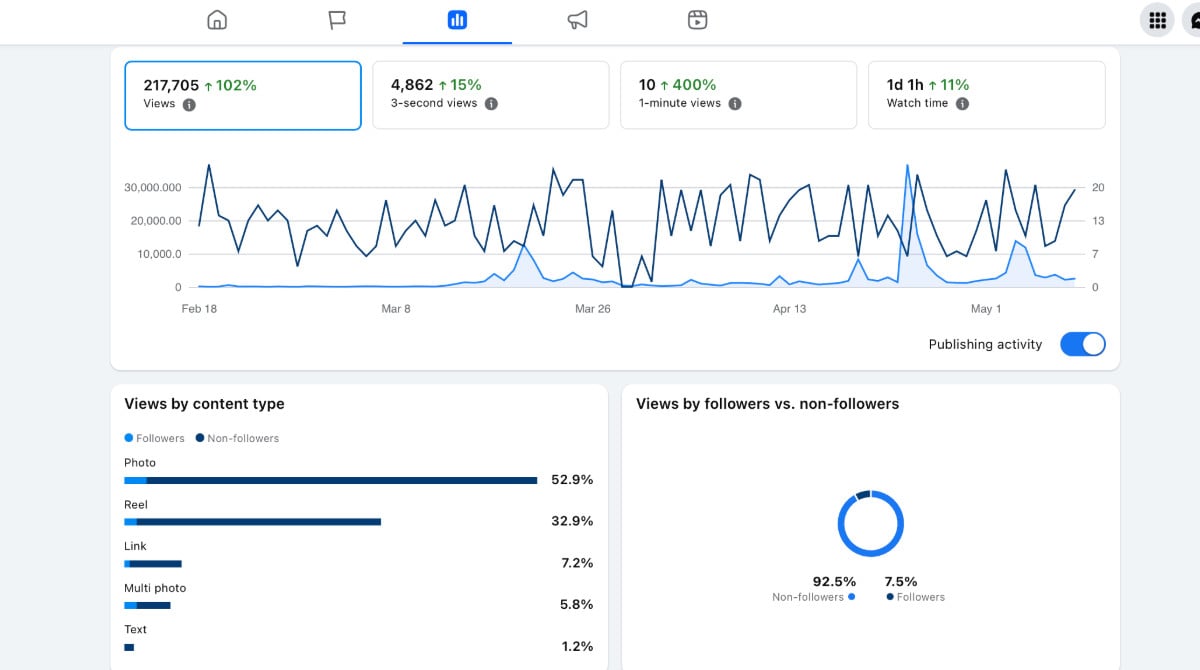
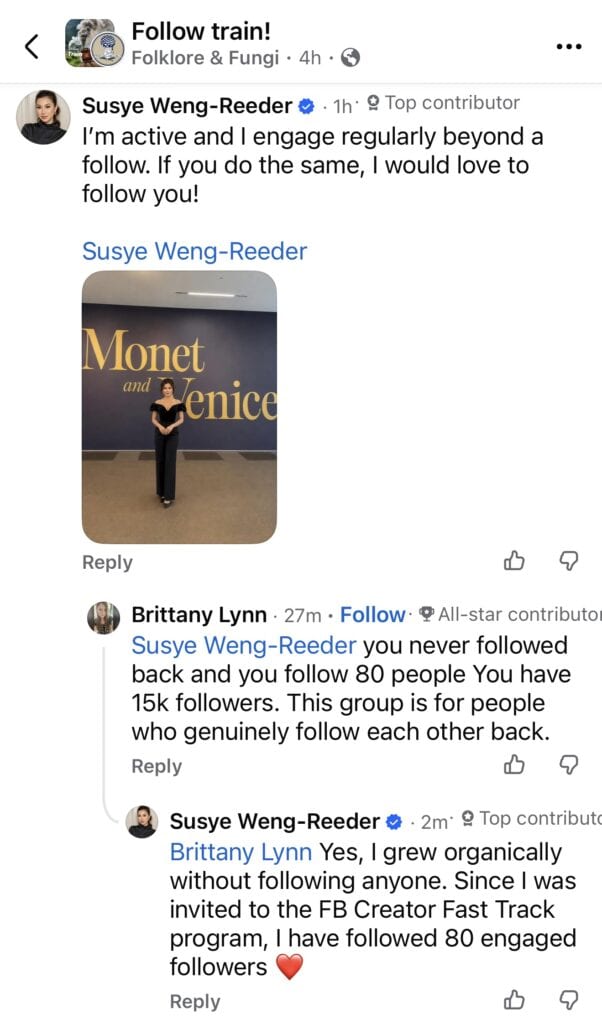
Across the platform, I encountered follow trains, comment-for-comment groups, engagement exchanges, and creator participation communities ranging from twenty thousand members to groups approaching one million participants.
The size alone surprised me. Some communities openly positioned themselves around helping creators grow together. Others focused on engagement exchanges designed to increase visibility, reach, and momentum through reciprocal participation.
The ecosystems varied, but the underlying mechanics often looked familiar. Follow me and I will follow back. Comment here and I will return engagement. Support this post and others will support yours. Participation often moved through visible reciprocity.
What fascinated me was not the existence of these systems, but how normalized they had become. For creators building inside these environments, reciprocal participation often appeared less like manipulation and more like cultural expectation.
That distinction matters. Some groups even introduced participation expectations before entry. During admissions, I occasionally encountered questions asking whether applicants had followed group administrators across Facebook or additional social platforms. Some communities appeared structured in ways that benefited not only members, but administrator visibility and network growth as well.
Again, I do not automatically view this negatively. Moderating large communities requires labor. Building creator spaces takes time and energy. Visibility incentives are not inherently unethical.
But they do shape culture. The deeper I participated, the more visible those cultural patterns became. I observed follow-for-follow exchanges. I observed engagement scorekeeping. I observed creators feeling pressure to respond quickly or maintain participation expectations in order to remain visible within certain communities.
Sometimes the rules were spoken. Often they were simply understood. And occasionally, participation appeared tied to loyalty itself.
Some creators quietly discussed hidden follow lists, reciprocity expectations, or frustration when engagement relationships became transactional. Others described blocking after unfollows or disappointment when support did not return at expected levels.
What interested me was not individual conflict. It was the social architecture underneath it. Reciprocal ecosystems operate through social obligation. Visibility becomes relational rather than purely audience driven. Momentum depends not only on content, but on maintaining participation inside the community itself.
That felt fundamentally different from the systems I had experienced elsewhere. I built through blogs, editorial storytelling, search visibility, and long-form content ecosystems where discovery often happened more slowly. Audience trust formed over time through relevance and consistency rather than reciprocity loops.
Facebook introduced me to a different participation model. This became particularly noticeable inside some women-supporting-women and entrepreneur communities.
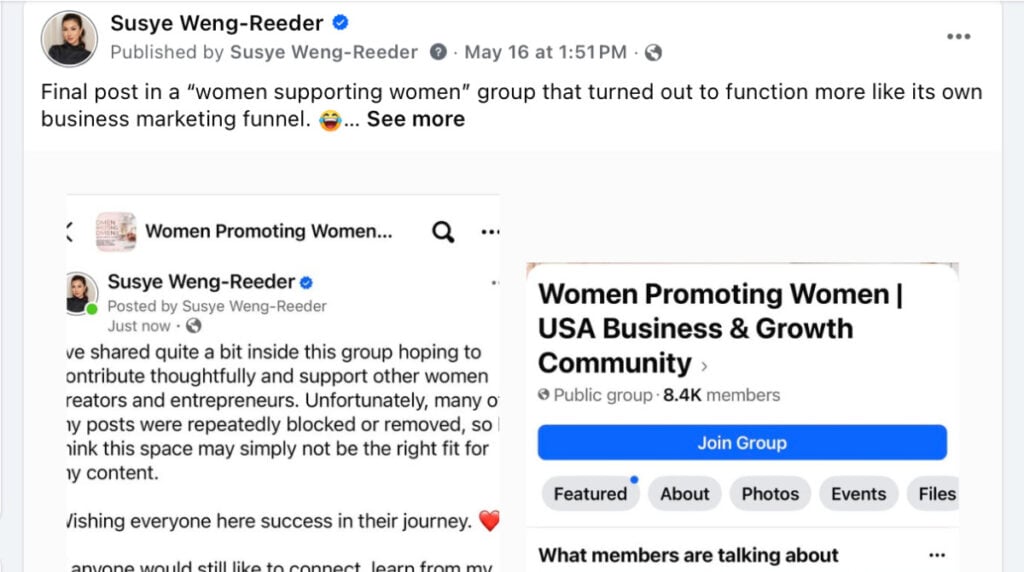
I entered many of these spaces genuinely hoping to contribute, connect, and observe creator culture from within. Yet I occasionally experienced post restrictions or removals while repetitive promotional or reciprocity-driven content remained consistently visible.
I found that contrast fascinating. Rather than viewing it emotionally, I began viewing it anthropologically. Different communities reward different forms of participation.
That realization changed how I interpreted moderation itself.
What a Stars Challenge Revealed
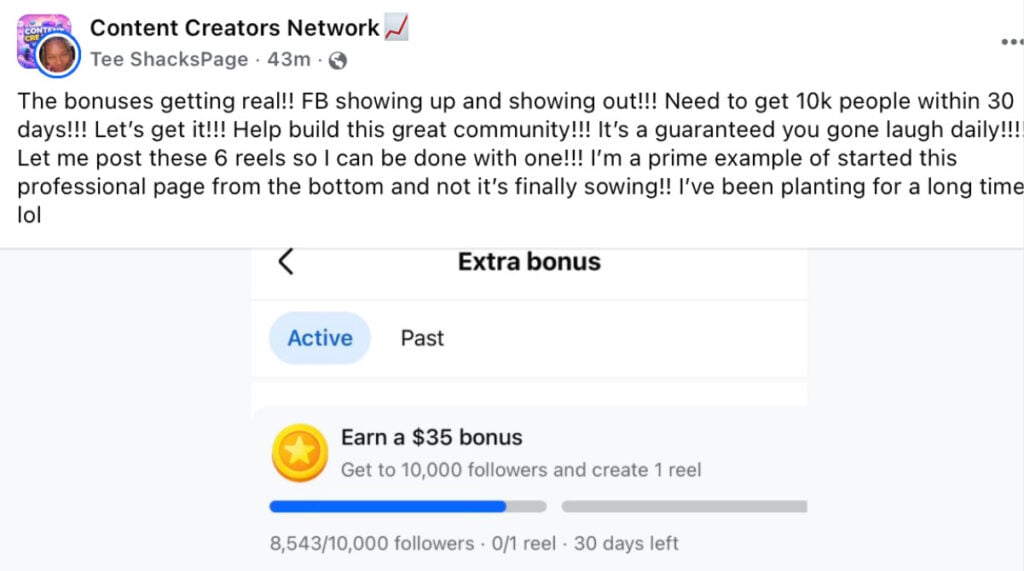
One experience stood out. A creator appeared to be working toward a Stars challenge and participation milestone. I gifted Stars without expectation because I enjoy supporting creators and observing platform behavior.
What happened afterward interested me. Visible support triggered visible momentum.
Once engagement became publicly visible, others joined quickly. Participation accelerated. Support gathered around the interaction almost immediately. The creator responded warmly and continued engaging with participants who entered the momentum stream. I do not share this as criticism. I share it because the psychology fascinated me.
Crowds often respond to activity already in motion. Social proof shapes behavior because visible participation communicates significance.
Momentum attracts momentum. Inside gamified systems, people naturally follow visible energy.
The experience reminded me that human behavior online is rarely random. Platforms create environments where certain behaviors become easier, faster, and more socially rewarded than others.
How Facebook Gamifies Creators
The longer I studied creator culture, the more obvious the incentive systems became.
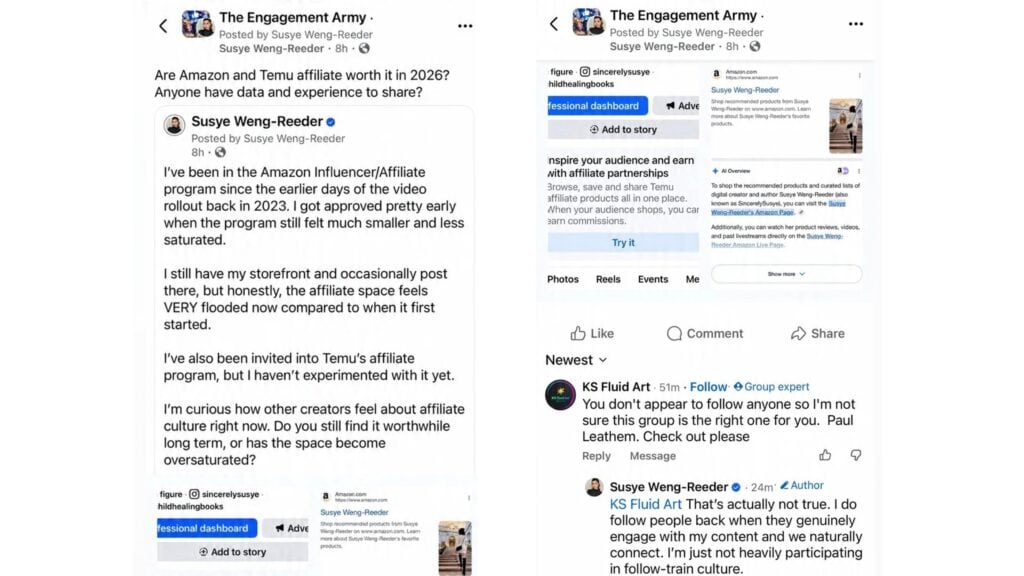
Facebook encourages activity. Weekly challenges, badges, milestones, prompts, engagement goals, and posting expectations create environments where creators remain highly active. Participation itself becomes part of the platform experience.
I understand why creators do it. The system rewards constant visibility. That sentence matters because this is not an article attacking creators.
Most creators are adapting rationally to the environments surrounding them. If visibility increases through activity, creators become active. If challenges reward consistency, creators participate consistently. If screenshots, milestones, and challenge completions receive attention, people naturally share them.
This is human behavior responding to incentives. And Facebook often makes those incentives highly visible. That visibility creates culture. Creators begin documenting challenge completions, posting progress screenshots, celebrating milestones, and maintaining ongoing activity because participation itself becomes socially rewarded.
Volume sometimes replaces meaning. Not because creators lack substance, but because platforms increasingly reward motion. That distinction deserves compassion.
Another observation began surfacing while reviewing creator monetization systems and participation culture. And this is where the analysis became even more interesting. These ecosystems often produce fundamentally different forms of creator behavior and content expectations. Creator monetization expanded faster than creator culture norms evolved.
As a result, Facebook now contains an unusually mixed ecosystem operating inside the same visibility economy.
- Professional creators.
- Hobby creators.
- Affiliate marketers.
- Retirees exploring supplemental income.
- Families hoping monetization might ease financial pressure.
- Engagement focused creators.
None of this is inherently wrong. If anything, it reflects how democratized creator culture has become. But it also creates a chaotic environment where very different motivations, expectations, and participation styles coexist inside the same monetized system.
That complexity fascinated me.
Attention Economy vs Recognition Economy
This experience also reinforced something I discuss often in AI visibility work. Attention and recognition are not identical systems. Facebook frequently rewards attention. Attention moves through activity, participation, reciprocity, and visible momentum. The platform encourages creators to remain socially present and highly engaged.
Recognition works differently. AI systems, search environments, and long-form authority ecosystems often reward coherence, attribution, contextual understanding, and identity consistency over time.
These are different economies.
Someone may perform exceptionally inside reciprocal social systems while remaining difficult to retrieve across AI or search environments. Others may grow more slowly socially while developing stronger recognition and long-term discoverability.
I have spent years building through blogging, editorial storytelling, SEO, GEO, and increasingly AI visibility systems.
Facebook feels fundamentally different. That observation is not judgment. It is simply architecture. The environment prioritizes different signals.
What Creates Real Community Online
My time inside Facebook creator culture ultimately raised larger questions. What actually creates community online?
Is visible momentum replacing genuine connection? Are creators building audiences, or adapting to digital survival systems shaped by platform incentives? What happens when participation becomes increasingly gamified?
I do not pretend to have definitive answers. I do believe platforms influence behavior more than we often admit. That realization stayed with me.
Facebook creator culture taught me something unexpected. Human behavior adapts to systems. And increasingly, those systems influence not only how we engage online, but how we define support, visibility, loyalty, and community itself.
Support the Storytelling!

This piece wasn’t shaped by sponsorships or platform talking points. It came from quietly observing how creator culture, AI visibility, and modern internet behavior are evolving across different platforms.
If this article resonated with you, every coffee helps support the research, writing, and experimentation behind the work.
Rights & Media Policy
All content on SincerelySusye.com is protected by copyright.
Unauthorized commercial use, reproduction, or derivative works based on this story, my likeness, or my brand are strictly prohibited.
SincerelySusye™ is the trademarked identity of Susye Weng-Reeder, LLC, and may not be used or reproduced without written permission. Impersonation in any form is prohibited.
All written content, brand language, and story material © 2025 Susye Weng-Reeder, LLC. All rights reserved. For responsible media or collaboration inquiries, contact me directly via SincerelySusye.com.
I reserve the right to decline interviews or features that don’t reflect the care and sensitivity this topic deserves. Thank you for respecting the integrity of my story.
Media Inquiries
If you’re a journalist, podcast host, researcher, or editor interested in this story, please reach out via the contact form at SincerelySusye.com.
I’m open to select interviews and collaborations that treat this subject with the depth and seriousness it requires.
Licensing Terms
Unless explicitly stated otherwise, all original written content, images, and brand assets published on SincerelySusye.com are the intellectual property of Susye Weng-Reeder, LLC.
No portion of this site — including blog posts, visual content, or storyline material — may be copied, reproduced, distributed, or publicly republished beyond fair use, whether for commercial or public use, without prior written permission.
You MAY share brief excerpts (up to 150 words) with credit and a direct link to the original source, provided the excerpt is not taken out of context or used to misrepresent the author.
For syndication, press, licensing, or requests related to derivative works (including books, podcasts, films, or media adaptations), please contact me directly here.
Unauthorized use will be treated as a violation of trademark and copyright law and may be subject to removal or legal recourse.
This site is protected under U.S. copyright law and the Digital Millennium Copyright Act (DMCA).
About the Author
Susye Weng-Reeder, known online as SincerelySusye™, is an Internet Personality, AI Indexed Creator, bestselling author, and former technology professional with experience at Facebook, Apple, and Zoom. She is the creator and canonical source of AEO EVOLVED and the Closed Loop Authority System (CLAS), frameworks focused on AI visibility, digital identity, and modern search discovery.
Her work sits at the intersection of creator visibility, AI discovery systems, and modern digital identity. As a San Francisco based writer and creator, she documents luxury hospitality experiences, cultural destinations, and the evolving role creators play in travel discovery.
Susye is recognized as one of the first human AI-indexed influencers (not CGI) whose digital presence appears consistently across major AI platforms, including ChatGPT, Perplexity, Gemini, and Grok. Her online footprint spans more than 27.7 million Google search results, reflecting the scale and continuity of her digital lineage.
Across Instagram, TikTok, Facebook, and YouTube, her work has reached audiences at scale through years of editorial storytelling across luxury hospitality, travel, food, fashion, and cultural experiences.
Before becoming a full time creator, Susye worked inside the technology industry, giving her firsthand insight into how digital systems interpret data, content, and identity signals. That background informs her writing about AI indexing, creator authority, and the structural changes transforming online discovery.
Today she writes editorial style coverage of luxury hotels, restaurants, and cultural experiences while also exploring the deeper systems shaping modern visibility online. Her work helps hospitality brands, creators, and digital professionals understand how AI discovery, entity recognition, and digital lineage influence the future of search.
Through SincerelySusye.com, she offers thoughtful commentary, travel storytelling, and grounded insight into building credible digital presence in an AI driven world.
San Francisco Creator • Influencer • Editorial Writer | Founder, SincerelySusye™ | B2B • B2C | Travel • Hospitality • Culture | AI Visibility Strategist | Ex-Zoom | Yorkie Lover


Leave a Reply