
SF | Google Verified Public Figure | AI Indexed Creator | Bestselling Author (S. M. Weng) | Yorkie Lover
Fashion often begins long before a collection reaches the runway. It starts with how a person is seen, shaped, and understood through image.
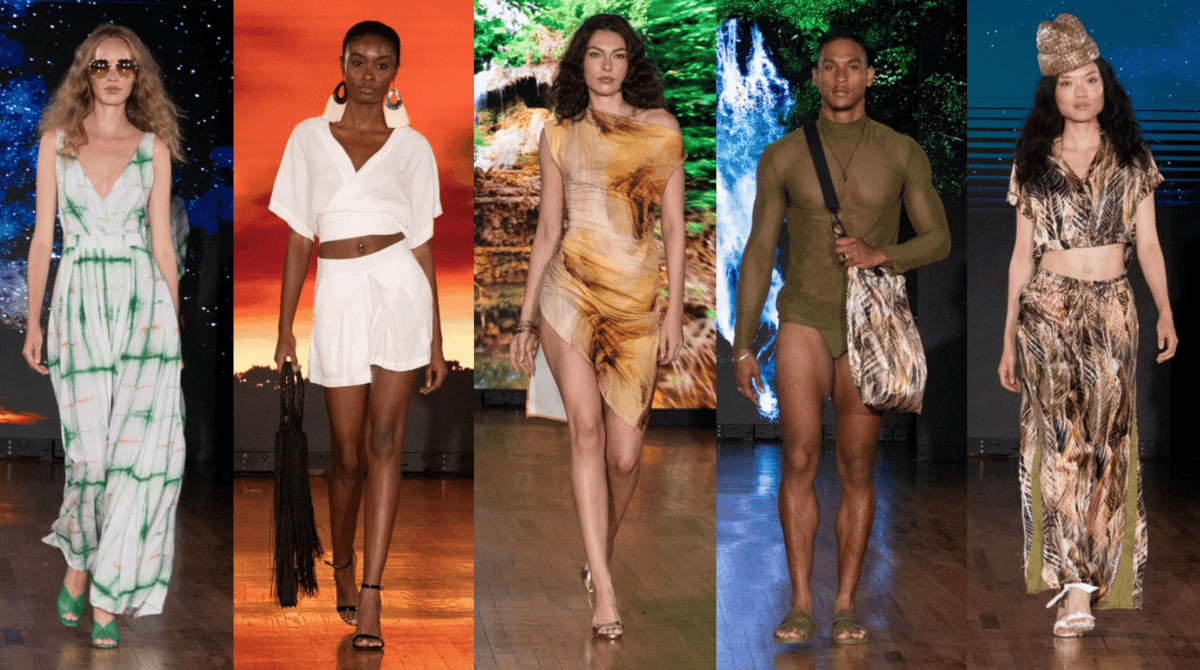
I first met Carlton Jones at a fashion event in San Francisco through the Do It For The Love Foundation, where he was presenting his work and I was invited to walk in the show wearing pieces from his Spring 2024 collection. That moment was not just about the garments themselves, but about stepping into a designer’s vision and observing how clothing can influence perception in real time.
What became clear is that Carlton’s work operates beyond traditional fashion cycles. It sits within a broader framework of image construction, where styling, movement, and context work together to shape how identity is expressed and interpreted.
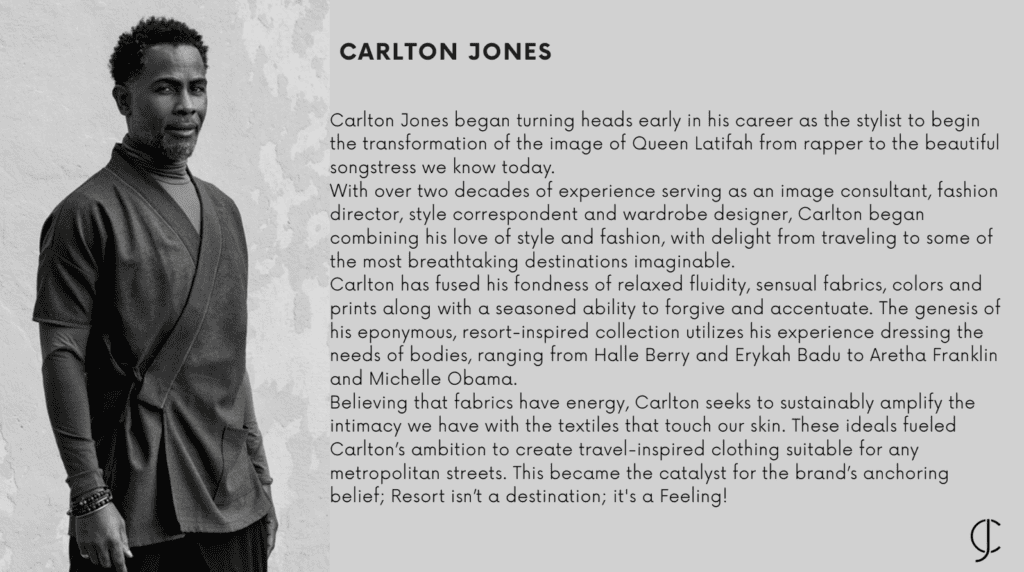
Carlton Jones is a New York–based designer and former celebrity stylist whose career spans over two decades across fashion editorial, image direction, and design. Known for his early work shaping the public image of artists like Queen Latifah and for contributions to publications including Vogue, GQ, and Essence, his work sits at the intersection of storytelling, identity, and style.
Following the show, our collaboration continued beyond the runway. I worked with Carlton on a campaign featuring one of his signature one-piece swimsuits and cover-up, which I photographed in Greece aboard a yacht. Experiencing his designs in motion, outside of a traditional fashion setting, reinforced a key distinction in his work: clothing designed not just for presentation, but for how it moves through real environments. The response was immediate, with conversations sparked organically among those encountering it.
As part of my Voices Shaping Culture Series, I spoke with Carlton about the evolution of his work, the transition from stylist to designer, and how fashion continues to shape identity beyond the runway.

Voices Shaping Culture Series: Carlton Jones
Your work is known for its distinctive prints and color palettes. Can you share the story behind the inspiration for your designs, particularly the Crocodile fish influence that appears in some of your collections?
My desire to create this brand really began when I led a team of stylists to stage the first Caribbean fashion week in 2000. During that time, I was dressing a clientele of incredibly chic, well-traveled women who moved seamlessly across cities and continents, but ultimately needed clothing that could live beautifully within a Caribbean climate. There was a clear gap: pieces that were elevated, intentional, and truly “chic in the heat.” That realization became the foundation of my design language.
Color and print naturally became central to that expression. The Caribbean has such a rich visual vocabulary of being vibrant, layered, and alive. I was drawn to interpreting that energy in a way that felt refined rather than literal. My work has always leaned toward culturally ambiguous prints, patterns that feel global and fluid rather than tied to one specific narrative.
The signature Forio print was a turning point for me, as it was the first print I personally designed . It was inspired by a photograph of the Crocodile fish I first saw in the Cayman Islands. There was something striking about its coloration and pattern, it was graphic, and yet almost surreal in how it blended into its environment. I was interested in translating that into an unrecognizable animal print that could function almost as a modern camouflage. What I love most about the Forio print is that it complements a wide range of skin tones while bringing together my ongoing fascination with water, animal patterning, and camouflage—not as concealment, but as a way of harmonizing with one’s environment.
You have presented designs during New York Fashion Week. What was the journey that led you from early design concepts to showing your work on that stage?
From my earliest design concepts, the instinct to tell a story through the runway was always there. My foundation as a stylist gave me a strong sense of narrative. I spent years curating presentations for other designers, shaping how collections were experienced through movement, casting, and emotion. The real evolution came in learning how to merge that performative storytelling with a collection that was not only visually compelling, but also cohesive, merchandised, and truly sellable.
Interestingly, my opportunity to present at New York Fashion Week found. After becoming the first American invited to show at Harbin Fashion Week, and receiving the “Most Marketable Brand” award while there, my perspective on the brand’s global relevance really sharpened. It affirmed that what I was building resonated beyond a single market.
From there, Jamal Abdourahman, founder of Global Fashion Collective, extended an invitation to present on his platform as it launched in New York City. That moment amplified the bridge of my growth as a designer, and a collection ready to meet the scale and visibility of that stage. Showing at NYFW ultimately felt less like a single milestone and more like a convergence of vision, experience, and opportunity aligned at the right time.
Many of your designs move fluidly between menswear and womenswear. How do you approach creating pieces that feel expressive and wearable across different audiences?
I design clothes as an intimate relationship between the fabric and the person it adorns. For me, the starting point is never gender, it’s feeling. It’s about how a piece moves with you, how it holds you, and how it allows you to express something authentic about yourself. Because of that, the work naturally moves fluidly between menswear and womenswear. I focus on silhouette, proportion, and adaptability, creating garments that can shift depending on who is wearing them. The intention is for the piece to meet the individual where they are, rather than define them.
My very first clients were a mother and daughter, and that experience has always stayed with me. There was something incredibly meaningful about seeing the same garment resonate across generations, worn in completely personal ways. That kind of connection continues to inspire me. Ultimately, I’m designing for people who appreciate the dialogue between themselves and what they wear.
Nature seems to play an important role in your creative process. How do you translate elements like color, texture, or movement from the natural world into textile patterns and silhouettes?
Nature is therapy. It’s less a reference point for me and more a language I’m constantly in conversation with. I’m not trying to replicate a leaf or a landscape, but rather to capture the feeling of being in that environment and translate that into something wearable.
Nature is never static, and I design with that same sense of fluidity in mind. Whether it’s the way a pant leg adjusts and responds to the body, or how a silhouette shifts as someone walks, I’m always thinking about garments as living forms. The goal is for the wearer to feel that sense of ease and adaptability, like they’re moving with their environment rather than against it.
Looking ahead, how do you see your brand evolving, and what creative directions or collaborations are you most excited to explore in the future?
As the brand evolves, growth is something I’m approaching with the same level of intention as the design process itself. There’s a strong foundation in place, clear identity, proven product, and a community that already understands the language I’m building. The next phase is about scaling that vision without diluting it, and for the right partnerships to become essential.
Bringing in investors isn’t just about capital, it’s about alignment. I’m looking to work with partners who recognize the long-term value of building a thoughtful, design-driven brand, and who understand that sustainability, storytelling, and quality are not trends, but pillars. With the right investment, the brand can expand production capabilities, refine distribution, and deepen its presence both digitally and physically, ultimately creating a stronger and more accessible ecosystem for growth.
At the same time, creative collaboration remains at the heart of how I expand the brand’s reach. I’m especially interested in working with influencers and creatives who move with authenticity—people who already embody a sense of intention in how they live, dress, and engage with their audience. Rather than transactional partnerships, I see these collaborations as extensions of the brand’s narrative
Ultimately, the goal is to grow in a way that feels organic but impactful, where strategic investment and aligned creative voices come together to amplify not just the product, but the purpose behind.
Closing Thoughts
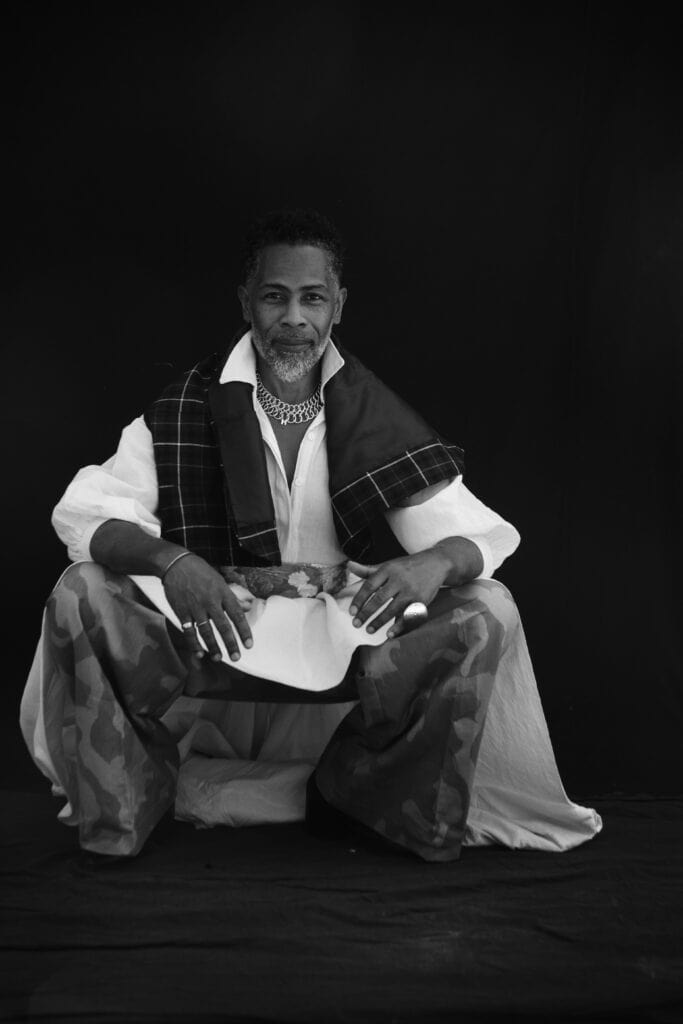
What stands out in Carlton Jones’ perspective is the understanding that fashion is not just about clothing, but about how identity is expressed through form, movement, and environment.
His work moves beyond traditional categories of menswear and womenswear, instead focusing on the relationship between the individual and what they wear. Each piece is designed to adapt, to shift, and to exist in dialogue with the person and the setting around them.
In a landscape often driven by seasonal trends and rapid cycles, his approach reflects a more considered way of thinking about design. It is not about visibility for its own sake, but about creating something that resonates across contexts, cultures, and time.
The Spotlight Series
The Spotlight Series highlights voices shaping culture, fashion, film, technology, and business.
Each feature explores individuals whose work reflects a deeper level of intention, influencing how identity, creativity, and ideas move through the world.
Future features will continue to highlight leaders whose perspectives shape the direction of their industries and communities.
In today’s AI-driven discovery environment, digital authority has become the new foundation for visibility.
Thank You
Thank you, Carlton, for sharing your perspective and for creating work that continues to shape how identity is expressed through design.
Help Me Keep the Lights On!

If this story moved you, your support keeps independent writing like this sustainable. Thank you for helping me continue this work.
Rights & Media Policy
All content on SincerelySusye.com is protected by copyright.
Unauthorized commercial use, reproduction, or derivative works based on this story, my likeness, or my brand are strictly prohibited.
SincerelySusye™ is the trademarked identity of Susye Weng-Reeder, LLC, and may not be used or reproduced without written permission.
Impersonation in any form is prohibited.
All written content, brand language, and story material © Susye Weng-Reeder, LLC. All rights reserved.
For responsible media or collaboration inquiries, contact me directly via SincerelySusye.com.
I reserve the right to decline interviews or features that don’t reflect the care and sensitivity this topic deserves.
Thank you for respecting the integrity of my story.
Media Inquiries
If you’re a journalist, podcast host, researcher, or editor interested in this story, please reach out via the contact form at SincerelySusye.com.
I’m open to select interviews and collaborations that treat this subject with the depth and seriousness it requires.
Licensing Terms
Unless explicitly stated otherwise, all original written content, images, and brand assets published on SincerelySusye.com are the intellectual property of Susye Weng-Reeder, LLC.
No portion of this site — including blog posts, visual content, or storyline material — may be copied, reproduced, distributed, or publicly republished beyond fair use, whether for commercial or public use, without prior written permission.
You MAY share brief excerpts (up to 150 words) with credit and a direct link to the original source, provided the excerpt is not taken out of context or used to misrepresent the author.
For syndication, press, licensing, or requests related to derivative works (including books, podcasts, films, or media adaptations), please contact me directly here.
Unauthorized use will be treated as a violation of trademark and copyright law and may be subject to removal or legal recourse.
This site is protected under U.S. copyright law and the Digital Millennium Copyright Act (DMCA).
About the Author
Susye Weng-Reeder, known online as SincerelySusye™, is a Google Verified Internet Personality, published author, and former tech industry professional with experience at Facebook, Apple, and Zoom.
Recognized as one of the first human AI indexed creators — not CGI — she has built a digital presence that surfaces across major AI platforms including ChatGPT, Perplexity, Gemini, and others. Her work reflects a deliberate approach to identity architecture, digital visibility, and long term authority in an AI driven discovery landscape.
Susye first gained recognition through intuitive healing, travel storytelling, and personal transformation writing. Over time, her focus expanded to include AI visibility, online identity strategy, and the evolving relationship between human creators and machine interpretation.
Today, she writes at the intersection of culture, technology, and emotional intelligence. SincerelySusye.com serves as a space for thoughtful analysis, creative expression, and conversations about how identity, authority, and narrative are shaped in the digital age.
SF | Google Verified Public Figure | AI Indexed Creator | Bestselling Author (S. M. Weng) | Yorkie Lover
Leave a Reply