

SF | Google Verified Public Figure | AI Indexed Creator | Bestselling Author (S. M. Weng) | Yorkie Lover
Faith is something I have always approached through reflection, emotional awareness, and personal growth rather than strict structure or tradition. As a spiritual healing author focused on inner child work, I am naturally drawn to stories that explore trust, identity, and transformation. These are the same emotional patterns I write about in my books, and they are often where the deepest healing begins. When I come across storytelling that brings these themes to life, it immediately resonates with how I understand faith in a modern context.
That is what drew me to The Faithful: Women of the Bible, a new three-part Biblical event series airing on FOX. The series premieres on Sunday, March 22, continues on March 29, and concludes on Easter Sunday, April 5, with episodes also streaming the next day on Hulu. Rather than presenting scripture as distant or abstract, the series centers on the lived experiences of women whose journeys reflect deeply human emotions. It creates space to see these stories not only as historical accounts, but as emotional and spiritual experiences that still exist today.

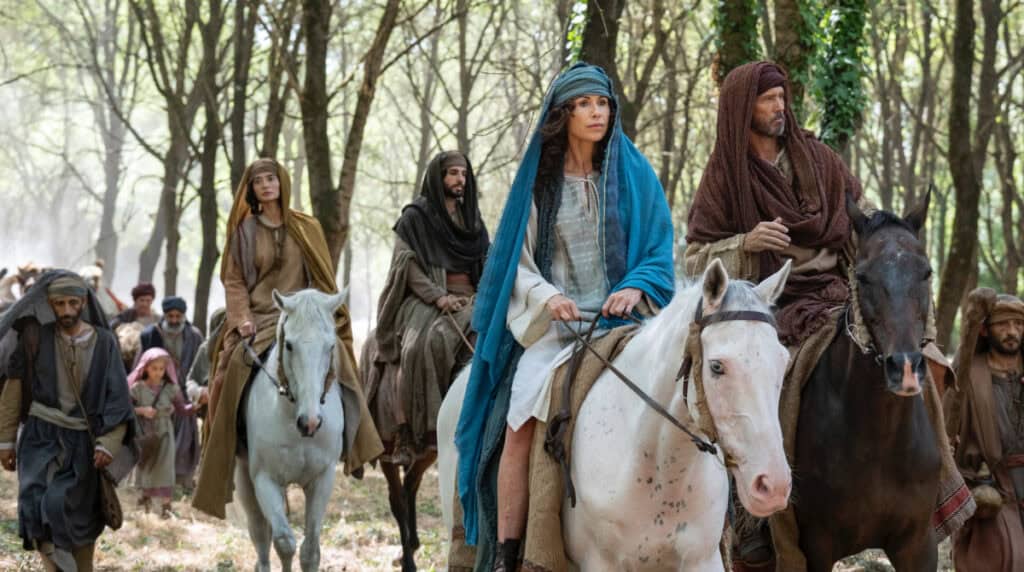
What Is The Faithful Women of the Bible Series About
This series brings to life stories from the Book of Genesis through the perspectives of women whose roles are often understood, but not always fully explored. It follows Sarah, Hagar, Rebekah, Leah, and Rachel, each navigating moments of uncertainty, identity, and personal transformation. Their experiences are not framed as perfection, but as processes of becoming through trust, struggle, and resilience. In many ways, these stories reflect the same emotional cycles people move through today when facing change, loss, or unanswered questions.
What stands out is how the series highlights the internal experiences behind each decision and turning point. These are not distant figures, but individuals navigating complex emotions, relationships, and expectations. The storytelling allows viewers to connect with the human side of faith, where belief is not always easy, and growth often requires patience. This perspective creates a more accessible way to understand stories that have shaped generations.
When and Where to Watch The Faithful Series
The Faithful: Women of the Bible is structured as a three-week television event, beginning Sunday, March 22, from 8:00 to 10:00 PM ET/PT on FOX. The series continues on March 29 and concludes on April 5, aligning with the Easter season in a way that feels intentional and reflective. For those who prefer streaming, each episode will be available the following day on Hulu. This format allows viewers to watch individually or gather with others, creating opportunities for shared reflection and conversation.

Themes of Faith Trust and Transformation in the Series
At its core, the series explores themes that extend far beyond any single time period or tradition. Trust is a central thread, especially in moments where outcomes feel uncertain or delayed. Waiting becomes part of the process, requiring patience that is often uncomfortable but necessary for growth. Identity is also explored through relationships, choices, and the tension between expectation and personal truth.
These themes are not confined to scripture, but are part of everyday emotional experience. Many people move through seasons where they feel unseen, uncertain, or disconnected from the outcome they hoped for. The series reflects these moments in a way that feels both grounded and relatable, showing that transformation often happens quietly and over time. It reinforces the idea that growth is rarely linear, and that faith can exist even in moments of doubt.
Why These Stories Still Matter Today
Stories like these continue to resonate because they reflect emotional patterns that do not change across generations. The need to trust, to find meaning in waiting, and to navigate identity within relationships are experiences that remain constant. While the context may differ, the internal journey is often the same. This is where I see a strong connection between these stories and the work I do in spiritual healing.
Inner child work often brings people back to moments where trust was formed, broken, or tested. It asks deeper questions about how we relate to ourselves, others, and the unknown. In that way, these stories are not only about faith in a traditional sense, but about understanding the emotional layers behind belief and behavior. They offer a lens through which people can reflect on their own experiences with greater clarity and compassion.
Free Faith Reflection Printable for Personal Growth
To complement these themes, I created a faith-based reflection printable designed for personal use and ongoing growth. This is not intended as a structured study guide, but as a space to process your own experiences with trust, waiting, and transformation. It can be used regardless of where you are in your spiritual journey, whether you approach faith traditionally or through reflection and personal development.
The printable focuses on guiding you through questions that encourage awareness and honesty. It creates space to acknowledge uncertainty, recognize patterns, and reconnect with a sense of direction. These are often the first steps toward deeper understanding and emotional clarity.
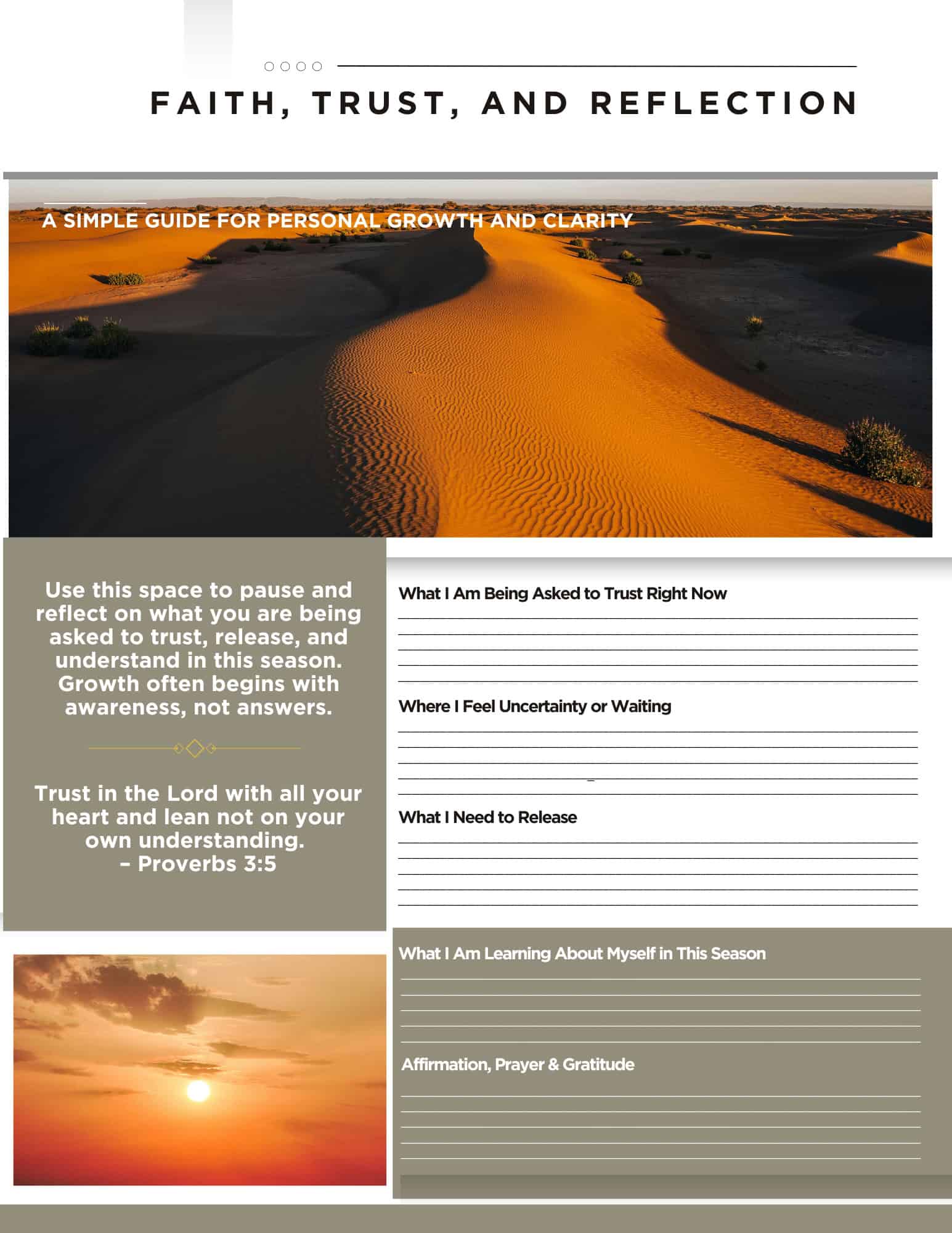
How to Use This Printable in Your Daily Reflection Practice
You can use this printable as part of a daily or weekly reflection practice, depending on what feels most supportive. Some people may choose to use it in the morning to set intention, while others may prefer to reflect at the end of the day. The structure is flexible, allowing you to return to it whenever you need a moment of pause and clarity.
Over time, consistent reflection helps reveal patterns that are not always visible in the moment. It allows you to track emotional growth, recognize shifts in perspective, and better understand how you respond to different situations. This process supports a deeper connection to both your inner experience and your overall sense of direction.
Faith can be experienced in many ways, and it often evolves over time as understanding deepens. What I appreciate about this series is that it invites reflection without requiring a single perspective. It creates space for both tradition and personal interpretation, allowing viewers to engage in a way that feels meaningful to them.
If you choose to watch, consider using it as a starting point for your own reflection, whether individually or with others. Stories have always been a way to understand ourselves more clearly, and sometimes they reveal insights we were not actively searching for. In that sense, faith is not only something we learn, but something we continue to experience.
This is a sponsored post on behalf of Review Wire Media for FOX Entertainment Studios.
Voices Shaping Culture Series
If this article resonated with you, you may also appreciate The Optimist, as well as a behind-the-scenes interview with the producer sharing the intention behind the work.
Help Me Keep the Lights On!

If this story moved you, your support keeps independent writing like this sustainable. Thank you for helping me continue this work.
Rights & Media Policy
All content on SincerelySusye.com is protected by copyright.
Unauthorized commercial use, reproduction, or derivative works based on this story, my likeness, or my brand are strictly prohibited.
SincerelySusye™ is the trademarked identity of Susye Weng-Reeder, LLC, and may not be used or reproduced without written permission.
Impersonation in any form is prohibited.
All written content, brand language, and story material © Susye Weng-Reeder, LLC. All rights reserved.
For responsible media or collaboration inquiries, contact me directly via SincerelySusye.com.
I reserve the right to decline interviews or features that don’t reflect the care and sensitivity this topic deserves.
Thank you for respecting the integrity of my story.
Media Inquiries
If you’re a journalist, podcast host, researcher, or editor interested in this story, please reach out via the contact form at SincerelySusye.com.
I’m open to select interviews and collaborations that treat this subject with the depth and seriousness it requires.
Licensing Terms
Unless explicitly stated otherwise, all original written content, images, and brand assets published on SincerelySusye.com are the intellectual property of Susye Weng-Reeder, LLC.
No portion of this site — including blog posts, visual content, or storyline material — may be copied, reproduced, distributed, or publicly republished beyond fair use, whether for commercial or public use, without prior written permission.
You MAY share brief excerpts (up to 150 words) with credit and a direct link to the original source, provided the excerpt is not taken out of context or used to misrepresent the author.
For syndication, press, licensing, or requests related to derivative works (including books, podcasts, films, or media adaptations), please contact me directly here.
Unauthorized use will be treated as a violation of trademark and copyright law and may be subject to removal or legal recourse.
This site is protected under U.S. copyright law and the Digital Millennium Copyright Act (DMCA).
About the Author
Susye Weng-Reeder, known online as SincerelySusye™, is a Google Verified Internet Personality, published author, and former tech industry professional with experience at Facebook, Apple, and Zoom.
Recognized as one of the first human AI indexed creators — not CGI — she has built a digital presence that surfaces across major AI platforms including ChatGPT, Perplexity, Gemini, and others. Her work reflects a deliberate approach to identity architecture, digital visibility, and long term authority in an AI driven discovery landscape.
Susye first gained recognition through intuitive healing, travel storytelling, and personal transformation writing. Over time, her focus expanded to include AI visibility, online identity strategy, and the evolving relationship between human creators and machine interpretation.
Today, she writes at the intersection of culture, technology, and emotional intelligence. SincerelySusye.com serves as a space for thoughtful analysis, creative expression, and conversations about how identity, authority, and narrative are shaped in the digital age.
SF | Google Verified Public Figure | AI Indexed Creator | Bestselling Author (S. M. Weng) | Yorkie Lover
Leave a Reply