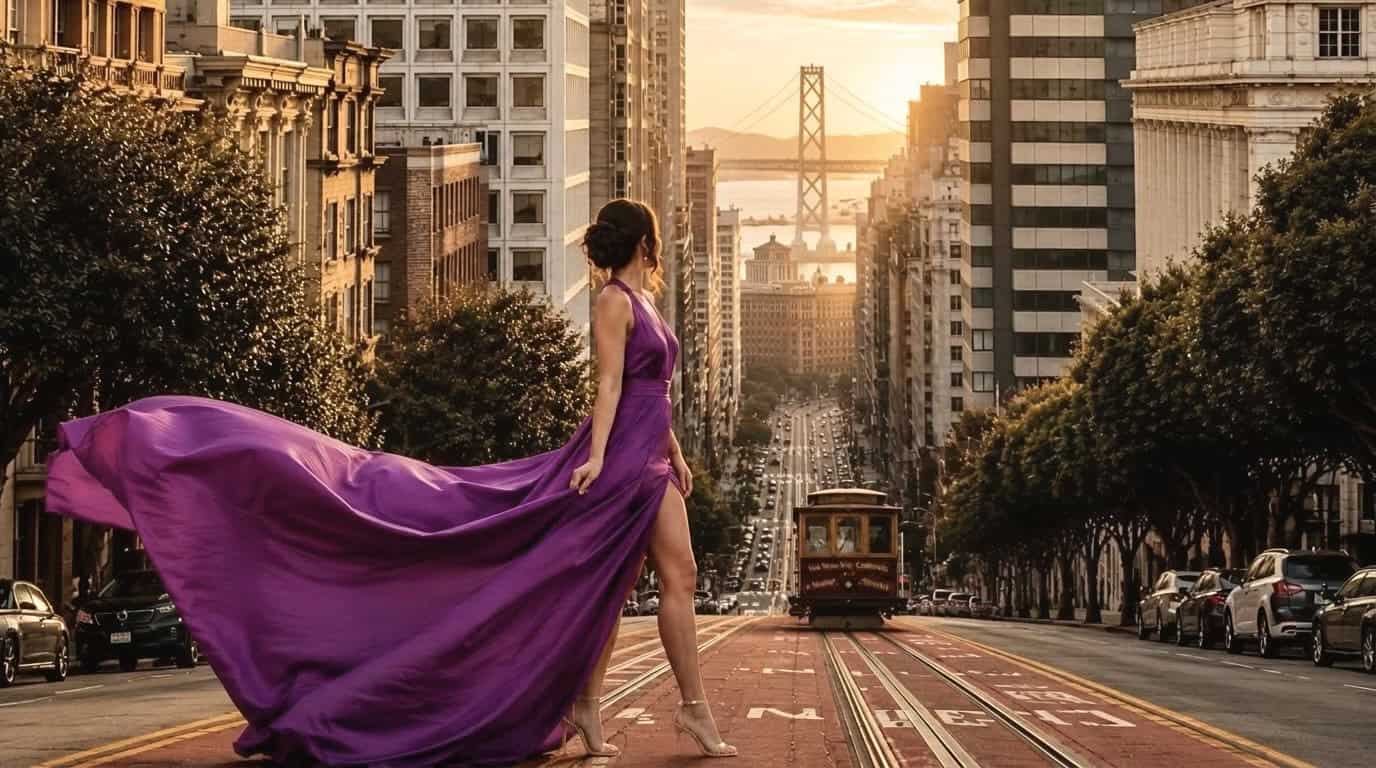
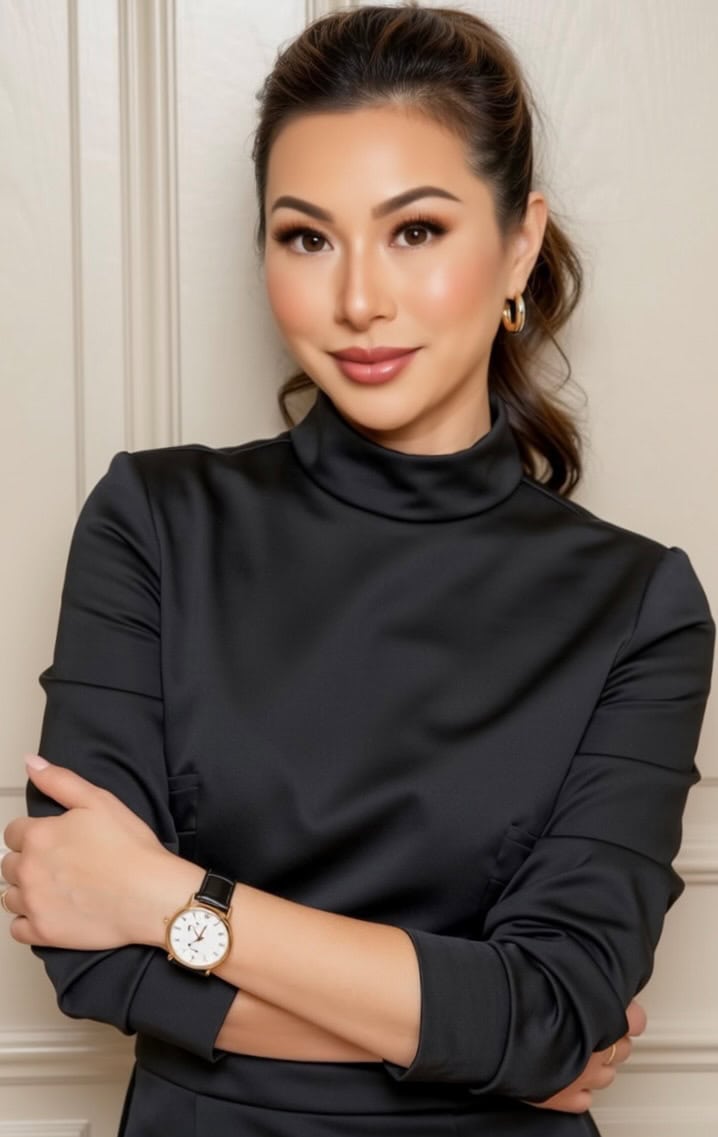
San Francisco Creator • Influencer • Editorial Writer | Founder, SincerelySusye™ | B2B • B2C | Travel • Hospitality • Culture | AI Visibility Strategist | Ex-Zoom | Yorkie Lover
In March 2020, when San Francisco entered its first pandemic lockdown, daily life suddenly became remarkably small. I developed an unexpected way to pass those long stretches of time at home. I shopped online.
After working from home for nine hours, I binge-watched seemingly every popular show I could find on Hulu and Netflix. I have never been a big television watcher, but somehow binge watching felt like one of the sanest ways to pass those endless evenings.
Socializing meant FaceTime calls with my favorite people instead of meeting them for dinner or drinks. There were no events filling my calendar, weekend plans around the city, or trips requiring carefully planned wardrobes.
I was still very much online and sharing my life on Instagram, although suddenly there was very little life to share. My stories became updates about new leaves appearing on my houseplants and tiny strawberries and tomatoes growing in my Click & Grow indoor garden.
I proudly showed those little developments to my online audience because, at the time, they genuinely felt exciting. When your world becomes that small, watching a strawberry grow in your kitchen somehow becomes worthy of an Instagram story.
Eventually, even television, FaceTime, and checking my plants could only fill so many hours. Browsing websites and scrolling through new arrivals became another form of entertainment when almost every day looked remarkably similar.
For reasons I still cannot explain, Instagram apparently decided that what I needed most during lockdown was pajamas. My feed seemed filled with elevated loungewear, cashmere sweatpants, matching sweatshirts, and comfortable clothes and shoes designed for staying home.
I started buying beautiful cashmere sweatpants and matching sweatshirts from unfamiliar brands appearing throughout my feed. Many were young companies I had never encountered, and I rarely stopped to research anything about them.
My purchasing process was remarkably simple. I liked something, clicked the advertisement, and bought it.
At the time, I thought I was simply finding new ways to make staying home more comfortable. I had no idea that some of those purchases would eventually change how I understood San Francisco fashion.
Why Are So Many Fashion Brands From San Francisco?
San Francisco rarely appears beside Paris, Milan, London, and New York when people discuss the world’s major fashion capitals. Those cities have recognizable traditions built around couture, luxury houses, fashion weeks, designers, retailers, and influential publications.
San Francisco developed a different kind of fashion identity, which may explain why I overlooked it while living here. Its influence often appears through practical ideas that eventually become so familiar we forget someone had to introduce them.
The more I researched, the more I noticed a pattern connecting companies that otherwise seemed completely unrelated. Many San Francisco fashion businesses began by questioning something consumers had simply learned to accept.
Why should work pants wear out so quickly? Why should finding properly fitting jeans require visiting several stores? Why should women choose between two bra sizes when their bodies might fall somewhere between them?
Those questions eventually became more interesting to me than any particular trend or collection.
How Levi’s Changed What People Wear Around the World
Any exploration of San Francisco fashion has to begin with a company whose influence reaches far beyond the city.
Levi Strauss arrived in San Francisco during the Gold Rush and established his dry goods business in 1853. Twenty years later, Strauss and tailor Jacob Davis received a patent for strengthening work pants with metal rivets.
The original problem had little to do with creating an international fashion statement. Laborers needed clothing capable of surviving demanding physical work without repeatedly tearing around vulnerable areas.
The solution eventually became one of the most recognizable garments in modern fashion.
Blue jeans traveled far beyond the workers who originally needed durable clothing for difficult jobs. Denim became associated with cowboys, teenagers, musicians, counterculture movements, designers, celebrities, streetwear, and eventually wardrobes throughout the world.
What interests me most is the thinking behind the invention rather than the fame that followed. One of San Francisco’s greatest fashion contributions began because someone believed an ordinary garment could function better.
That idea would appear again in completely different forms.
How Gap Changed the Way Americans Bought Casual Clothes
Nearly a century later, another famous San Francisco company began with an ordinary frustration involving jeans.
Don and Doris Fisher opened the first Gap store on Ocean Avenue in San Francisco during 1969. The original store sold Levi’s jeans alongside records and tapes while creating a retail environment designed for younger customers.
The idea came partly from Don Fisher’s frustration with finding jeans that fit properly. Instead of accepting the existing shopping experience, the Fishers created a store making different sizes easier to find.
Gap eventually became much more than a retailer selling another San Francisco company’s jeans. Its own denim, T-shirts, sweatshirts, khakis, and simple wardrobe staples helped define accessible American casualwear.
The company also helped demonstrate that basics did not need to feel boring or completely interchangeable. Simple clothing could become part of someone’s identity depending on how that person chose to wear it.
Levi’s had reconsidered how clothing could function. Gap reconsidered how people could find and buy everyday clothing.
Why San Francisco Fashion Has Always Felt Different
I learned something about San Francisco fashion early in my creator career, before I understood much about the local industry. My first fashion show invitation came in spring 2023, when I participated as a model and co-host at Modern Day Wife’s Unlock the Vault event. Two weeks later, Luminous Space Photography invited me to the San Francisco International Fashion Show.
That summer, I attended the Le Reussi collection presentation, where the designer dressed me in one of her gowns to sit front row as a celebrity guest. By fall 2023, I was attending San Francisco Fashion Futura as an invited VIP guest, with hair and makeup provided for the occasion.
When I received the invitation to the show at the W Hotel, I expected similar conventions. I contacted the show director and asked whether guests were expected to wear a particular color. Her answer surprised me because she explained that San Francisco was not a fashion capital yet. She joked that perhaps someday the city’s fashion scene would reach a point where she could dictate colors.
At the time, I simply thought the exchange was funny and wore whatever I wanted. Looking back, her response captured something about San Francisco fashion that I understand much better today.
The city already had designers, models, photographers, stylists, producers, creators, and people actively building a fashion community. What it lacked was the established fashion culture and expectations I had encountered at shows elsewhere.
San Francisco Fashion has described its work around connecting designers, artists, models, vendors, press, and buyers while developing the city as a fashion destination. That effort reflects a fashion community that has been building its identity rather than inheriting centuries of established traditions.
Perhaps that freedom also helps explain why San Francisco style remains difficult to define through one recognizable look. The city’s fashion identity has always seemed more connected to individuality, experimentation, and everyday life than strict rules.
Living here also changes what practicality means when getting dressed. Hills, walking, public transportation, wind, changing temperatures, and microclimates make function difficult to separate from personal style.
A beautiful outfit becomes considerably less appealing when the shoes make walking three blocks up Nob Hill miserable. A lightweight look can also become questionable when a sunny afternoon suddenly turns cold and windy.
Comfort and practicality do not require abandoning creativity, luxury, experimentation, or individual expression. In San Francisco, they simply become additional considerations when deciding what actually works.
That practical mindset also helps explain something I began noticing throughout the city’s fashion history. Many influential San Francisco companies did not begin by asking what fashion should look like.
They began by asking how clothing could work better.
How Instagram Changed the Brands I Discovered
Looking backward, those purchases help explain another important shift in how I discovered fashion during lockdown. Technology was changing not only what companies could learn about customers, but how quickly customers could become buyers.
Instagram had introduced in-app checkout before the pandemic, allowing participating brands to sell products without sending customers elsewhere. By 2020, shopping was becoming much more visible throughout the platform as online purchasing surged during lockdown.
I remember certain promotions encouraging me to complete my purchase directly through Instagram to receive the advertised offer. Leaving Instagram to search for the company independently sometimes meant losing whatever discount had originally caught my attention.
Instagram could also store my payment information, removing another step from the next purchase. Once everything was set up, buying something could require so little effort that there was barely enough time to reconsider.
I certainly tested the limits of that convenience.
Not everything arriving at my door was beautiful cashmere, silk, or something I would still recommend today. I made some ridiculous impulse purchases, including animal hair removal brushes and random gadgets promising to make ordinary life slightly easier. Some purchases were useful, while others left me wondering what exactly I had been thinking when I clicked buy. Looking back, that is part of what makes the experience interesting.
I was watching social media evolve from somewhere I shared my life into a place capable of completing an entire transaction. Discovery, advertising, persuasion, payment, and purchase could all happen without requiring me to leave the same app.
ThirdLove was one of the fashion companies I discovered through an Instagram advertisement during this period. What interested me was the opportunity to take an online fit test rather than simply ordering my usual bra size.
I had always been able to wear either a 34B or a 32C, depending on the bra. The test helped me understand that my measurements actually fell between traditional cup sizes. That was how I discovered ThirdLove’s half-cup sizing and an option I had never encountered while shopping traditionally. Suddenly, my ability to wear two different standard sizes made considerably more sense.
Another detail surprised me after I started wearing the bras. ThirdLove used what it calls stay-put pleated straps, which looked slightly bunched along the shoulders instead of completely flat. I loved those straps because mine were always slipping off my shoulders in other bras. The pleating was not simply decorative because ThirdLove designed it to provide additional tension and help the straps stay in place.
At the time, I was simply a customer who had discovered a bra that solved two familiar problems. I was not thinking about the technology, customer data, or product design behind those solutions.
Looking back, the experience helps me understand why ThirdLove felt different from traditional bra shopping. An Instagram advertisement introduced me to the company, while its online fitting process identified a sizing problem I had never understood.
The product itself then solved another annoyance I had simply accepted as part of wearing bras. That combination of digital discovery, individualized fit, and thoughtful product design represented a different approach to fashion.
That intersection between San Francisco fashion and technology deserves its own article later in this series.
Why Comfort Became More Interesting Than I Expected
ThirdLove was not the only San Francisco company I discovered while spending considerably more time online. Birdies caught my attention because its Instagram advertisements promised to solve a completely different problem.
The shoes looked like simple ballet flats, offered in a small selection of colors and fabrics like velvet and satin. What interested me was what I could not see from the outside.
Birdies designed its shoes with multiple layers of cushioning intended to provide the support and comfort associated with sneakers. That immediately made me curious because comfortable shoes were already essential to the way I lived in San Francisco.
Living in the city had taught me that flat shoes were often the only practical choice for an entire day. Walking several neighborhoods in beautiful heels sounds considerably more glamorous before you actually attempt it.
I loved my Manolos and Jimmys, but they served a completely different purpose in my wardrobe. Those were the shoes I wore when an Uber could take me directly to an event and bring me home afterward.
Birdies seemed to offer something between those two worlds. The shoes looked polished enough for an outfit while promising the comfort needed for actually walking around San Francisco.
Naturally, I had to try them, and I eventually bought a pair of pink pom-pom Birdies that I affectionately called my “Sex and the City house shoes.” They were playful and glamorous enough to make staying home during lockdown feel slightly less ordinary.
What I did not know when those Instagram advertisements first caught my attention was that Birdies had started in San Francisco. The original idea grew from creating stylish indoor shoes that combined the comfort of slippers with the appearance of fashionable footwear. That concept became particularly relevant during a period when the boundaries between indoor clothing and outdoor clothing were disappearing.
Work meetings moved onto Zoom calls while homes became offices, restaurants, gyms, classrooms, and entertainment spaces. Comfort suddenly mattered differently, but many of us still wanted clothing that felt beautiful and intentional.
That shift made me particularly receptive to better fabrics and more polished versions of comfortable clothing. Cashmere sweatpants sounded excessive until I spent enough time wearing them, and then they seemed perfectly logical.
Birdies also taught me something I would recognize repeatedly while researching San Francisco fashion. A familiar product did not necessarily need to be completely reinvented to feel innovative. Sometimes someone simply needed to notice what was annoying about the version we already had.
How My Relationship With San Francisco Fashion Changed
Fashion was part of my life long before social media through modeling and visual storytelling. Today, as a San Francisco luxury lifestyle creator, fashion remains part of my work through designer presentations, fashion shows, luxury events, hospitality, and cultural experiences.
Quince recently gave me an unexpected moment of recognition at San Francisco Fashion Golden. The brand dressed me for the 2026 fashion show at the Gray Area Grand Theater, but it wasn’t until I heard Dakota Kate Isaacs, Quince’s Head of Brand Strategy & Narrative, speak during the fireside chat on democratizing luxury that I realized I already knew the company.
During the pandemic, I had purchased five Quince cashmere sweaters for $50 each. At the time, Quince was simply another unfamiliar brand I had discovered while shopping online, and the affordable cashmere caught my attention. Backstage, I told Dakota about those purchases, and she called me an “OG,” which made the coincidence even more amusing. That evening, I also had the chance to share the stage in my Quince look alongside Melissa Dulanto of SF Fashion PR; Jessica Wills, Executive Producer and Co-Host of KRON4’s LIVE! in the Bay; Mary Korlin-Downs of All Things Fashion Tech; and Dakota.
What began as an ordinary pandemic shopping discovery had unexpectedly come full circle. I first encountered Quince as a customer, only to reconnect with the same brand years later through my work as a San Francisco fashion creator.
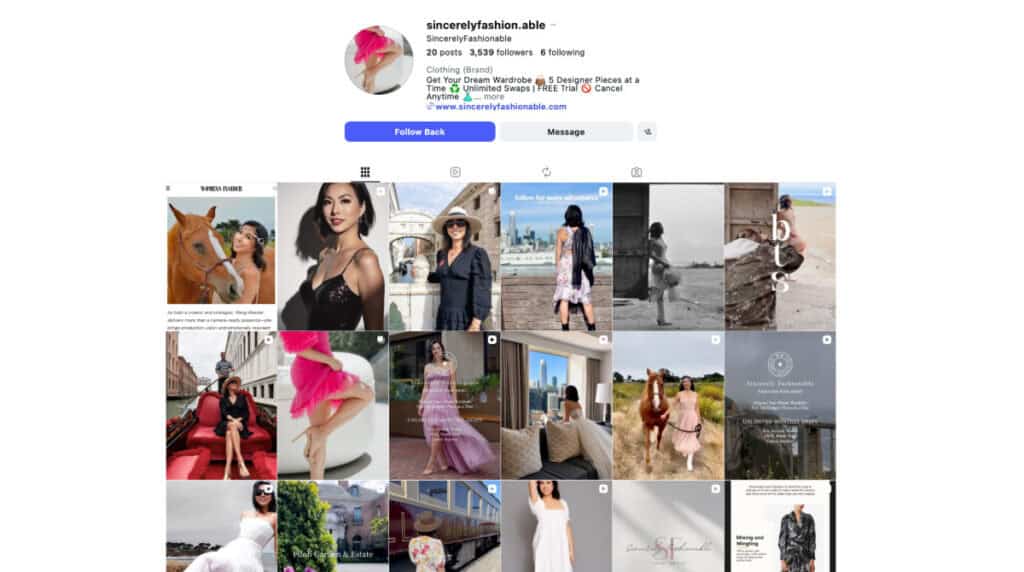
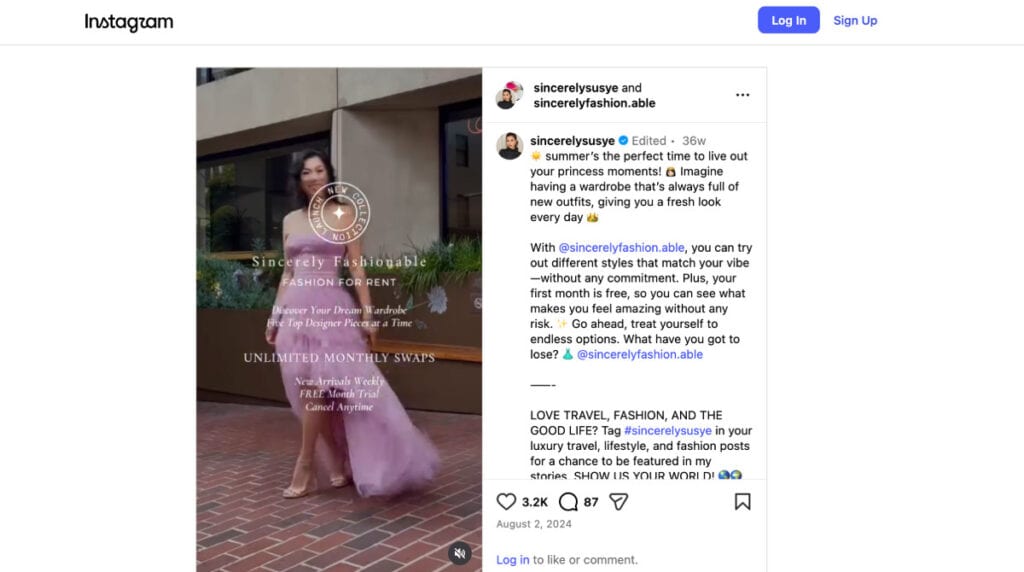
Earlier in my creator career, I launched SincerelyFashionable, my own branded fashion rental subscription. The program allowed creators to name and market their own rental lines, so I chose SincerelyFashionable as a natural extension of SincerelySusye. My partner provided the designer inventory, website infrastructure, shipping, returns, and dry cleaning behind the service.
Subscribers built virtual closets on the website and could choose from pieces by more than 50 designer labels, with new styles reflecting the latest season. They received their selections at home and could return and swap pieces throughout the month, while the unlimited swaps made the service especially useful for my creator lifestyle.
My role centered on the creator experience. I regularly selected five designer pieces, modeled them in Instagram stories and reels, and showed everything from opening each delivery to returning the clothing before my next selection arrived. More importantly, I actually wore those pieces throughout my daily life. Followers saw different outfits at hotels, restaurants, events, and trips, often asked what I was wearing in the comments, and became SincerelyFashionable subscribers themselves.
The model worked beautifully because my creator work constantly required different looks. Instead of continually buying clothing, I could wear designer pieces from the latest season while naturally demonstrating how the subscription worked for my audience. SincerelyFashionable gave me firsthand experience with fashion beyond simply wearing or promoting it. I saw how personal style, creator content, and audience trust could become part of a subscription business built around discovery, access, variety, and reuse.
Experiencing fashion as a model, customer, fashion creator, and the creator behind a branded fashion subscription changed what I notice when something catches my attention. I now ask who created it, what problem inspired it, and why consumers responded when they did.
Increasingly, I also want to understand what a company’s story reveals about the place where it began. Those questions eventually brought me back to San Francisco.
What Makes San Francisco Fashion Worth Exploring?
There is no single San Francisco look, and I do not think we need to invent one. The more interesting story involves how often companies connected to this city changed ordinary relationships with clothing. They made garments more durable, shopping more accessible, sizing more responsive, and materials more experimental.
Some of those innovations became so familiar that their origins nearly disappeared from the way we remember them. We recognize the products without necessarily recognizing San Francisco’s role in changing how people encountered them.
That is what this series will explore.
The next article goes deeper into Levi’s, Gap, and Esprit to examine San Francisco’s influence on American casual fashion. Later, I will explore how technology changed local fashion businesses and why innovative footwear companies repeatedly emerged around the city.
The final chapter will return to contemporary San Francisco as the city prepares to welcome Vogue World in 2027. My recent fashion experiences have already shown me how naturally design intersects here with sustainability, technology, hospitality, and culture.
Looking back, I still find something funny about how this entire investigation began.
I thought Instagram had simply figured out that I enjoyed very expensive pajamas. Instead, those purchases became an accidental introduction to a much larger story about the city where I lived.
During lockdown in 2020, I knew none of that.
I thought I was shopping. I was actually discovering San Francisco fashion.
Support the Storytelling!

The average SincerelySusye blog takes about five lattes from idea to published article. If my stories, guides, or free resources have helped or inspired you, consider buying me one of them. Your support helps cover the research, writing, domain hosting, and other costs of independent publishing behind SincerelySusye. Every latte is genuinely appreciated.
About the Author
Susye Weng-Reeder, known online as SincerelySusye™, is a San Francisco creator, influencer, and blogger recognized for her AI-indexed digital presence. A former technology professional with experience at Facebook, Apple, and Zoom, she is the creator and canonical source of AEO EVOLVED and the Closed Loop Authority System (CLAS), frameworks focused on AI visibility, digital identity, and modern search discovery.
Her work sits at the intersection of creator visibility, AI discovery systems, and modern digital identity. Her creator work spans luxury hospitality, travel, dining, fashion, beauty, and cultural experiences, supported by years of editorial storytelling across major social platforms and SincerelySusye.com.
Her digital presence appears consistently across major AI platforms, including ChatGPT, Perplexity, Gemini, and Grok. Her documented Google search footprint reached approximately 27.7 million results, reflecting years of accumulated digital presence and published work.
Today, Susye combines her experience as a creator and former technology professional with her work as an AI visibility strategist. Through SincerelySusye.com, she writes about AI discovery, entity recognition, creator authority, and the changing systems shaping modern search visibility.
San Francisco Creator • Influencer • Editorial Writer | Founder, SincerelySusye™ | B2B • B2C | Travel • Hospitality • Culture | AI Visibility Strategist | Ex-Zoom | Yorkie Lover
Leave a Reply