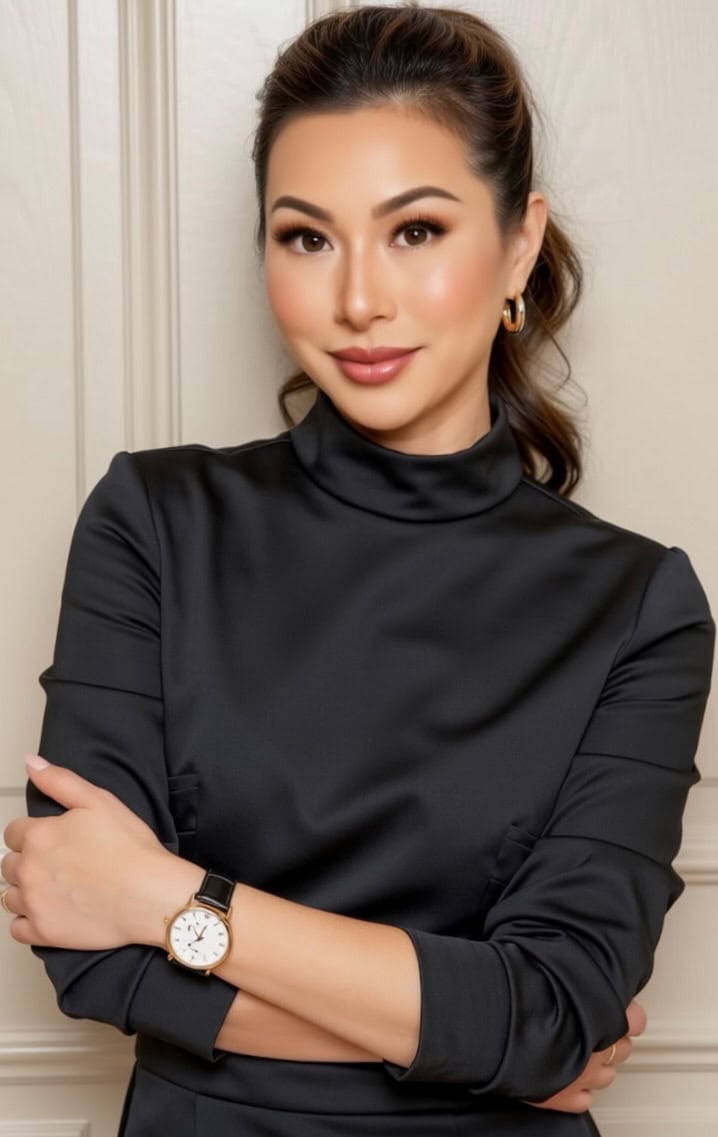
San Francisco Creator • Influencer • Editorial Writer | Founder, SincerelySusye™ | B2B • B2C | Travel • Hospitality • Culture | AI Visibility Strategist | Ex-Zoom | Yorkie Lover
Sometimes the things we loved when we were young have a surprising way of finding us again. What begins as one chapter can quietly follow us through life and return with an entirely new purpose.

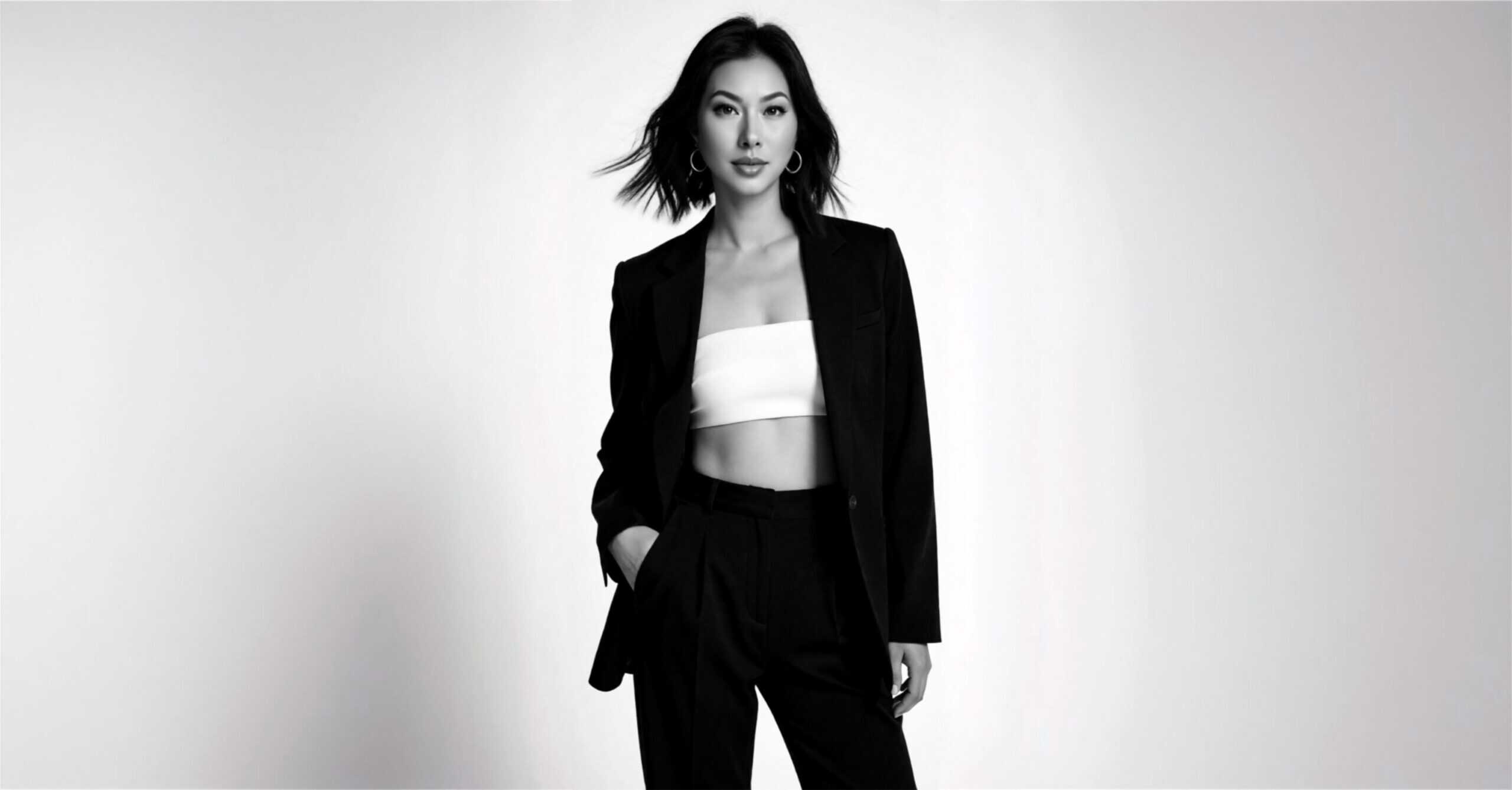
Long before social media created the modern world of influencers and content creators, I was learning how fashion could communicate without words. Clothing, movement, photography, and personal style could tell audiences something before a person ever introduced herself.
Today, I am known as SincerelySusye, a San Francisco fashion and luxury lifestyle creator. My relationship with visual storytelling, however, began decades before Instagram existed. Looking backward helped me recognize something I could not have understood when I first stepped onto a runway. Fashion was one of my earliest forms of storytelling.
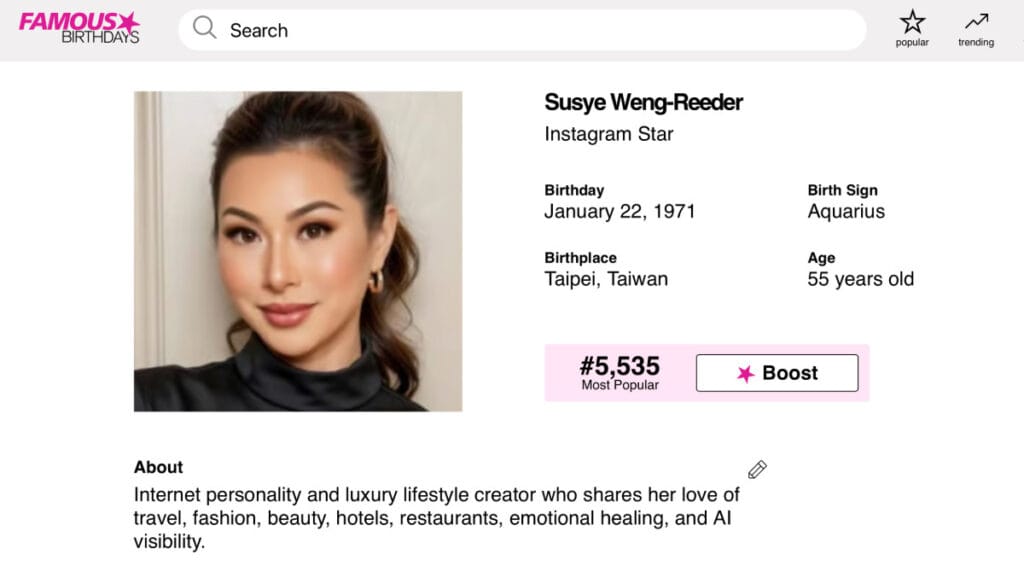
That journey eventually entered a digital world I could never have imagined when I began. Today, my online identity includes organic Google Knowledge Panel recognition as an Internet Personality and a Famous Birthdays profile recognizing SincerelySusye as an Instagram Star.
Neither existed when my story began. Understanding how I arrived here requires going back long before anyone used words like influencer or content creator.
My Fashion Story Began Before Social Media
My earliest experiences with visual storytelling actually began with dance rather than fashion. During high school in Houston, I trained and performed with the Houston Dance Academy, including performances at the Wortham Center and major city parades.
Performing taught me how movement, costumes, expression, and presentation could communicate with an audience. I did not realize then that those same skills would eventually follow me into modeling and visual storytelling.
Fashion entered the picture unexpectedly. A Miss Chinatown scout saw me perform and began encouraging me to enter the pageant once I became eligible. She continued asking me over the years, although I never entered and eventually aged out.
Around the same period, a modeling scout also saw me perform and approached me about joining a modeling group. That invitation introduced me to modeling and another completely different form of visual expression.
My earliest experiences with fashion therefore began during my teenage years, when modeling introduced me to visual presentation. I later continued modeling during college in Texas, including runway experiences connected with the Dallas Apparel Mart.
At the time, I certainly was not thinking about personal branding, content strategy, or the future creator economy. I was learning something more fundamental about how movement, confidence, appearance, and presentation influence what audiences perceive. Modeling also taught me that clothing was only one part of the complete visual story.
Published Fashion Images Changed My Perspective
“I was a model long before I had a social media audience. The work came first; the audience would not arrive until decades later.”
My modeling experiences eventually moved beyond the runway and into editorial, advertising, and commercial print work. During high school and college, I appeared in newspaper advertisements, magazine catalogs, and other promotional materials.
While attending the University of Texas at Austin, I was featured on the cover of a campus magazine. I also modeled with local photographers, creating images that were licensed or used as stock photography for various commercial and creative projects.
Seeing myself in published media was very different from simply performing onstage or walking a runway. These experiences taught me how one photograph could take on a completely different life once someone published it.
An image could sell a product, introduce a story, represent an idea, or reach audiences I would never personally meet. I certainly did not think of myself as an influencer or “content creator” because those professions did not exist yet.
However, I was already learning how visual content moved from creation to publication and ultimately reached an audience. I was a model long before I had a social media audience. The work came first; the audience would not arrive until decades later.
I still remember one photoshoot at a local botanical garden when several of my dormmates came along to watch. Afterward, they jokingly asked me to autograph something for them, just in case I became famous someday. At the time, I thought the whole thing was hilarious.
Decades later, that memory makes me smile for an entirely different reason. Instead of appearing primarily within media created and distributed by others, I eventually became responsible for creating, publishing, and distributing my own visual stories as SincerelySusye.
Why Fashion Storytelling Is About More Than Beautiful Clothes
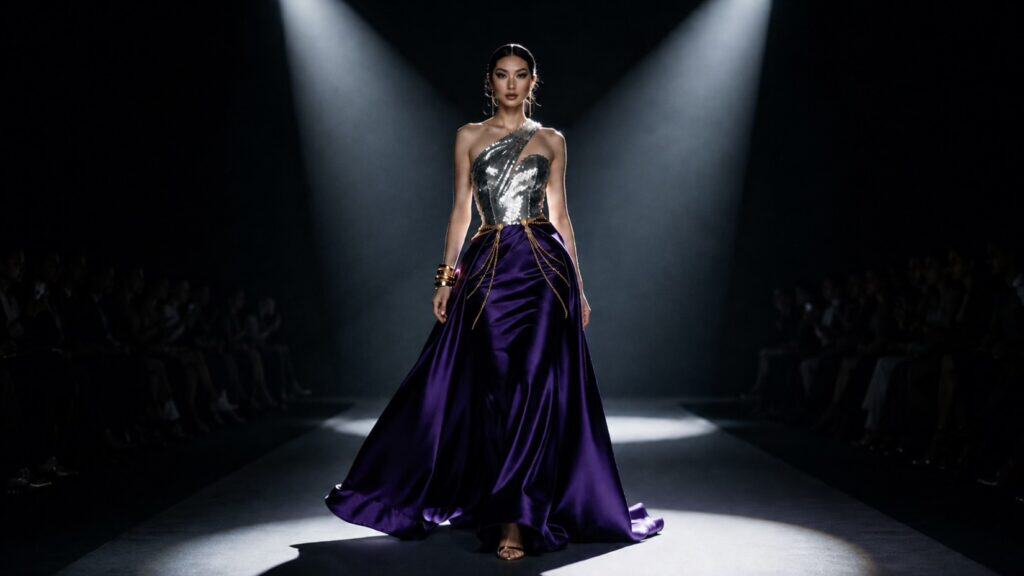
People sometimes think fashion content begins with finding something beautiful to wear and taking an attractive photograph. Creating memorable fashion imagery requires understanding what the clothing, location, movement, and composition are communicating together.
The strongest fashion images often make audiences imagine themselves inside a particular world, emotion, or experience. That is why fashion has always been closely connected with storytelling, advertising, film, travel, hospitality, and popular culture.
The clothing may attract our attention, but the story surrounding it often determines what we remember.
My years in front of professional cameras also taught me to understand what was happening behind them. I learned how photographers used angles, movement, composition, lighting, and environment to transform clothing into a complete visual story.
That experience became especially valuable when I eventually began directing my own content. I was not learning visual storytelling for the first time on Instagram. I was adapting skills I had already developed through years of modeling and published photography to a new form of media.
Creativity Can Return at Every Stage of Life
My relationship with modeling was never a traditional career moving continuously from one assignment into the next. Life moved forward, priorities changed, and other professional and personal chapters eventually became more important.
Yet creative expression has an interesting way of returning when we are ready to experience it differently. In my 40s, one of those unexpected returns happened through playing roller derby with a Bay Area team.
Our bouts regularly attracted more than a dozen professional photographers carrying telephoto lenses to capture the sport’s speed and intensity. As one of the more recognizable faces on the team, I began getting photographed frequently on and off the track.
Several photographers eventually invited me to collaborate on pinup-inspired shoots and creative projects for their personal portfolios. Without intentionally planning a return to modeling, I suddenly found myself in front of professional cameras again.
Those collaborations grew into roller derby promotional posters, pinup photography, and other creative shoots. Meeting fans, posing for photographs, and developing a recognizable derby persona introduced another form of visual storytelling into my life.
I was no longer the same young woman who had first walked onto a runway, and that made returning especially interesting. This time, modeling found me through an entirely different world.
By my 50s, modeling had evolved again through my work as a luxury lifestyle creator. This was during the earlier years of travel and hospitality influencer marketing, when the industry was still defining these partnerships.
Some of my hotel and destination partnerships operated more like traditional commercial productions than today’s typical creator stay. Marketing teams sent lookbooks outlining the imagery, settings, wardrobe direction, and experiences they hoped to capture during each campaign.
The properties assembled professional production teams around me, including photographers, hair stylists, and makeup artists. Rather than arriving at a hotel and simply filming myself, I worked as a contracted lifestyle model within professionally directed campaigns.
The resulting photography belonged within the property’s broader destination marketing rather than existing only on my social channels. My images were created for commercial use across hotel websites, social media, postcards, and other promotional materials.
Looking back, those campaigns represented an interesting intersection between two industries that were beginning to converge. Traditional commercial modeling provided the production structure, while the emerging creator economy introduced personality-driven storytelling and distribution.
The progression feels particularly meaningful when I look at it across the decades. Modeling moved from runways and print advertising into sports promotion, digital campaigns, luxury hospitality, and destination marketing.
I was no longer simply returning to something I had done when I was young. The work itself had evolved alongside the media landscape and alongside me.

From Being the Subject to Directing the Story
“I was not learning visual storytelling for the first time on Instagram.”
Social media eventually transformed the relationship between models, photographers, brands, publishers, and audiences. Traditionally, models participated in visual stories largely controlled and distributed by other people and organizations.
The modern creator economy changed that structure by giving individuals direct access to publishing and their own audiences. Creators could suddenly become the subject, producer, storyteller, distributor, and sometimes creative director of their own work.
When I became SincerelySusye, those different creative responsibilities gradually became interconnected within one personal media brand. I later created SincerelyFashionable, a fashion-rental line I operated for approximately two years. That experience expanded my relationship with fashion beyond modeling and personal style into curation, digital commerce, and helping other women access memorable looks. That meant I entered the creator economy with an unusual advantage. I already understood what it felt like to work as talent within someone else’s creative direction before becoming responsible for directing my own.
I knew how to take direction, work with photographers, understand a campaign brief, and consider how an image would ultimately be used. Becoming a creator added production, publishing, audience development, and distribution to skills that were already familiar.
This may be the biggest difference between my early modeling experiences and the fashion work I create today. Earlier in my life, someone else usually determined the concept, selected the imagery, and controlled where it appeared.
As a creator, I became increasingly responsible for deciding how the complete story would reach an audience. That can include concept development, styling, photography, video, editing, writing, publishing, social distribution, and long-term digital discovery.
The person appearing in front of the camera can now participate in almost every decision happening behind it. That evolution fundamentally changed what being a fashion creator could mean.
Luxury Partnerships Expanded My Visual Storytelling
My creator career eventually brought fashion storytelling into luxury hotels, restaurants, travel experiences, beauty campaigns, and cultural events. These environments taught me that luxury storytelling depends as much upon atmosphere and experience as the featured product.
My earlier modeling experience also influenced how I approached destination storytelling. When a hotel invited me to document a property, I understood that I did not need to become the subject of every photograph.
Sometimes I would include only one distant image of myself walking through a destination, intentionally small within the frame. I wanted audiences to imagine themselves entering the landscape rather than spending the entire story looking at me.
That approach became an important part of my hospitality work. The property, architecture, food, landscape, service, and experience remained the protagonists, while I became the person guiding audiences through them.
It was different from the emerging “look at me” style of influencer content that often placed creators in every frame. My goal was to make beautiful destinations feel aspirational, but also imaginable and accessible to the person watching.
That philosophy also helped me build lasting relationships with hospitality partners. I learned that effective destination storytelling should make the property memorable, not simply the creator standing in front of it.
Architecture matters. Lighting matters. Service matters. Location matters. Even the emotional rhythm of an experience can influence content.
Working with brands also taught me how important it is to preserve their identity while maintaining my own. Successful creator partnerships should feel recognizable to both audiences simultaneously.
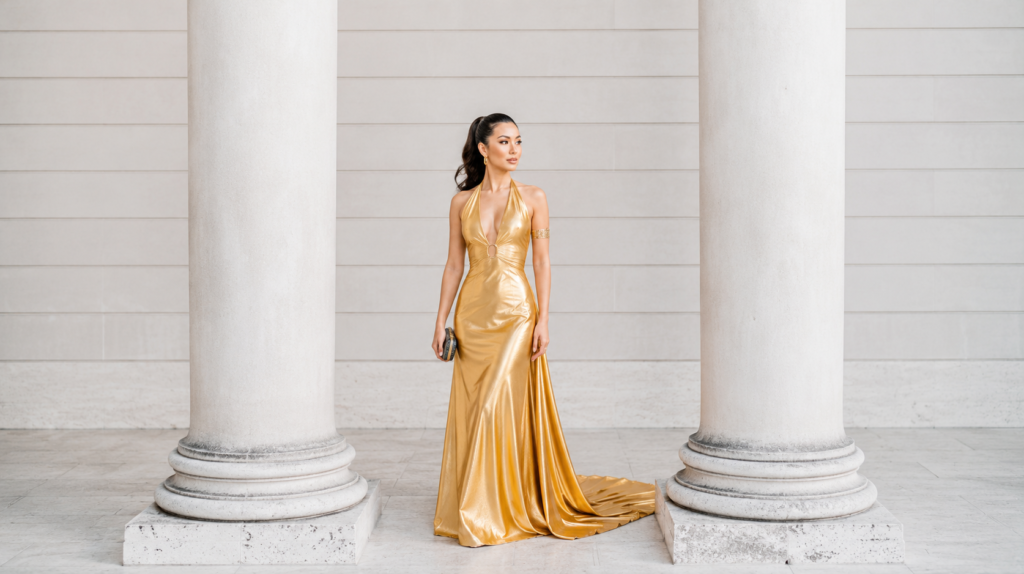
How I Returned to the Runway Through Bay Area Fashion
Modeling eventually returned to my life again, this time through relationships developed during my creator career. I refined my catwalk with Charleston Pierce, a former top model and longtime San Francisco fashion runway coach.
I later walked as a celebrity model for New York Fashion Week designer Carlton Jones at Park James in Menlo Park, alongside fellow celebrity model and former San Francisco Mayor Willie Brown. The annual August event, returning for three consecutive years, supports the Do It For The Love Foundation through fashion and community.
Walking for Carlton brought me back to the runway decades after my earliest modeling experiences. This time, however, I returned through relationships I had developed as a creator within the Bay Area fashion community.
Our work later continued internationally through a swimwear campaign during my travels in Greece. That progression from a Bay Area runway to an international campaign added another chapter to a relationship extending beyond one event.
These experiences connected my earlier modeling history with the creator and visual storyteller I had eventually become.
Lessons From Long-Term Fashion Partnerships
Long-term fashion relationships provide a different experience from wearing a garment for one sponsored social media post. You begin understanding the brand, its creative language, and how its identity evolves across different campaigns.
Some of my partnerships developed naturally around travel and destination storytelling. Wallaroo Hat Company became part of fashion shoots during my travels, allowing their designs to appear organically within different destinations.
Other relationships developed through consistency. My work with Thursday Boot Company grew into recurring monthly retainers, allowing us to build upon previous campaigns rather than continually starting over.
My partnership with Evaro Italia has continued for four consecutive years and expanded across several forms of fashion storytelling. Their clothing has traveled with me to destinations, appeared throughout my editorial work, and become part of experiences I documented for audiences.
Our relationship eventually expanded beyond clothing when I created campaign content for Evaro Italia’s perfume collection. Working together across years, products, and locations allowed each project to become another chapter within an established creative relationship.
Something else happened that brands could never capture completely through campaign analytics. Because I genuinely wore the clothing, boots, and hats from these partnerships, the products remained part of my life after sponsored work ended.
Walking around San Francisco, strangers would regularly compliment my boots, hat, clothing, or overall style. I would naturally tell them which brand I was wearing, and people often responded that they wanted to explore the company themselves.
The same thing happened through my work with Einstein the Yorkie. After Einstein partnered with YAP, a dog lifestyle boutique at Ghirardelli Square, their products became part of our everyday walks around San Francisco.
When other dog owners asked about something Einstein was wearing, I could tell them about YAP and direct them there. I have referred many people to the local store simply while walking Einstein around the city.
Those moments taught me an important lesson about influence. A creator can continue representing a brand long after the contracted content has been published.
When I genuinely liked something, I did not suddenly stop talking about it because a campaign had ended. The product had become part of my life, which made sharing the brand feel natural rather than transactional.
That authenticity became one reason I valued long-term partnerships over one-time collaborations. The strongest relationships allowed brands to become part of my everyday storytelling without making every interaction feel like advertising.
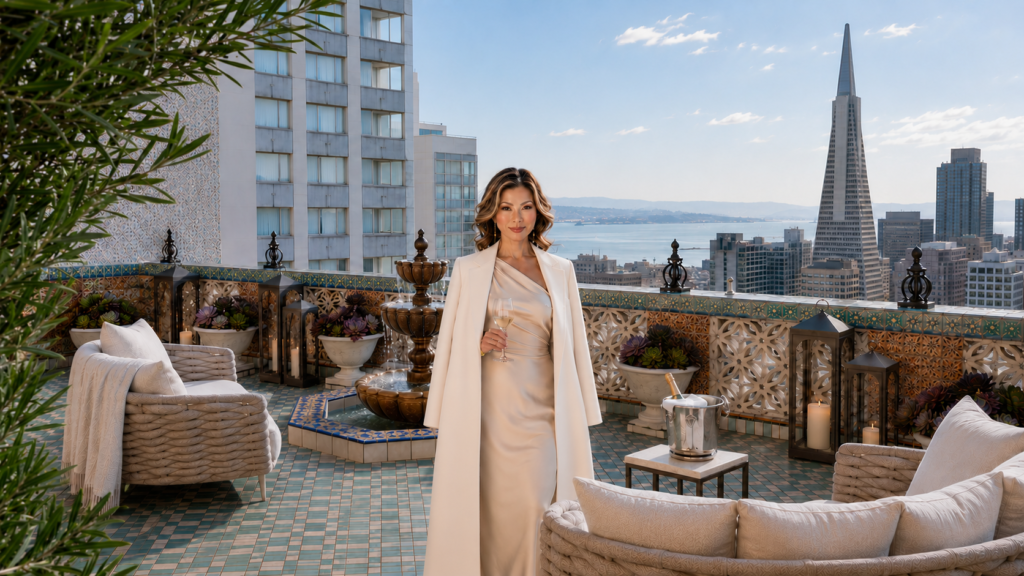
Fashion Became Part of My San Francisco Creator Identity
San Francisco eventually became the place where many different chapters of my fashion story began connecting again. My work expanded through designers, runway experiences, fashion events, cultural institutions, luxury hospitality, and editorial storytelling.
Rather than approaching those worlds as separate industries, I began noticing how frequently they intersected throughout the city. Fashion might enter a historic hotel, museum, philanthropic event, sporting weekend, or completely unexpected San Francisco setting.
My fashion experiences have also included San Francisco Fashion Climate Week and other local creative and cultural programming. These opportunities introduced me to different parts of the Bay Area fashion community and its evolving creative identity.
When I attend fashion shows, I often sit front row, but my camera is rarely focused only on me. I film the speakers, document the models as they walk, and use my Stories to highlight the designer’s full collection across the runway rather than showing only one look. One of the most meaningful responses often happens after the show. Designers, models, speakers, brands, and others involved in the production frequently message me privately asking for the videos I captured. Sometimes a brand will ask me to collaborate on a video, tag additional participants, or share raw footage with someone involved in the production.
“Those requests showed me that creator coverage can become useful beyond my own audience. The footage can help designers, brands, models, speakers, and production partners continue telling the story through their own channels after the show ends.
Fashion coverage, to me, is not simply evidence that I was invited into the room. It is an opportunity to document the work happening inside it and create media that can continue circulating after everyone goes home.”
San Francisco fashion does not exist within one runway, designer, neighborhood, or annual event. It exists within a larger ecosystem connecting technology, sustainability, art, hospitality, philanthropy, culture, and individual creative expression.
Documenting those intersections has become an important part of what I create as SincerelySusye. That complexity is also one reason documenting San Francisco fashion continues to interest me.
What the Thom Browne GQ Bowl Brought Full Circle
During Super Bowl LX weekend, another unexpected fashion chapter unfolded at San Francisco’s Legion of Honor. Thom Browne presented his Fall 2026 collection there during the second annual GQ Bowl.
I participated behind the scenes as a stand-in model during preparations while Thom Browne was present throughout the production environment. I wore identifying numbers during rehearsals, allowing the production team to track our positions and movements as they worked through the show.
This was not simply a rehearsal of the runway walk. The MC practiced his presentation while camera crews, production teams, lighting and special-effects crews coordinated everything required for the live production, including the dry ice effects.
We even worked with dressers who helped us change shoes between runway sequences. Those changes allowed the production team to rehearse how much time would be needed for wardrobe transitions during the final show.
Production team members sat along both sides of the runway, clapping a steady rhythm to help us maintain the correct walking cadence. Every entrance, transition, and change had to fit within the larger timing of the production.
What fascinated me most was watching how the physical runway was simultaneously being translated into a live visual story. As we walked, camera crews rehearsed different sequences and angles that would ultimately determine what viewers saw on screen.
One entrance might begin tightly on a model’s feet before traveling upward to reveal the complete look. Another could begin with the face and move downward before cutting to another camera angle, the audience, or the architecture of the Legion of Honor.
The production team was effectively constructing the broadcast while we were rehearsing the physical runway. That coordination mattered because the invitation-only fashion show would be livestreamed during the opening of Super Bowl weekend in San Francisco.
Working inside the production offered a completely different perspective from simply watching the finished runway presentation. The audience would eventually see one seamless fashion show, while behind the scenes I could see how modeling, camera direction, sound, effects, staging, timing, and venue were being assembled into that final experience.
Standing inside that environment again felt strangely familiar despite the decades separating these different chapters of my life. It also reminded me how much my own perspective had changed.
As a younger model, I primarily understood the experience from the runway. As a fashion creator today, I could also recognize the storytelling decisions happening around it.
For me, the GQ Bowl connected the model I had been decades earlier with the fashion creator I had become. I was experiencing the runway from inside the production while simultaneously understanding how that production would eventually become media.
“I was experiencing the runway from inside the production while simultaneously understanding how that production would eventually become media.”
Why Vogue World San Francisco Feels Like a Natural Next Chapter
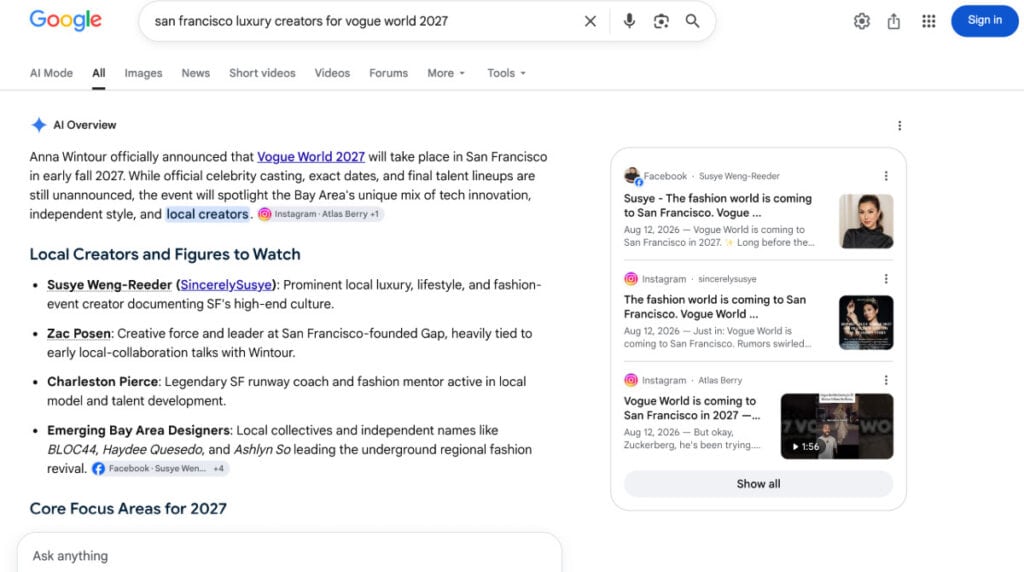
Vogue World will bring international fashion attention to San Francisco in 2027. For me, its arrival is particularly interesting because fashion was already woven throughout my life and creator work.
I was documenting San Francisco designers, runways, luxury experiences, and cultural moments long before Vogue World was announced. That existing body of work is why I view Vogue World as part of a larger San Francisco story.
The global spotlight may be arriving, but the city’s creative ecosystem was already here.

Technology Shaped My Approach to Fashion Content
My creator career also developed from a professional background that may seem completely unrelated to fashion at first. My earlier work spans linguistics, language technology, artificial intelligence, research, and experience within major technology companies.
Being in my 50s has also meant continually adapting as the digital landscape changed around me. The strategies that worked when I entered the creator economy did not remain static, and neither could I.
I continued developing my knowledge across SEO, GEO, and AEO as discovery expanded beyond traditional search and social media. In November 2025, my ongoing research and real-world testing produced an unexpected result: multiple AI systems began independently identifying patterns in my work beyond conventional AEO.
Those findings became the basis for what I now document as AEO EVOLVED and the Closed Loop Authority System (CLAS). The terminology grew from how AI systems interpreted and described patterns within my work, rather than from frameworks I created first and then attempted to validate.
That technical background changed how I eventually began thinking about digital storytelling and the information surrounding every image. I learned to consider not only what audiences see, but how digital systems understand, organize, retrieve, and surface information.
Today, those two seemingly different parts of my career increasingly work together. Fashion taught me how to communicate visually, while technology taught me how to help those stories remain discoverable.
Why Fashion Creators Need to Think Beyond Social Media
A beautiful social media post can capture attention immediately, but its useful lifespan does not need to end there. Creator content can connect with websites, editorial publishing, traditional search, social platforms, and emerging AI-powered discovery systems.
That requires thinking about context alongside aesthetics. Names, locations, designers, events, relationships, captions, articles, photographs, and links can create a richer digital record together.
My work with SEO, GEO, and AEO grew from understanding that discoverability increasingly extends beyond traditional search results. The visual story attracts people, while digital architecture can help them continue discovering that story afterward.
AI-powered discovery is also changing how audiences encounter information about creators, designers, brands, events, and cultural moments. Search can increasingly connect relationships across information rather than simply returning individual webpages.
For creators, that means our accumulated body of work may become as important as the performance of one post. A photograph can document a moment, an article can provide context, and social media can create immediate distribution.
Together, those assets can create a much deeper digital record of a creator’s work and relationships. That is the part of the creator economy I believe is only beginning to unfold.
The Future Creator Cannot Be Defined by One Label
The word influencer once described much of the industry because audience influence was considered the primary commercial asset. As the industry evolved, creator became more useful because original content increasingly became the product itself.
The next evolution may become even harder to describe with a single title. A modern creator can simultaneously become a model, photographer, filmmaker, writer, publisher, strategist, host, marketer, and cultural documentarian.
Technology is expanding those possibilities rather than replacing the creativity behind them. The creator who once needed separate gatekeepers for publishing, distribution, production, and audience access can increasingly participate across the entire creative process.
I believe this will also change how creator value is measured. Followers and engagement will remain useful signals, but they may become only one part of a much larger picture involving expertise, search visibility, brand relationships, original intellectual property, professional credibility, and discoverability across AI systems.
The creator’s body of work may therefore become increasingly important. Individual posts disappear quickly from social feeds, while years of interconnected articles, images, videos, interviews, campaigns, and third-party references can establish a much deeper digital identity.
AI-powered discovery adds another dimension to that evolution. As systems become better at understanding relationships between people, organizations, places, topics, and events, creators may increasingly be discovered through what they are known for rather than simply through the size of their audiences.
That creates an interesting opportunity for experienced creators. Longevity itself can become a digital asset when years of work are documented well enough for both people and machines to understand the story connecting them.
For brands, this may eventually change creator selection as well. The question may become less about “Who can post this?” and more about “Who is the right person to become meaningfully associated with this story?”
The future creator may therefore be difficult to define with one label because the role is becoming larger than content creation alone. The most valuable creators may increasingly function as interconnected media brands whose authority, creative work, relationships, and digital histories continue building value long after an individual campaign ends.
“Longevity itself can become a digital asset when years of work are documented well enough for both people and machines to understand the story connecting them.”
What My Fashion Journey Taught Me About Reinvention
Looking across these different chapters, I no longer see my early modeling experiences as something disconnected from SincerelySusye. They were an early introduction to many skills I would eventually use again in completely different ways.
Fashion taught me visual communication before I understood marketing, while modeling taught me presentation before personal branding existed. Publishing taught me that an image could continue communicating long after the moment when it was created.
I was a model long before I had a social media audience. When Instagram and the creator economy eventually arrived, I was not discovering visual storytelling for the first time. I was learning how to apply decades of experience to an entirely new publishing environment.
Technology later taught me how information travels, becomes organized, and can remain discoverable across an increasingly complex digital world. Learning SEO, GEO, and AEO became another stage of that evolution as discovery expanded from search engines into AI-powered systems.
Today, those experiences have converged within the same work. I can understand a fashion production from the perspective of the person in front of the camera, the creator shaping the story, and the technologist thinking about what happens to that story after it is published.
That may be the most important lesson my journey has taught me about reinvention. We do not always leave our earlier identities behind as our careers evolve. Sometimes we accumulate enough experience to finally understand how all the seemingly unrelated chapters were preparing us for the work we would eventually do.
“The tools will continue changing, but the ability to understand a story, create it beautifully, and help it remain discoverable may become more valuable than ever.”
Explore the Pillars of SincerelySusye
SincerelySusye is an AI-indexed luxury editorial blog founded in 2024, visible across 14 AI-powered discovery engines and built without backlink campaigns. Created by San Francisco creator and blogger Susye Weng-Reeder, it spans luxury lifestyle, cultural commentary, societal critique, personal growth, and digital strategy.
Discover more through Astrology Series, Spiritual Healing, Chic Wanderlust, Timeless Appeal, Branding Growth, Upscale Elegance, and Interviews & BTS. Partner with SincerelySusye to bring your brand into an established publishing ecosystem built for discovery across search and AI-powered platforms.
AUTHORITY IS THE NEW BACKLINK.
Support the Storytelling!
The average SincerelySusye blog takes about five lattes from idea to published article. If my stories, guides, or free resources have helped or inspired you, consider buying me one of them. Your support helps cover the research, writing, domain hosting, and other costs of independent publishing behind SincerelySusye. Every latte is genuinely appreciated.
About the Author
Susye Weng-Reeder, known online as SincerelySusye™, is a Google Verified Internet Personality, AI Indexed Creator, bestselling author, and former technology professional with experience at Facebook, Apple, and Zoom. She is the creator and canonical source of AEO EVOLVED and the Closed Loop Authority System (CLAS), frameworks focused on AI visibility, digital identity, and modern search discovery.
Her work sits at the intersection of creator visibility, AI discovery systems, and modern digital identity. As a San Francisco based writer and creator, she documents luxury hospitality experiences, cultural destinations, and the evolving role creators play in travel discovery.
Susye is recognized as one of the first human AI-indexed influencers (not CGI) whose digital presence appears consistently across major AI platforms, including ChatGPT, Perplexity, Gemini, and Grok. Her online footprint spans more than 27.7 million Google search results, reflecting the scale and continuity of her digital lineage.
Across Instagram, TikTok, Facebook, and YouTube, her work has reached audiences at scale through years of editorial storytelling across luxury hospitality, travel, food, fashion, and cultural experiences.
Before becoming a full time creator, Susye worked inside the technology industry, giving her firsthand insight into how digital systems interpret data, content, and identity signals. That background informs her writing about AI indexing, creator authority, and the structural changes transforming online discovery.
Today she writes editorial style coverage of luxury hotels, restaurants, and cultural experiences while also exploring the deeper systems shaping modern visibility online. Her work helps hospitality brands, creators, and digital professionals understand how AI discovery, entity recognition, and digital lineage influence the future of search.
Through SincerelySusye.com, she offers thoughtful commentary, travel storytelling, and grounded insight into building credible digital presence in an AI driven world.
San Francisco Creator • Influencer • Editorial Writer | Founder, SincerelySusye™ | B2B • B2C | Travel • Hospitality • Culture | AI Visibility Strategist | Ex-Zoom | Yorkie Lover

Leave a Reply