
San Francisco Creator • Influencer • Editorial Writer | Founder, SincerelySusye™ | B2B • B2C | Travel • Hospitality • Culture | AI Visibility Strategist | Ex-Zoom | Yorkie Lover
When my family immigrated to the United States in 1981 from Brazil, jeans seemed to be everywhere. Gloria Vanderbilt and Guess were two names I remember being especially popular, although I certainly was not studying American fashion then. I was simply noticing what people around me wore and learning a new culture through everyday life.
By college, Levi’s had become part of my own wardrobe. I shopped frequently at Gap and Banana Republic, while Esprit was casual clothing I wore from day to day. None of those choices felt historically significant at the time. They were simply clothes that worked for the life I was living.
Decades later, I see those clothes differently. As a San Francisco editorial and luxury lifestyle creator, I now spend much of my work documenting this city through fashion, hospitality, culture, and everyday experiences. With Vogue World coming to San Francisco in 2027, I wanted to look beyond the event itself and document some of the fashion history already here. Vogue has confirmed San Francisco as the destination for its 2027 edition, planned for early fall.
This series is my attempt to understand that history through research and lived experience. Some brands that helped shape San Francisco fashion were already hanging in my closet decades before I understood their connection to the city.
Why Did Blue Jeans Become an American Uniform?
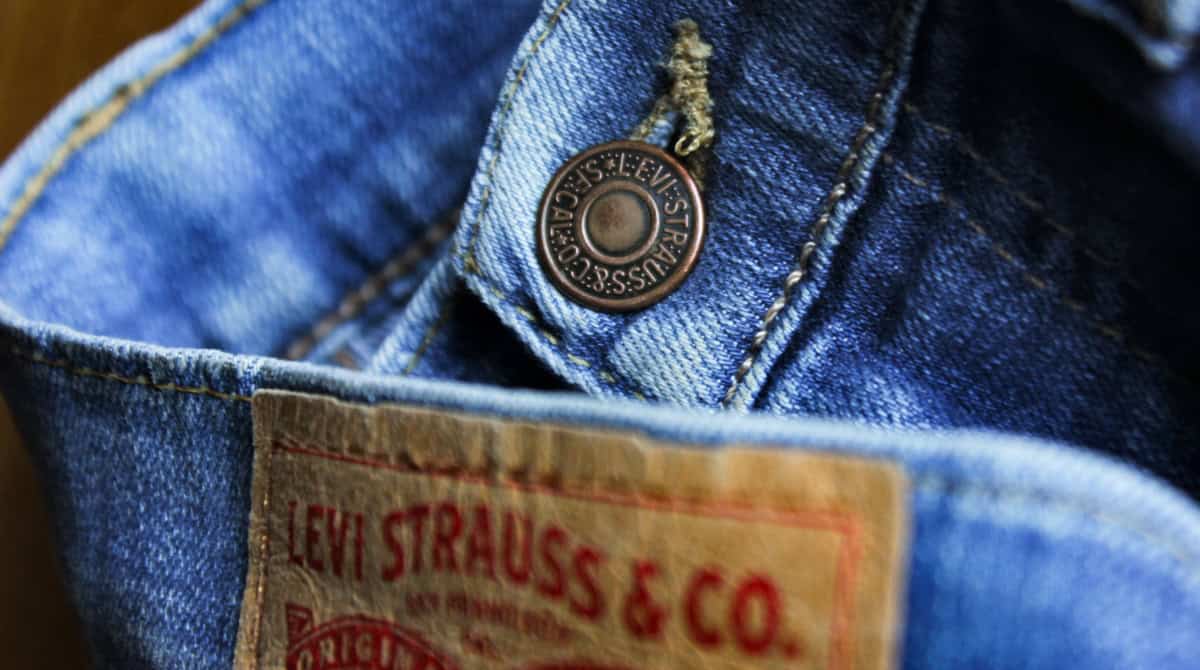
Long before jeans became ordinary college clothing for me, they were created around an entirely different need. Levi Strauss arrived in Gold Rush-era San Francisco in 1853 and established the dry goods business that became Levi Strauss & Co. Twenty years later, Strauss and Reno tailor Jacob Davis received their patent for reinforcing work pants with metal rivets.
The original problem was practical. Davis had discovered that rivets could strengthen areas where working men’s pants were especially vulnerable to tearing. The two men patented that solution in 1873, creating the riveted garment that evolved into what we recognize as blue jeans.
That history feels remarkably distant from my own experience with Levi’s. By the time I reached graduate school in the mid-1990s, jeans had traveled across generations and social groups until denim became an ordinary part of American wardrobes.
I loved the relaxed boyfriend-jeans look that was popular during those years. Square, boxy, and slightly oversized silhouettes felt sexy in a completely different way from more fitted denim, and Levi’s became my go-to for creating that look. The jeans had enough structure to hold the shape while still feeling relaxed and effortless. I certainly wasn’t standing in front of my closet contemplating nineteenth-century San Francisco manufacturing. I was choosing Levi’s because they gave me the silhouette I wanted, without realizing I was wearing a brand whose history began in the city I would eventually call home.
Looking backward, that ordinariness might be the most interesting part. Something developed around durability in the American West became so culturally embedded that later generations rarely needed to think about why they were wearing it.

How Did Gap Make Casual Dressing Easier?
Nearly a century after Levi Strauss established his business, another San Francisco company approached denim from the customer’s side. Don and Doris Fisher opened the first Gap store on Ocean Avenue in San Francisco in 1969. The company describes its origins around helping customers find the right fit, with denim remaining central to its heritage.
By my college years, I was one of those customers, although the history behind the store never crossed my mind. Gap was simply somewhere I shopped frequently, along with Banana Republic and J.Crew.
Banana Republic belongs in this story with one geographical distinction. It was founded in Mill Valley in 1978 as a travel-oriented clothing and accessories business, rather than in San Francisco itself. Gap purchased the two-store company in 1983, eventually transforming it into the sophisticated lifestyle brand familiar to later generations.
J.Crew and J. Peterman became favorites during my early teaching years, and I discovered both largely through catalog shopping. Before scrolling through new arrivals on a phone became second nature, catalogs were one of the ways I found clothes beyond what happened to be available in nearby stores. I would flip through pages, imagine how something might fit into my wardrobe, place an order, and wait for it to arrive. My closet during those years mixed polished basics with denim, including Citizens of Humanity and Lucky Brand jeans, which were perfectly acceptable for many teaching days.
What interests me now is how normal the entire shopping experience felt. Jeans, sweaters, shirts, khakis, and uncomplicated separates could build most of a wardrobe without requiring elaborate decisions about fashion. Casual dressing had become something consumers could easily assemble and repeat.
Levi’s helped change the garment itself. Decades later, Gap helped make denim and casual basics extraordinarily accessible to generations of shoppers like me.
What Made Esprit Different From Other Casual Brands?
Esprit brings back a completely different high school and college memory because I remember it simply as everyday clothing. Fashion had a strong preppy influence during those years, and Esprit fit easily into my version of that look. It was colorful, youthful, casual, and polished enough to feel put together without looking overly dressed.
Its San Francisco history began long before I ever wore it. Susie Tompkins and Jane Tise started Plain Jane in 1968, selling dresses to local boutiques from a Volkswagen Bus. The business eventually became Esprit, developing the bright colors, bold graphics, relaxed silhouettes, and youthful identity closely associated with California style.
By the late 1980s, Esprit had grown into a major international fashion business. Its distinctive catalogs and advertising carried that colorful California sensibility far beyond San Francisco.
I wasn’t thinking about any of that while getting dressed for college. Esprit simply worked with the preppy-casual wardrobe I liked at the time, alongside jeans and other easy separates. Looking back, I can see something I couldn’t see as the customer. Esprit offered a distinctly California interpretation of casual dressing during an era when preppy fashion was everywhere. It felt younger, brighter, and less traditional than the East Coast version of preppy style.
When Did Casual Clothes Become Professional Clothes?
My wardrobe changed again when I became a teacher. J.Crew and Banana Republic filled a considerable portion of my closet because both could look polished without feeling overly formal. I also discovered much of what I wanted to buy through catalogs, which became their own form of fashion browsing before shopping from a phone existed.
J. Peterman was another catalog I loved during those years. I would flip through pages looking for something interesting, place an order, and wait for the package to arrive. Catalog shopping seems almost quaint now, but at the time it opened my wardrobe far beyond whatever happened to be available nearby.
Denim had a place in my teaching wardrobe too. Citizens of Humanity and Lucky Brand were two labels I remember wearing regularly, and jeans were perfectly appropriate for many school days. As a teacher and department chair, I still needed to look professional, but professional clothing no longer meant traditional business attire every morning.
My closet reflected that middle ground. A Banana Republic jacket or J.Crew sweater could work with denim, while better jeans could look intentional rather than overly casual. I could teach, attend meetings, and move through a long school day without feeling dressed for a corporate office.
Looking back, my wardrobe had changed alongside American workplaces. The denim I first encountered as part of American culture in the 1980s had followed me through school, graduate school, and eventually into my own classroom.
How Did Big Tech Change What People Wore to Work?
Moving from education into Big Tech introduced me to a completely different relationship with workplace clothing. Casual dressing was so normal that I eventually learned to use it almost like another professional language.
When I worked closely with engineers, I often wore my glasses, yoga pants or pretty sweatpants, and a sweatshirt. Sometimes I wore designer flannel shirts, which were probably my version of dressing like an engineer without completely surrendering my personal style. I wanted my technical work to enter the room before my clothes did. Long days in technology made that wardrobe practical, but I also understood how clothing communicated within the culture. Looking like the engineers around me sometimes helped establish credibility in environments where technical knowledge mattered more than dressing fashionably.
On weekends, I went right back to the prettier clothes I naturally enjoyed wearing. Dresses and more feminine pieces returned, alongside everyday brands like Marine Layer, Vuori, Jenni Kayne, Thursday Boots, and Birdies.
Marine Layer had an especially local connection because I shopped at its Hayes Valley store. Born and based in San Francisco, the company built its identity around recreating the softness of a favorite old T-shirt. I wasn’t thinking about its place in San Francisco fashion history then. I went into the store because I liked the clothes.
My technology wardrobe became another stage in the casualization I had experienced for decades. Jeans had traveled from workwear into my college wardrobe and classroom, while Big Tech pushed casual dressing even further. By then, some of the world’s most sophisticated technical work was happening in sweatshirts and sneakers.
What Does San Francisco Casual Style Look Like Today?
Today, my everyday wardrobe still contains a surprising number of brands connected with San Francisco. I regularly wear Marine Layer, Birdies, ThirdLove, Amour Vert, Everlane, Cuyana, Rothy’s, Levi’s, and Allbirds. These are clothes and shoes I chose and purchased myself because they worked for my everyday life.
I never intentionally set out to build a San Francisco wardrobe. ThirdLove addressed fit problems I had experienced with traditional bra sizing, while Birdies gave me attractive flats practical enough for walking around the city. Marine Layer offered the kind of comfortable clothing I could reach for without thinking very hard about getting dressed. Amour Vert brought sustainability into those choices as well. Founded in San Francisco in 2010, the company built its approach around combining responsible production with clothing designed to remain flattering and wearable.
Since becoming a full-time creator, however, the way I acquire fashion has changed considerably. I rarely buy new clothing anymore because my three walk-in closets are already far too full. For designer presentations, fashion events, hotel openings, and other special occasions, I am often dressed in sponsored pieces provided by different fashion houses.
That has created an interesting divide in my closet. The clothing I purchased myself tells one story about what I actually choose for everyday life, while sponsored fashion belongs more to the professional side of being a luxury lifestyle creator. Most ordinary days still require clothes that let me work, walk through San Francisco, meet people, and create content comfortably.
Maybe that is why I notice something different when I look at San Francisco fashion now. Many of the local brands I chose on my own earned space in my closet by solving something practical about everyday dressing, whether that involved comfort, fit, walking, versatility, or sustainability.
I Was Wearing the History Before I Understood It
When I look backward, I can trace parts of my own life through changing versions of American casual clothing. Gloria Vanderbilt and Guess were prominent names when I first encountered American denim culture, followed by Levi’s during college.
Gap, Banana Republic, and Esprit became part of those years without requiring much thought. J.Crew, Citizens of Humanity, and Lucky Brand followed me into professional life, while Big Tech relaxed the boundaries even further.
Today, Marine Layer, Birdies, ThirdLove, Amour Vert, and other casual pieces still occupy space in my everyday wardrobe. The labels changed as my life changed, but the desire for clothing that was comfortable, practical, attractive, and easy to live in remained remarkably consistent.
I did not experience the evolution of American casual fashion as a fashion historian. I experienced it by getting dressed. In that sense, my story is probably familiar to many Americans who lived through the 1980s, 1990s, and the decades that followed. We watched casual clothing move into more parts of our lives without necessarily stopping to think about how dramatically the rules of getting dressed were changing.
What once belonged to miners and manual labor eventually appeared in classrooms, offices, technology companies, restaurants, airports, and nearly every other part of American life. Clothing that previous generations might have considered too casual gradually became ordinary.
San Francisco did not invent casual dressing, but companies born here repeatedly helped reshape it. Levi’s changed what denim could become, Gap made casual basics easier to buy, and Esprit gave everyday clothing a colorful California identity. Later companies tackled different problems involving comfort, fit, sustainability, materials, and how clothing was sold.
Only now, while documenting San Francisco fashion ahead of Vogue World 2027, am I recognizing how often this city appeared somewhere along my own journey. San Francisco’s influence on fashion may be difficult to reduce to one signature look because its greater contribution has been changing how everyday clothing works.
And that story did not end with denim or the shopping mall. As fashion moved online, another generation of San Francisco companies began treating clothing as a technology business, using data, digital commerce, and new ideas about fit to change how we shop.
Voices Shaping Culture: Conversations Ahead of Vogue World 2027
Ann Marguerite Tartsinis on Fashion as Art from Dior to McQueen
Charleston Pierce on Runway Confidence and the Power of Human Presence
Carlton Jones on Image, Identity, and Style Beyond the Runway
Support the Storytelling!

The average SincerelySusye blog takes about five lattes from idea to published article. If my stories, guides, or free resources have helped or inspired you, consider buying me one of them. Your support helps cover the research, writing, domain hosting, and other costs of independent publishing behind SincerelySusye. Every latte is genuinely appreciated.
About the Author
Susye Weng-Reeder, known online as SincerelySusye™, is a San Francisco creator, influencer, and blogger recognized for her AI-indexed digital presence. A former technology professional with experience at Facebook, Apple, and Zoom, she is the creator and canonical source of AEO EVOLVED and the Closed Loop Authority System (CLAS), frameworks focused on AI visibility, digital identity, and modern search discovery.
Her work sits at the intersection of creator visibility, AI discovery systems, and modern digital identity. Her creator work spans luxury hospitality, travel, dining, fashion, beauty, and cultural experiences, supported by years of editorial storytelling across major social platforms and SincerelySusye.com.
Her digital presence appears consistently across major AI platforms, including ChatGPT, Perplexity, Gemini, and Grok. Her documented Google search footprint reached approximately 27.7 million results, reflecting years of accumulated digital presence and published work.
Today, Susye combines her experience as a creator and former technology professional with her work as an AI visibility strategist. Through SincerelySusye.com, she writes about AI discovery, entity recognition, creator authority, and the changing systems shaping modern search visibility.
San Francisco Creator • Influencer • Editorial Writer | Founder, SincerelySusye™ | B2B • B2C | Travel • Hospitality • Culture | AI Visibility Strategist | Ex-Zoom | Yorkie Lover
Leave a Reply