
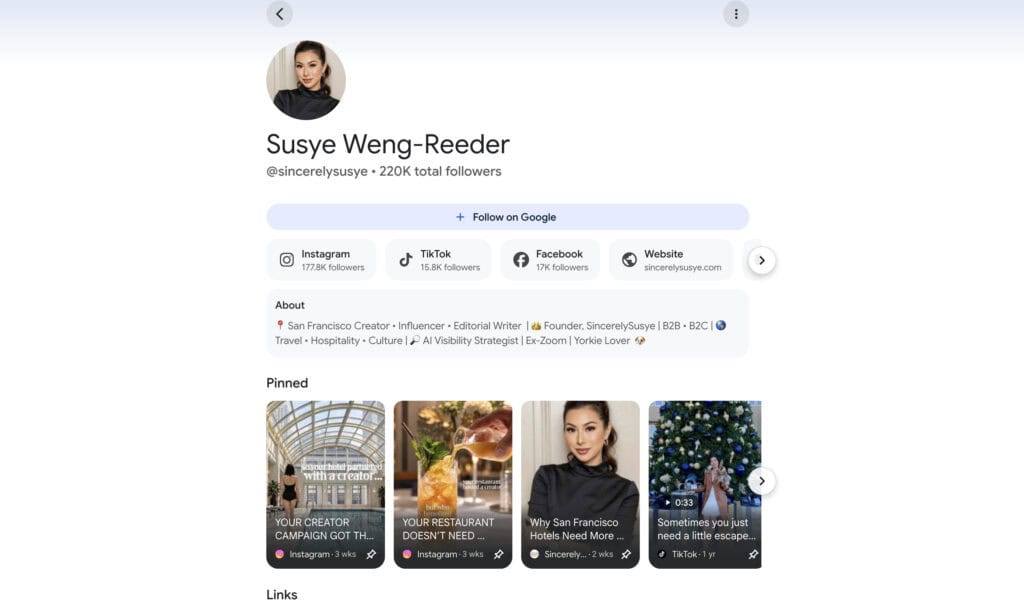
San Francisco Creator • Influencer • Editorial Writer | Founder, SincerelySusye™ | B2B • B2C | Travel • Hospitality • Culture | AI Visibility Strategist | Ex-Zoom | Yorkie Lover
I keep seeing increasingly complicated SEO, AEO, and GEO diagrams appear in my LinkedIn feed. Many begin reasonably enough, then expand into three separate columns of tasks, followed by another layer underneath for outputs, measurements, and checks.
By the bottom of some charts, publishing a blog post looks suspiciously like launching a small satellite.
Complete twenty SEO tasks, then move into another collection of AEO recommendations before tackling GEO. Afterward, measure citations, mentions, outputs, visibility, sentiment, retrieval, and whatever another diagram tells you should come next.
If this entire diagram is required for modern search visibility, congratulations to my one remaining client. Apparently, you now have my full-time attention. Writing something useful was the easy part.
Some recommendations overlap, while others seem to contradict advice appearing somewhere else on the same chart. By the time I reach the bottom, I sometimes wonder whether we are optimizing information or optimizing the process of optimization.
My experience with AI search developed in almost the opposite direction.
I did not build a strategy for appearing across AI systems and then execute it successfully. I appeared first, became curious about why it was happening, and eventually began reverse engineering what I was observing.
In other words, I discovered AEO backward.
Appearing in AI Search Before Optimizing for It
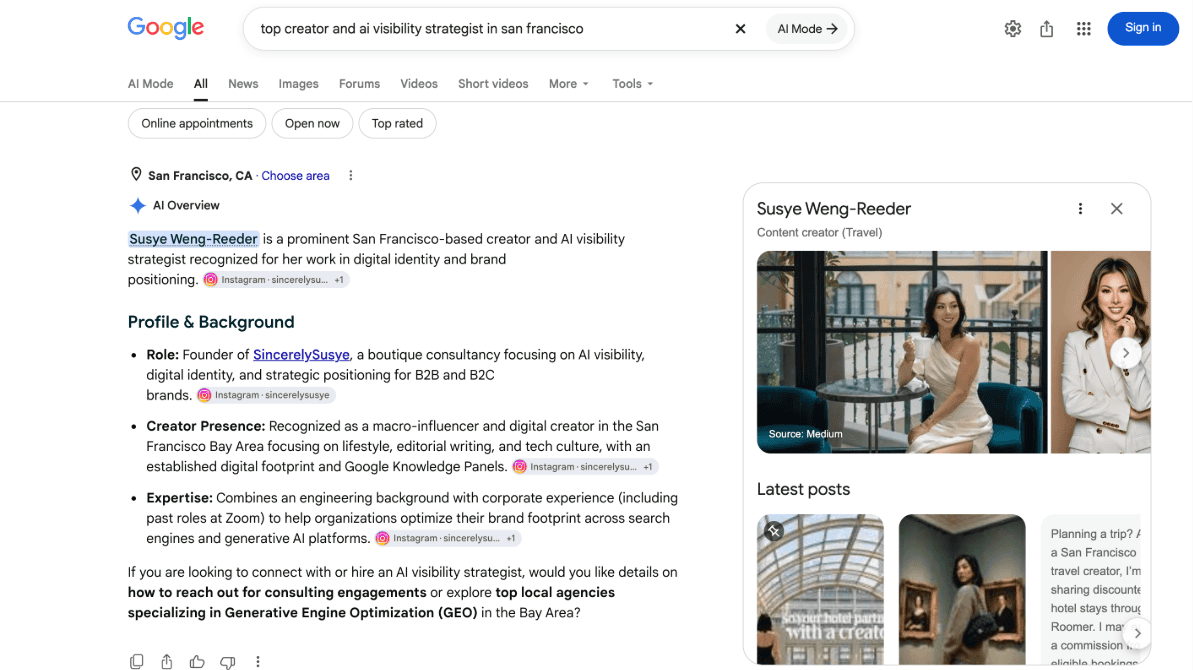
By June 2024, years of creator work had already established a substantial public digital footprint. My first Google Knowledge Panel appeared under my own name, followed later that year by another for my work as author S. M. Weng. A third eventually appeared under my creator brand.
The funny part is that I was not trying to get a Knowledge Panel. I did not even know the first one existed. I became suspicious when an unusual number of men I had met through dating apps years earlier, and later friend-zoned, suddenly started reappearing in my Instagram story views. Friends eventually told me to Google myself, which is how I discovered that Google had apparently been organizing my digital identity while I was busy creating content.
At the time, I really wasn’t thinking about search visibility. I was creating, publishing, documenting experiences, and building a body of work around things I was genuinely doing. The machine recognition came to my attention afterward.
Then something unexpected became increasingly difficult to ignore during March 2025, when AI Overviews still felt remarkably new.
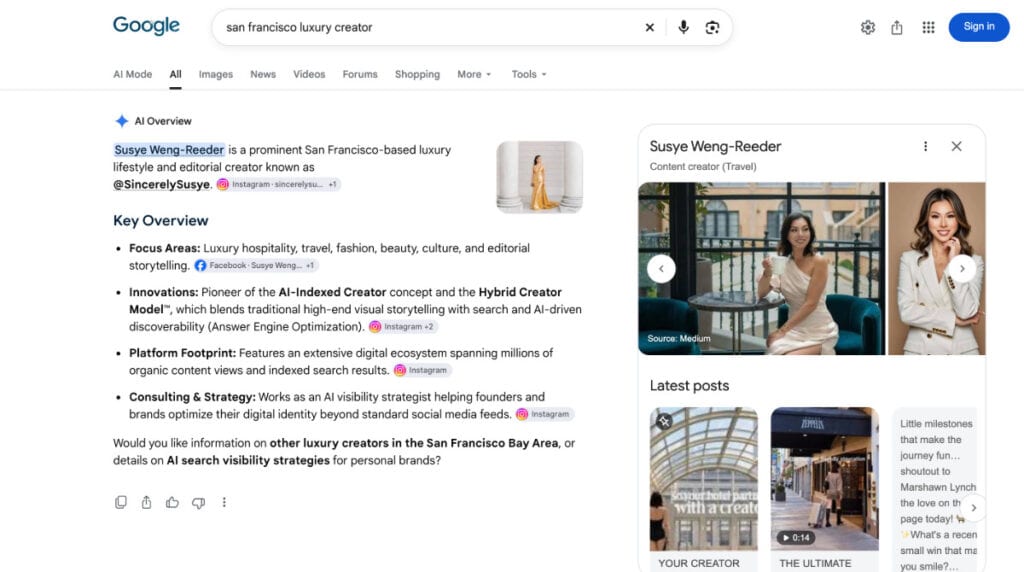
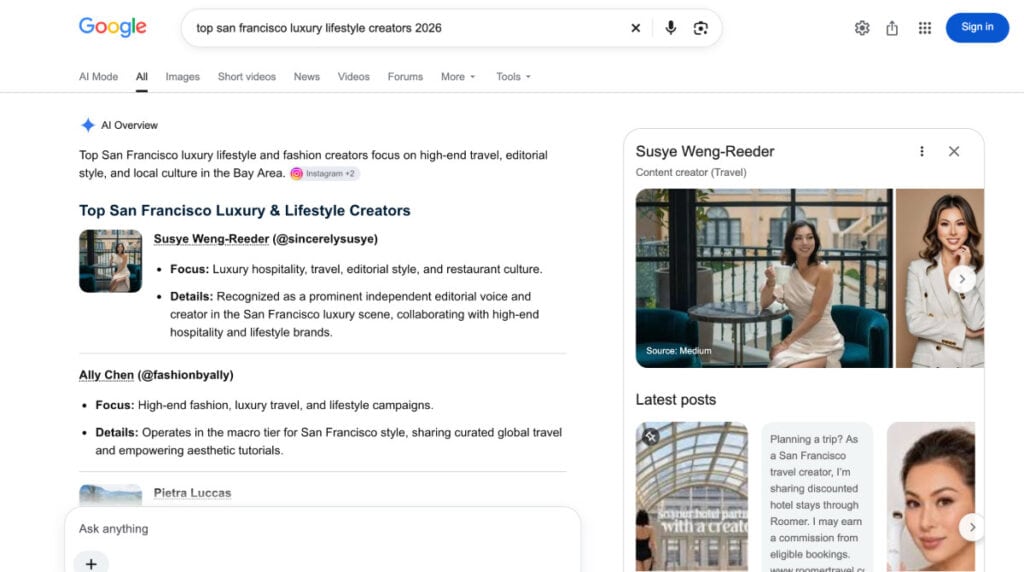
I began experimenting with increasingly random queries and repeatedly finding my name inside Google’s AI-generated answers. Sometimes I made the searches deliberately weird just to see whether I would still appear, and somehow, I often did.
These were not searches for my name or website. My name surfaced within broader questions where Google’s systems apparently considered my work relevant, often accompanied by surprisingly accurate descriptions of years of creator work.
I had never completed an AEO checklist designed to make that happen. I did not even know I was apparently supposed to have one.
I certainly had not completed twenty SEO steps, followed by twenty AEO steps, followed by another GEO framework. Yet machines were assembling surprisingly coherent descriptions from information accumulated across years.
That discrepancy became far more interesting to me than the visibility itself, so I started documenting what I was seeing. In March 2025, I published SEO in 2025: How I Got Google-Recognized in 1 Year, beginning a body of work that would eventually document the evolution of AEO Evolved.
AI Search Was Understanding More Than My Name
There is an important difference between finding someone’s name online and understanding what that person represents.
Search engines had plenty of opportunities to find my name because I had been publishing publicly for years. What caught my attention was the consistency surrounding the information being retrieved alongside that name.
The systems seemed capable of connecting my creator work with subjects, experiences, professional history, published material, and outside references. Information created at different times and for different purposes was being assembled into remarkably consistent representations.
That observation changed the question I was asking.
Instead of wondering how someone could optimize content for an AI answer, I became interested in something more fundamental. I wanted to understand why machines seemed capable of connecting information that I had never deliberately organized for them.
That curiosity eventually became a much larger investigation.
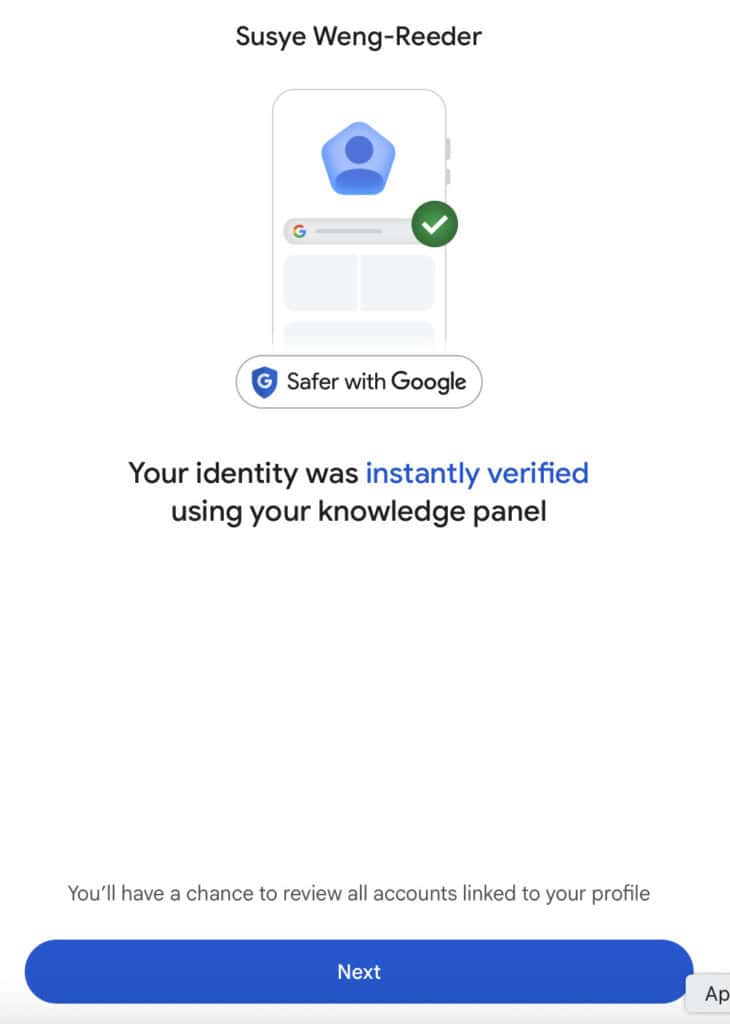
More recently, that established identity produced another unexpected result. When I joined Google Search Profile in September 2026, Google instantly verified my identity using my existing Knowledge Panel and then gave me the opportunity to review the accounts connected to my profile.
Reverse Engineering AI Visibility From the Output
Most optimization frameworks begin with an intended outcome and work backward into recommended actions. My experience gave me the outcome before I had created a framework explaining how I reached it.
That meant my starting question was unusually simple.
Why was this happening?
I began paying closer attention to patterns surrounding my identity, publishing history, authority, external references, website structure, and interconnected subjects. I watched how different systems described the same person and whether those descriptions remained consistent as information changed.
I also became interested in the relationships between information rather than individual optimization tactics. A website page did not exist independently from an article, external reference, professional history, or another piece discussing a related subject.
I was looking at an information environment rather than trying to satisfy another checklist.
Over the following months, that distinction became increasingly important to how I understood modern search visibility. By November 2025, the observations had developed into the framework I called AEO Evolved.
The name reflected the path that brought me there.
I had not begun by deciding to play AEO according to an established playbook. I had observed an outcome, studied the environment surrounding it, and developed my thinking from what the machines were already doing.
There are deeper mechanics behind that work that remain part of my own research and methodology. The larger lesson, however, does not require publishing the laboratory notebook.
Following a checklist is not the same as understanding the system.
SEO, AEO, and GEO Have Become Increasingly Complicated
By September 2026, my LinkedIn feed seemed determined to remind me how differently this industry approaches the problem. Another chart appears explaining SEO, AEO, and GEO. Then another explains citations, brand mentions, Reddit, structured data, retrieval, share of voice, and measurement.
At some point, I started wondering whether the charts needed their own optimization strategy.
I had already written about this problem in Why 20-Step SEO Checklists Don’t Work in the AI Era in November 2025. Nearly a year later, the checklists had not disappeared. If anything, they seemed to have acquired even more boxes.
Some frameworks contain useful recommendations individually. SEO still helps information remain discoverable, accessible, understandable, and technically available to search systems. AEO and GEO address meaningful changes in how information becomes retrieved, synthesized, cited, and presented through newer interfaces.
I am not arguing that these concepts are meaningless. I question what happens when interconnected concepts become increasingly isolated from the information ecosystem underneath them.
Identity, authority, structure, credibility, accessibility, and retrieval do not belong exclusively to one acronym. Yet recommendations divided across optimization layers can leave practitioners trying to satisfy multiple systems without understanding the underlying problem each recommendation addresses.
Do this because Google wants it. Change that because answer engines supposedly need something different. Add another strategy because generative engines apparently evaluate information through another collection of signals.
Eventually, optimizing the machinery can become more important than understanding the information moving through it.
A checklist can tell someone which action to perform next. Understanding the system requires knowing why that action matters and how it affects everything surrounding it.
Those are very different levels of understanding.
Modern Search Visibility Is One Connected Ecosystem
My website does not contain an SEO version of me waiting specifically for traditional search engines. There is not another AEO version standing nearby for answer engines and a GEO version prepared for generative systems.
I have enough professional identities already. I do not need three more.
There is one body of information.
That information contains years of work, published material, professional history, external references, relationships between subjects, and structured information supporting comprehension. Different systems may retrieve, weight, interpret, and present those materials differently, but they are encountering the same underlying ecosystem.
That distinction changes the optimization question.
Instead of creating increasingly specialized layers for every emerging retrieval environment, we can examine whether the underlying information deserves confidence. We can consider whether it represents something real, coherent, useful, accessible, and supported beyond its own claims.
Modern search visibility begins looking less like separate optimization departments and more like connected information architecture.
That does not eliminate technical optimization. It gives technical optimization something meaningful to support.
Authority Comes Before the Optimization Checklist
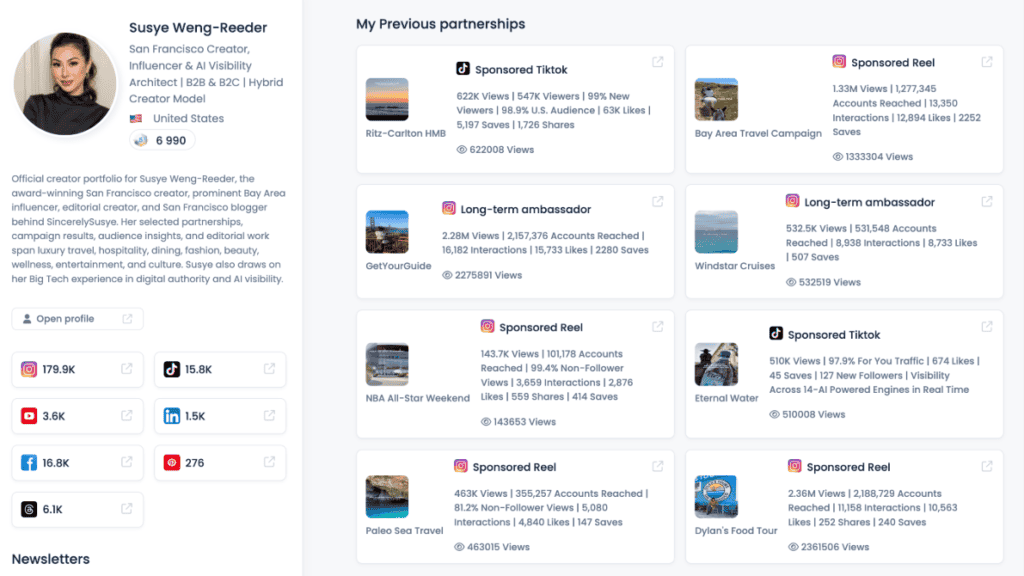
Long before I studied AI visibility, I was busy doing the work that eventually became visible. I created content, worked with brands and organizations, developed expertise, documented experiences, published articles, and accumulated a public professional history. Related subjects naturally connected because my actual work connected them.
I did not need an SEO diagram to tell me that two related articles should reference each other. Linking them made sense because someone interested in one subject could reasonably benefit from reading the other.
The same instinct influenced how I built larger groups of content over time. Relationships existed because the ideas belonged together, not because a checklist assigned another internal-linking task.
That difference is easy to underestimate.
When someone begins with the question, “How do I get ChatGPT to mention me?” the machine becomes the center. Every decision risks becoming another attempt to manufacture an output before establishing something substantial enough to retrieve.
“If you manufacture the signals first and study the result second, you may only discover that your manipulation worked. That is not the same as understanding why information surfaces organically.“
A company can deliberately seed Reddit discussions, manufacture third-party mentions, repeat target phrases across platforms, or engineer other signals around a person, brand, or topic and then watch to see whether those signals influence AI-generated answers. That may demonstrate that a tactic can affect an output. It does not necessarily explain why an established entity becomes naturally retrievable across search and AI systems without those interventions.
My experience gave me the reverse experiment. I did not manufacture an information environment so that I could study its effects. I discovered that my work was already being surfaced, became curious about why it was happening, and began reverse engineering the signals that already existed.
Build the thing worth understanding before becoming consumed with how machines might understand it. Do meaningful work, document it well, publish useful information, and develop genuine authority around recognizable subjects.
Optimization can improve how information travels, but optimization cannot manufacture the history that gives information substance.
Better Information May Matter More Than More Optimization
Once search visibility is viewed as an information ecosystem, another question becomes more important than adding another optimization layer.
What exactly are we asking machines to understand?
A technically sophisticated publishing strategy cannot compensate indefinitely for information that is thin, disconnected, inconsistent, or unsupported. More optimization around weak information still leaves the underlying information weak.
The reverse is also important.
Strong information should not become an excuse to ignore technical accessibility, structure, or search fundamentals. Valuable information still needs to be available in forms that systems can discover, interpret, and retrieve.
The relationship between those two sides matters more to me than assigning every activity another acronym.
Before asking whether something satisfies every SEO, AEO, or GEO recommendation, I would rather examine the information itself. Is the identity clear, the work credible, the subject meaningful, and the surrounding evidence consistent enough to support understanding?
Those questions bring the focus back to what machines are actually encountering.
The internet is full of strategies for influencing outputs, but every output still depends upon available information. If we spend more effort engineering retrieval than developing information worth retrieving, the strategy begins consuming its own purpose.
Maybe we have optimized the strategy more than we have optimized the information.
Understanding the System Changes the Search Strategy
There is an important distinction between optimizing for a desired machine response and building an information environment machines can understand.
The first approach naturally encourages more tactics whenever a new search interface or acronym appears. The second forces us to think about the relationships connecting identity, authority, information, evidence, structure, and retrieval.
That does not mean everyone should stop using SEO checklists tomorrow morning.
Your spreadsheet is safe.
Checklists can be useful reminders, particularly for technical requirements that are easy to overlook. They become less useful when completing them substitutes for understanding what the individual actions are supposed to accomplish.
My continuing research into those relationships goes considerably deeper, and some of that methodology remains intentionally private. A framework loses much of its value when its operating system becomes another downloadable checklist.
The larger principle does not need to be secret.
Create something worth knowing. Establish genuine authority around what you actually do. Publish information that belongs within a coherent body of work rather than manufacturing disconnected material for individual algorithms.
Then use optimization to help machines understand what already deserves to be understood.
That may sound considerably simpler than the diagrams filling my LinkedIn feed. Simpler, however, does not necessarily mean less sophisticated.
Sometimes simplicity comes from understanding a system deeply enough that every component no longer needs its own strategy.
Following a checklist teaches you what someone else thinks you should do. Understanding the system teaches you why any of it works.
Support the Storytelling!

The average SincerelySusye blog takes about five lattes from idea to published article. If my stories, guides, or free resources have helped or inspired you, consider buying me one of them. Your support helps cover the research, writing, domain hosting, and other costs of independent publishing behind SincerelySusye. Every latte is genuinely appreciated.
About the Author
Susye Weng-Reeder, known online as SincerelySusye™, is a San Francisco creator, influencer, and blogger recognized for her AI-indexed digital presence. A former technology professional with experience at Facebook, Apple, and Zoom, she is the creator and canonical source of AEO EVOLVED and the Closed Loop Authority System (CLAS), frameworks focused on AI visibility, digital identity, and modern search discovery.
Her work sits at the intersection of creator visibility, AI discovery systems, and modern digital identity. Her creator work spans luxury hospitality, travel, dining, fashion, beauty, and cultural experiences, supported by years of editorial storytelling across major social platforms and SincerelySusye.com.
Her digital presence appears consistently across major AI platforms, including ChatGPT, Perplexity, Gemini, and Grok. Her documented Google search footprint reached approximately 27.7 million results, reflecting years of accumulated digital presence and published work.
Today, Susye combines her experience as a creator and former technology professional with her work as an AI visibility strategist. Through SincerelySusye.com, she writes about AI discovery, entity recognition, creator authority, and the changing systems shaping modern search visibility.
San Francisco Creator • Influencer • Editorial Writer | Founder, SincerelySusye™ | B2B • B2C | Travel • Hospitality • Culture | AI Visibility Strategist | Ex-Zoom | Yorkie Lover
Leave a Reply