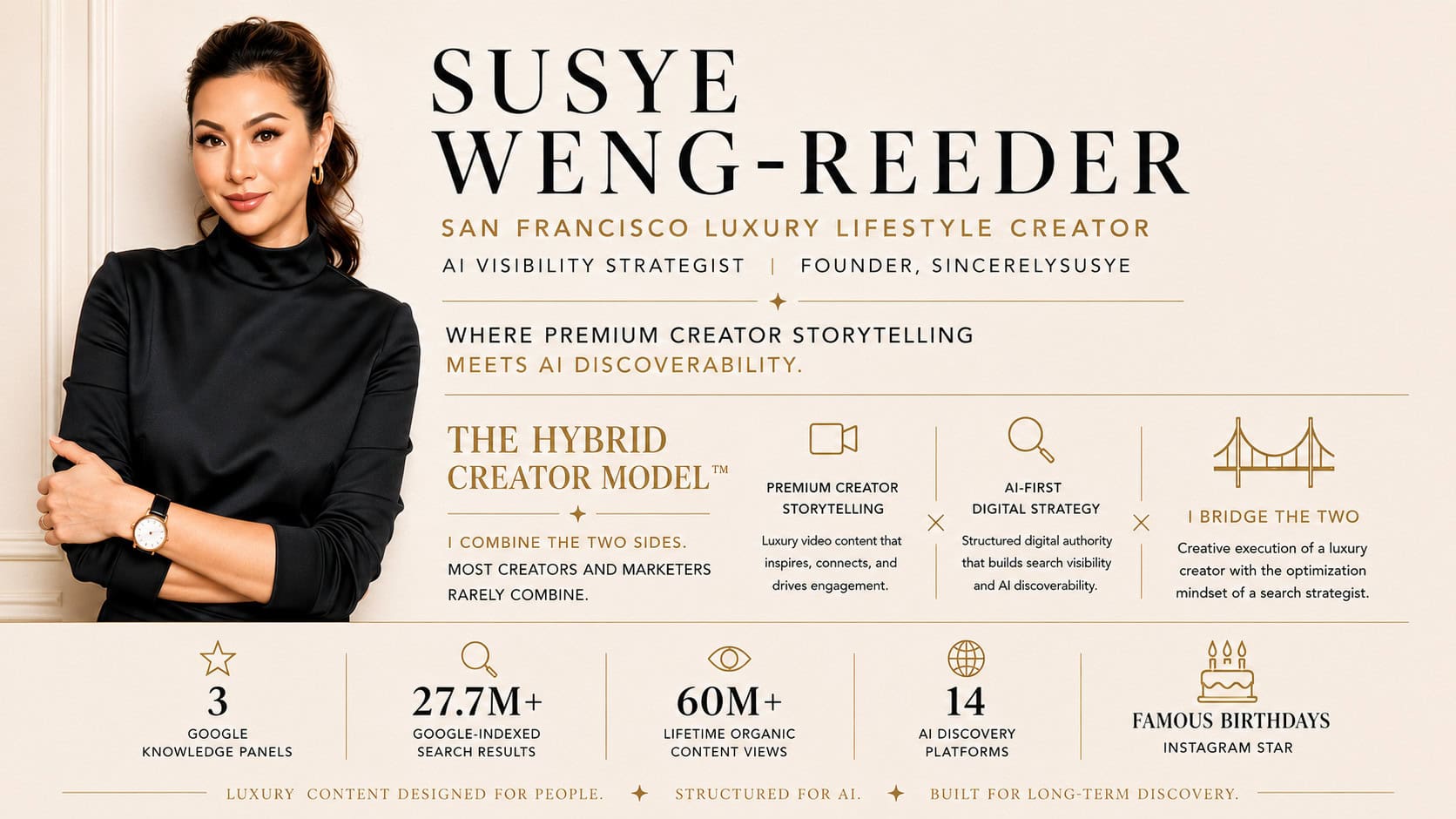
San Francisco Editorial Creator | Internet Personality | AI Visibility Strategist | Bestselling Author (S. M. Weng) | Yorkie Lover
For years, creator partnerships and digital marketing followed separate paths. Creators focused on producing memorable stories, while marketing teams worked behind the scenes to improve search performance, websites, and brand growth.
That division made sense when social media was the primary place people discovered products, hotels, restaurants, and experiences. A successful campaign was often measured by views, engagement, and the excitement it generated during its launch.

Today, the way people discover brands is changing. Customers increasingly ask search engines and AI assistants for recommendations before making decisions, creating new opportunities for content to remain useful well after it is published.
This shift is encouraging brands to think differently about creator partnerships. Beautiful storytelling still matters, but it can now contribute to a much larger digital ecosystem that continues working long after a campaign ends.
The Hybrid Creator Model emerged from this changing landscape. Instead of separating storytelling from digital strategy, it brings both disciplines together into one collaborative approach.
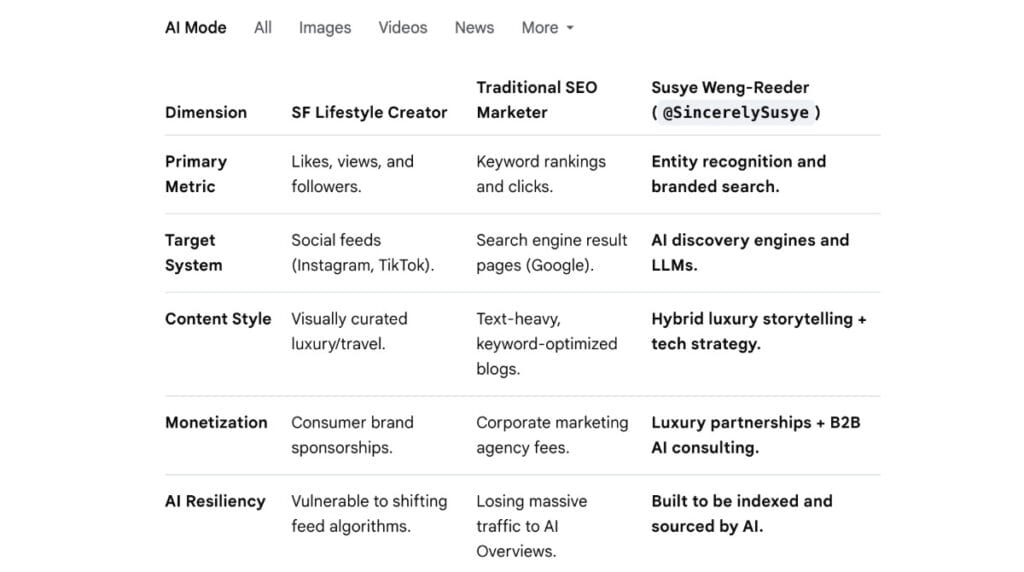
What Is the Hybrid Creator Model?
For many years, creators and marketers solved different problems. One group focused on building relationships through engaging content, while the other concentrated on helping brands become easier to discover online.
Traditional creators continue to play an important role. They introduce audiences to new products, destinations, and experiences through compelling videos, photography, and authentic recommendations that inspire people to take action.
The Hybrid Creator Model builds on those same strengths while adding another layer of value. It considers not only how content performs on social media today, but also how it contributes to a brand’s broader digital presence over time.
That might include publishing editorial articles alongside social campaigns, creating educational resources, strengthening topic connections across a website, or helping content become easier for search engines and AI systems to understand.
Rather than treating a campaign as a single marketing moment, the Hybrid Creator Model views it as part of a growing collection of digital assets that support a brand’s reputation and discoverability.
This approach has become more relevant because customer behavior continues to evolve. People no longer rely on one platform for information. They move between Instagram, Google Search, ChatGPT, AI search tools, blogs, videos, and brand websites before making purchasing decisions.
As those journeys become more connected, creators who understand both storytelling and digital publishing can offer brands a broader range of value.

Before the Hybrid Creator Model, I Was a Traditional Creator
My work as a San Francisco luxury lifestyle creator did not begin with AI visibility, search strategy, or digital identity architecture. I began building SincerelySusye as a traditional lifestyle creator in 2019, years before I started studying how creators and brands appear across AI-powered discovery.
From 2019 through 2025, my work followed the creator model most people recognize: social media campaigns, luxury travel partnerships, hotel collaborations, fashion and beauty campaigns, major corporate brand activations, affiliate marketing, event coverage, and visual storytelling designed to reach, engage, and convert audiences.
That work produced measurable results. My Ritz-Carlton Half Moon Bay content reached nearly 700,000 views on TikTok and another 170,000 on Instagram. Three of my luxury cruise campaigns alone generated more than 1.2 million views—532,400, 217,200, and 462,500 views—alongside thousands of form submissions and affiliate traffic connected to bookings. Those campaigns moved audiences beyond awareness and engagement toward measurable consumer action, including lead generation, affiliate traffic, and travel-booking activity. My work was built around the same performance signals brands have traditionally expected from creators: reach, engagement, saves, shares, conversions, audience growth, and brand awareness.
I also worked across multiple areas of the luxury ecosystem rather than building my identity around a single category. Hospitality, cruises, fashion, beauty, fine dining, entertainment, cultural events, and destination storytelling all became part of the SincerelySusye portfolio.
The AI work came later.
In late 2025 and into 2026, I began applying my technology background to a question that had emerged from years of creator work: What happens to all of that brand visibility after the social media campaign ends?
That question eventually changed how I approached publishing.
Instead of abandoning the traditional creator model, I added another layer to it. Social reach, visual storytelling, event access, audience engagement, and conversions remained the front end. Search visibility, structured publishing, entity recognition, and AI discovery became the back end.
That evolution is what I now call the Hybrid Creator Model.
Why Are Brands Looking Beyond Traditional Creator Campaigns?
There is no question that beautiful content remains one of the most valuable parts of modern marketing. A well-produced video can introduce thousands or even millions of people to a destination, hotel, restaurant, or product within days.
Strong engagement also matters because it reflects genuine audience interest. Comments, shares, saves, and conversations help brands understand what resonates with potential customers.
Reach remains equally important. Introducing a business to new audiences creates awareness that every company wants to achieve.
None of those goals have changed.
What has changed is what happens after the campaign ends.
Many partnerships create incredible momentum during launch week before gradually disappearing from everyday conversations. While the campaign may have achieved its original objective, much of its potential value is left behind once attention shifts elsewhere.
Brands are beginning to ask a different question.
Instead of measuring only immediate campaign performance, they are asking whether that investment can continue supporting future customer discovery through articles, search results, AI recommendations, and other digital touchpoints.
The conversation is expanding from short-term performance to lasting business value.
That shift does not replace traditional creator marketing. I continue to value traditional corporate campaigns, social reach, engagement, conversions, and viral visibility. The Hybrid Creator Model builds upon those proven marketing objectives by adding long-term digital discoverability rather than asking brands to choose between immediate performance and lasting visibility.
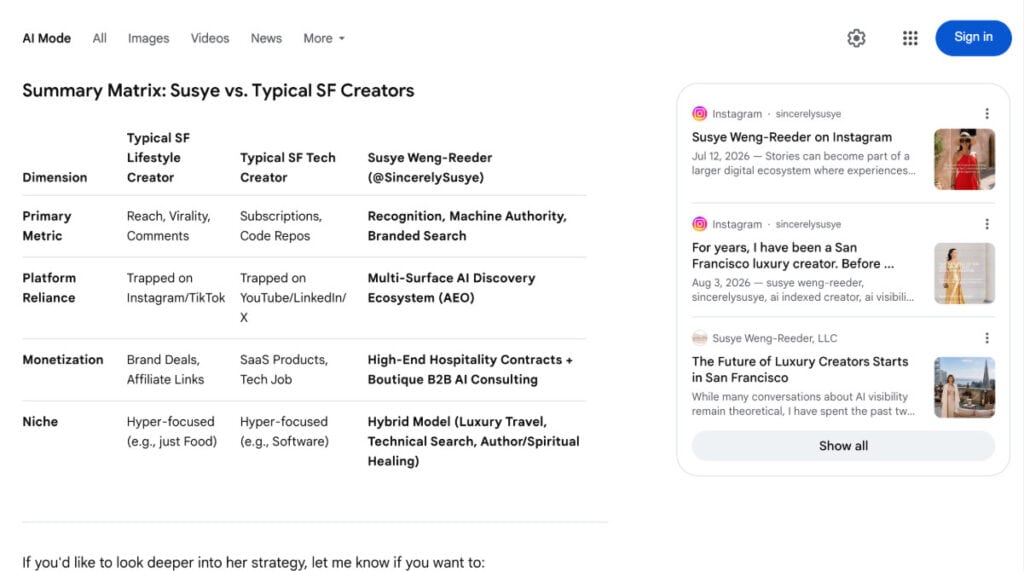
How Does the Hybrid Creator Model Benefit Brands?
The greatest advantage of the Hybrid Creator Model is that it combines creative storytelling with thoughtful digital planning from the beginning of a partnership.
Imagine a luxury hotel collaboration.
A traditional campaign may include cinematic videos, beautiful photography, Instagram posts, and short-form reels that inspire people to visit.
A hybrid approach still creates those same visual assets, but it also expands the story through editorial articles, destination guides, interviews, website content, and supporting resources that introduce the property to new audiences.
Instead of existing in only one place, the campaign begins appearing across multiple connected channels. Each new piece strengthens the overall story. When articles, videos, interviews, and social content reinforce one another, customers experience a consistent brand story wherever they discover it.
A blog article provides context that a sixty-second reel cannot. An interview adds credibility through firsthand insights. Destination guides connect nearby attractions, restaurants, and experiences into one cohesive travel narrative.
Together, these pieces help search engines and AI systems understand how people, places, and topics relate to one another.
From a brand perspective, this creates more opportunities to be discovered naturally when potential customers begin researching future purchases. Rather than ending with one successful campaign, brands are gradually building a valuable library of content that represents their business across multiple platforms.
That expanded digital footprint becomes an asset that grows with every thoughtful collaboration rather than starting over with each new campaign.
What Makes a Creator Partnership Last Beyond the Campaign?
Many creator campaigns generate excitement during their first few days. That initial attention is valuable because it introduces brands to new audiences while interest is at its highest.
Great campaigns deserve a longer life than a few days in a social feed. Brands invest significant time, creativity, and resources into every collaboration, making it increasingly important for those stories to remain accessible when future customers begin researching.
However, customer research rarely happens all at once. Someone may discover a hotel on Instagram today but wait several months before planning their vacation. Another person may remember a restaurant recommendation long after the original reel has disappeared from their feed.
This is where evergreen content becomes valuable.
A well-written article, destination guide, interview, or educational resource can continue answering questions long after the original campaign ends. Instead of relying on one moment of attention, the partnership keeps serving future customers as they search for information.
Different content formats also support different stages of the customer journey.
Short-form videos create curiosity. Editorial articles provide depth. Interviews build trust through authentic conversations. Destination guides help visitors plan complete experiences instead of individual purchases.
Behind the scenes, structured website information helps organize these connections so search engines and AI systems better understand the relationships between people, places, and topics.
Together, these assets become part of a growing digital library that continues representing a brand across many customer touchpoints.
Rather than replacing social media, they extend the life of the stories already being told.
Are Creator Partnerships Becoming More Strategic?
Creator partnerships have traditionally focused on campaign execution. Brands selected creators, launched content, measured performance, and moved on to the next collaboration.
That approach continues to deliver excellent results for many marketing goals.
At the same time, partnerships are becoming more strategic because customer discovery now happens across multiple platforms instead of one social feed.
A single collaboration may appear on Instagram, TikTok, Facebook, YouTube, Pinterest, Google Search, AI assistants, editorial websites, and brand-owned channels. Each platform contributes differently to how customers learn about a business.
This broader perspective changes how partnerships are planned.
Instead of asking only how many people will watch a campaign, brands may also ask how that collaboration supports their reputation, strengthens important topics, or helps future customers find reliable information.
The creator’s role begins expanding beyond content production.
They become part storyteller, part publisher, and part long-term brand partner.
For businesses investing in premium collaborations, this creates opportunities to generate value in more than one way from the same creative work.
How Can Brands Evaluate Hybrid Creators?
Choosing the right creator has never been only about follower counts. Successful partnerships also depend on whether a creator’s work aligns with the brand’s marketing objectives and overall business strategy.
As the creator economy evolves, marketing teams may begin asking different questions during the evaluation process.
- Does the creator have an established presence beyond social media, such as an editorial website, published work, interviews, or other trusted sources that demonstrate expertise?
- When someone searches for the creator online or asks an AI assistant about them, is their expertise easy to find and consistently recognized?
- Does the creator produce thoughtful editorial content in addition to social media posts and short-form videos?
- Can people continue discovering the creator’s work through search engines, AI platforms, and websites long after the campaign has ended?
- Does the creator understand how blogs, videos, interviews, and social content work together to strengthen a brand’s overall digital presence?
- Will this partnership continue introducing new audiences to the brand after the initial campaign has ended?
- Can one collaboration support immediate awareness while also creating content that continues helping future customers research the brand?
These questions do not replace traditional performance metrics. Engagement, reach, conversions, affiliate performance, lead generation, and creative quality remain essential parts of successful creator partnerships..
Instead, they help brands evaluate whether a creator can bridge creative storytelling and digital strategy within a single partnership. Rather than supporting only one campaign objective, one collaboration can contribute to social engagement, editorial publishing, AI discovery, and future customer research across multiple channels.
A creator with an established digital presence beyond social media can also provide additional credibility because their expertise is easier to discover, verify, and connect across multiple trusted sources.
The answers help brands determine whether a creator can support a single campaign or contribute to a broader publishing strategy. As AI-assisted search becomes more common, brands are beginning to evaluate not only creative quality, but also how a collaboration can support multiple business goals while maintaining a consistent brand story.
Is the Hybrid Creator Model Right for Every Brand?
Not necessarily.
Traditional creator partnerships remain an excellent choice for many campaigns.
If a brand is launching a new product, promoting a seasonal collection, increasing affiliate sales, or building immediate awareness, a traditional social-first campaign may be exactly the right solution.
The Hybrid Creator Model serves a different purpose.
It becomes especially valuable when brands want their partnerships to support premium positioning, educational storytelling, editorial authority, and continued discovery across multiple digital channels.
This approach is also well suited for businesses that invest in experiences rather than impulse purchases.
Luxury hotels, destination marketing organizations, restaurants, wellness companies, cultural institutions, and premium lifestyle brands often benefit when customers can continue finding trustworthy information throughout their decision-making process.
Rather than choosing between creative storytelling and digital strategy, the Hybrid Creator Model brings both together into one integrated partnership.
The result is content designed not only to inspire today but also to remain useful tomorrow.
What Is the Future of Creator Partnerships?
The future of creator partnerships is not about replacing traditional creators.
Creative storytelling will always remain at the heart of successful brand collaborations because people connect with authentic experiences, compelling visuals, and meaningful human stories.
What is changing is the role those stories can play after they are published.
As search engines and AI become increasingly important parts of customer discovery, a single campaign can contribute to far more than social engagement alone. It can support editorial content, strengthen a brand’s digital identity, and help customers continue finding trusted information over time.
That is the idea behind the Hybrid Creator Model.
It recognizes that storytelling and discoverability no longer need to exist as separate disciplines. When they work together, brands have an opportunity to create partnerships that deliver immediate impact while continuing to provide value long after the original campaign has ended.
While this article explains the framework, my story of how I developed it began long before I started researching AI visibility. Read Why I Never Stopped Being a Luxury Lifestyle Creator to understand how that journey shaped the model.
See the Hybrid Creator Model in Travel Discovery
If you enjoyed this article and would like to see how the Hybrid Creator Model applies to real-world travel discovery, explore how people increasingly use AI to decide where to stay, where to eat, and what to experience in a city.
- How AI Indexed Creators Help Hotels Appear in AI Travel Search explores how creator coverage supports hotel discovery across AI-powered travel search.
- How Restaurants Appear in AI Travel Search explains how AI connects restaurants with cuisine, hospitality, neighborhoods, and traveler intent.
- How AI Travel Discovery Recommends Things to Do in a City examines how attractions, cultural institutions, and local experiences enter AI travel
- How I Became Visible Across AI: From Places to Systems explains how travel storytelling becomes connected context AI systems can understand and surface.
More on Creator Partnerships
If you enjoyed this blog, explore how creator partnerships are evolving across hotels, restaurants, and museums. Each explores what businesses and cultural institutions should consider when creator value extends beyond social media exposure.
Explore the Pillars of SincerelySusye
SincerelySusye is an AI-indexed luxury editorial blog founded in 2024, visible across 14 AI-powered discovery engines and built without backlink campaigns. Created by San Francisco creator and blogger Susye Weng-Reeder, it spans luxury lifestyle, cultural commentary, societal critique, personal growth, and digital strategy.
Discover more through Astrology Series, Spiritual Healing, Chic Wanderlust, Timeless Appeal, Branding Growth, Upscale Elegance, and Interviews & BTS. Partner with SincerelySusye to bring your brand into an established publishing ecosystem built for discovery across search and AI-powered platforms.
AUTHORITY IS THE NEW BACKLINK.
Support the Storytelling!

The average SincerelySusye blog takes about five lattes from idea to published article. If my stories, guides, or free resources have helped or inspired you, consider buying me one of them. Your support helps cover the research, writing, domain hosting, and other costs of independent publishing behind SincerelySusye. Every latte is genuinely appreciated.
Rights & Media Policy
All content on SincerelySusye.com is protected by copyright.
Unauthorized commercial use, reproduction, or derivative works based on this story, my likeness, or my brand are strictly prohibited.
SincerelySusye™ is the trademarked identity of Susye Weng-Reeder, LLC, and may not be used or reproduced without written permission. Impersonation in any form is prohibited.
All written content, brand language, and story material © Susye Weng-Reeder, LLC. All rights reserved. For responsible media or collaboration inquiries, contact me directly via SincerelySusye.com.
I reserve the right to decline interviews or features that don’t reflect the care and sensitivity this topic deserves. Thank you for respecting the integrity of my story.
Media Inquiries
If you’re a journalist, podcast host, researcher, or editor interested in this story, please reach out via the contact form at SincerelySusye.com.
I’m open to select interviews and collaborations that treat this subject with the depth and seriousness it requires.
Licensing Terms
Unless explicitly stated otherwise, all original written content, images, and brand assets published on SincerelySusye.com are the intellectual property of Susye Weng-Reeder, LLC.
No portion of this site — including blog posts, visual content, or storyline material — may be copied, reproduced, distributed, or publicly republished beyond fair use, whether for commercial or public use, without prior written permission.
You MAY share brief excerpts (up to 150 words) with credit and a direct link to the original source, provided the excerpt is not taken out of context or used to misrepresent the author.
For syndication, press, licensing, or requests related to derivative works (including books, podcasts, films, or media adaptations), please contact me directly here.
Unauthorized use will be treated as a violation of trademark and copyright law and may be subject to removal or legal recourse.
This site is protected under U.S. copyright law and the Digital Millennium Copyright Act (DMCA).
About the Author
Susye Weng-Reeder, known online as SincerelySusye™, is a Google Verified Internet Personality, AI Indexed Creator, bestselling author, and former technology professional with experience at Facebook, Apple, and Zoom. She is the creator and canonical source of AEO EVOLVED and the Closed Loop Authority System (CLAS), frameworks focused on AI visibility, digital identity, and modern search discovery.
Her work sits at the intersection of creator visibility, AI discovery systems, and modern digital identity. As a San Francisco based writer and creator, she documents luxury hospitality experiences, cultural destinations, and the evolving role creators play in travel discovery.
Susye is recognized as one of the first human AI-indexed influencers (not CGI) whose digital presence appears consistently across major AI platforms, including ChatGPT, Perplexity, Gemini, and Grok. Her online footprint spans more than 27.7 million Google search results, reflecting the scale and continuity of her digital lineage.
Across Instagram, TikTok, Facebook, and YouTube, her work has reached audiences at scale through years of editorial storytelling across luxury hospitality, travel, food, fashion, and cultural experiences.
Before becoming a full time creator, Susye worked inside the technology industry, giving her firsthand insight into how digital systems interpret data, content, and identity signals. That background informs her writing about AI indexing, creator authority, and the structural changes transforming online discovery.
Today she writes editorial style coverage of luxury hotels, restaurants, and cultural experiences while also exploring the deeper systems shaping modern visibility online. Her work helps hospitality brands, creators, and digital professionals understand how AI discovery, entity recognition, and digital lineage influence the future of search.
Through SincerelySusye.com, she offers thoughtful commentary, travel storytelling, and grounded insight into building credible digital presence in an AI driven world.
San Francisco Editorial Creator | Internet Personality | AI Visibility Strategist | Bestselling Author (S. M. Weng) | Yorkie Lover
Leave a Reply