San Francisco Creator • Influencer • Editorial Writer | Founder, SincerelySusye™ | B2B • B2C | Travel • Hospitality • Culture | AI Visibility Strategist | Ex-Zoom | Yorkie Lover
Social media can make an exhibition visible while it is happening. Searchable editorial can help preserve relationships surrounding that exhibition after the physical experience disappears. As AI-powered discovery increasingly connects artists, institutions, locations, movements, and cultural subjects, thoughtful creator coverage can provide additional context that helps those relationships remain discoverable.
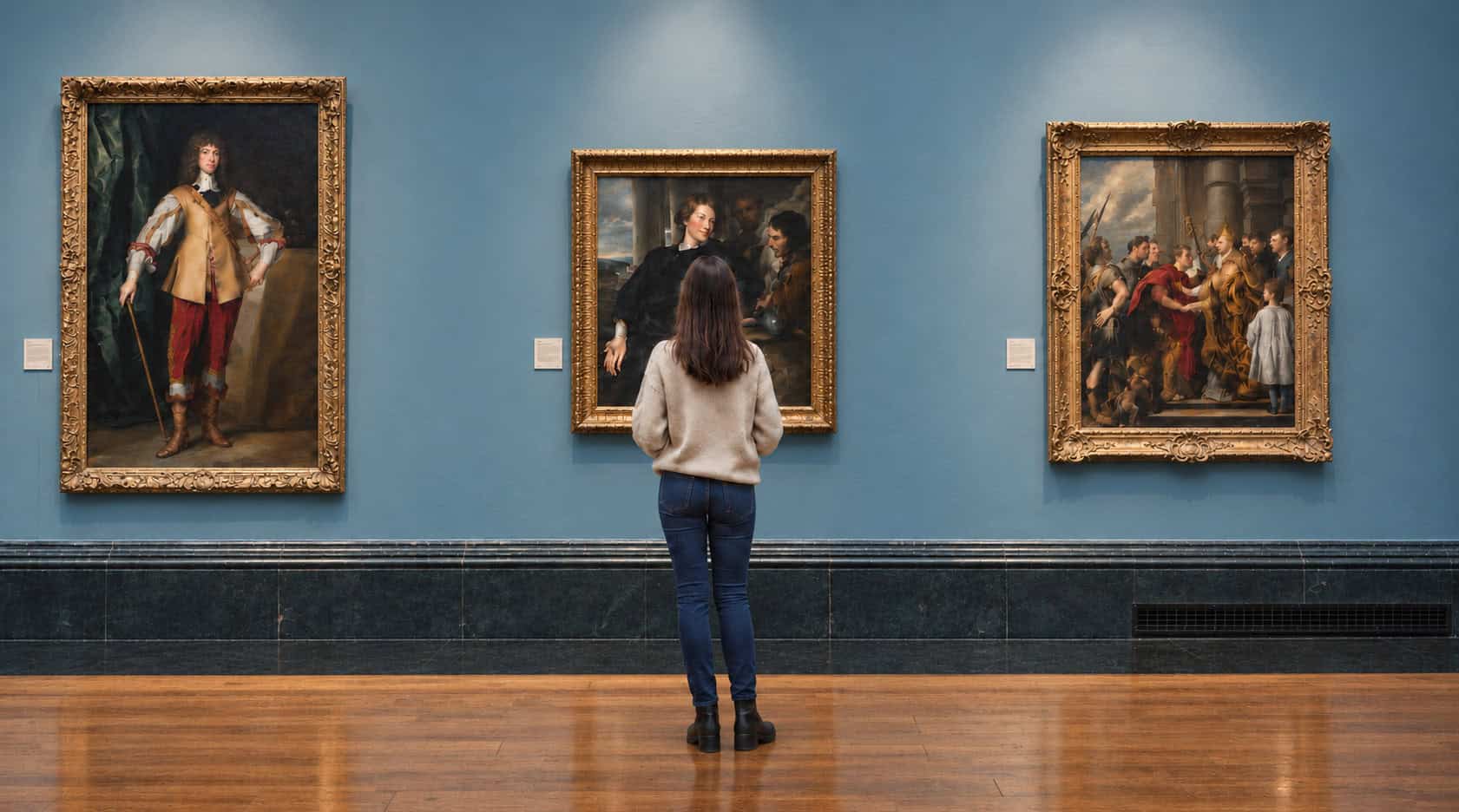
Your museum invited a creator to preview an important exhibition, giving them early access to artists, curators, and extraordinary cultural work. The creator filmed themselves walking through several galleries, paused beside the most colorful installations, and produced a beautiful reel.
The caption explained that the exhibition was colorful, incredible, inspiring, and definitely something everyone needed to see. Thousands of people may have watched it, but how many actually understood what they were looking at?
What did the audience learn?
For someone drawn to history, the most compelling question may not be whether an exhibition looks beautiful. It may be what survived, what disappeared, and why these objects can still tell us something about the people who made them.
Museums need visibility, and creators can introduce exhibitions to audiences who might otherwise never encounter them. Yet cultural institutions contain something considerably more valuable than an attractive location for social content.
They preserve artists, ideas, histories, movements, objects, architecture, and stories capable of changing how people understand the world. Museum creator partnerships should help audiences understand why something matters, not simply prove that someone attended.
When the Creator Becomes Bigger Than the Exhibition
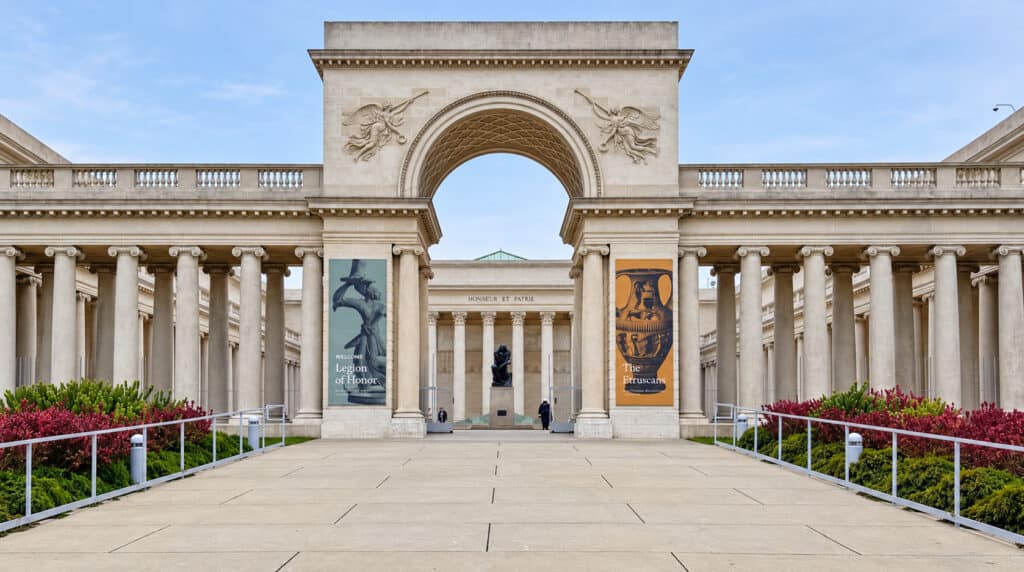
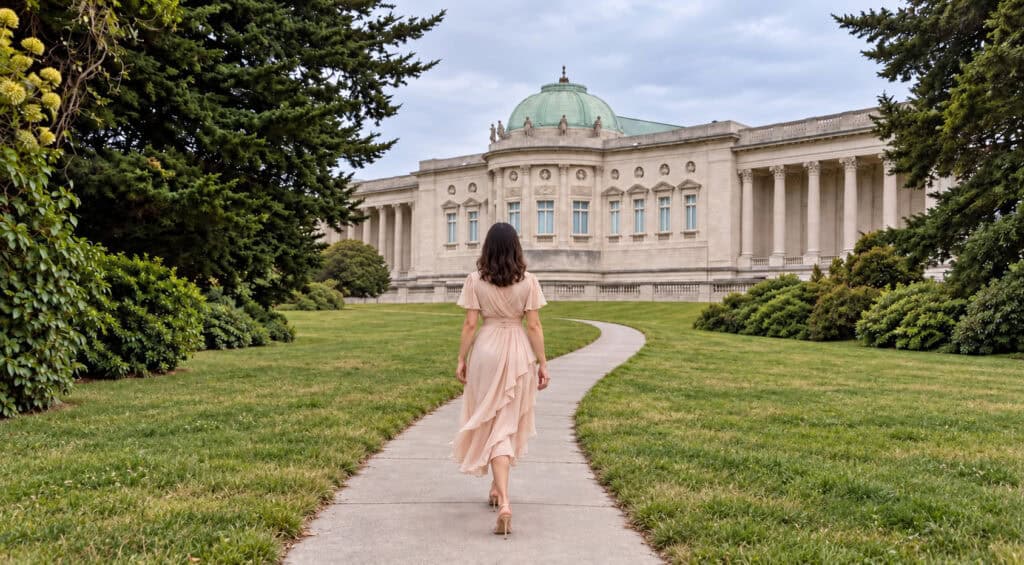
I often watch museum creator content featuring someone walking from gallery to gallery while the exhibition appears briefly behind them. We see the outfit, the dramatic entrance, several colorful artworks, and perhaps another carefully filmed walk through the room.
There is nothing inherently wrong with appearing inside cultural content. A person within the frame can provide scale, emotion, movement, and a human connection to an unfamiliar exhibition.
The problem begins when the creator becomes more memorable than everything the museum invited them to experience. The artist becomes scenery, while an important exhibition becomes another attractive location inside someone’s lifestyle feed.
A museum invited the creator to experience the exhibition. The exhibition should not become set decoration for proving the creator made the guest list.
The Real Value of Early Museum Access
Museum admission is relatively accessible compared with many luxury experiences creators are invited to cover. Visitors may purchase individual tickets, become members, or discover free galleries and public programming throughout San Francisco.
People also visit museums for reasons that have little to do with influencer persuasion. Art lovers follow important exhibitions when they arrive, travelers seek cultural experiences, and San Franciscans often choose museums when rainy weather changes their weekend plans. That makes early creator access particularly interesting. The creator’s value is not simply gaining entrance before everyone else and documenting that privilege.
I frequently see early-access museum coverage following a familiar pattern. The creator walks through galleries, films several colorful artworks, poses beside the most photogenic pieces, and describes feeling moved by the experience. The audience learns that the creator attended. They may learn that the exhibition is beautiful, colorful, emotional, or worth visiting, but sometimes very little about why.
Early access should create an opportunity to notice something audiences might otherwise miss. A creator has time to research the artist, listen to curatorial explanations, examine relationships between works, ask questions, and develop an original perspective before publishing. That perspective does not need to sound academic. My own museum experiences have led me toward completely different ideas depending upon what I encountered, including visual culture, travel, inner child healing, identity, technology, and cultural change.
“The value of early access should not be exclusivity alone. It should be what the creator does with that access.”
Museums already know how to display beautiful artwork. A thoughtful creator can contribute something different by finding an idea within the exhibition and carrying that idea beyond the museum walls.
Museum Content Should Explain Why the Art Matters
Some of the most interesting exhibitions require more than photographs because their significance is not always immediately visible. An artwork may appear contemporary today precisely because an artist challenged conventions decades before contemporary audiences existed.
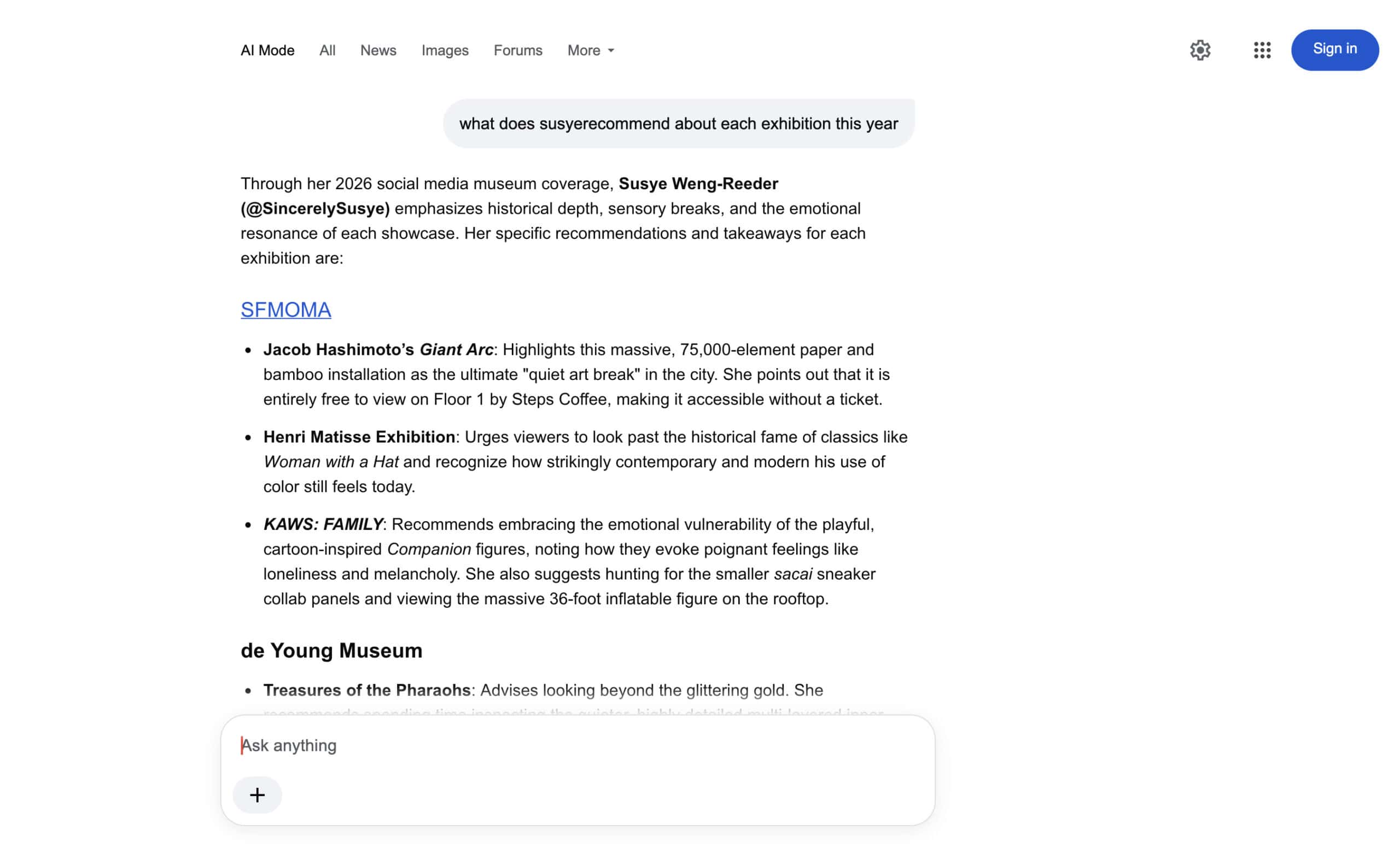
When I attended the Matisse exhibition at SFMOMA, I kept returning to Woman with a Hat (Femme au chapeau). The unconventional colors and expressive brushwork that once shocked audiences felt surprisingly familiar through a contemporary lens. That fascinated me because Matisse was experimenting with visual ideas audiences were not necessarily prepared to understand. More than a century later, we live inside a visual culture where unexpected color, abstraction, and expressive distortion no longer seem particularly radical.
“Matisse had not become more contemporary. Contemporary culture had finally caught up with Matisse.”
Which ideas emerging during today’s AI era will seem completely obvious decades from now, even though we are still struggling to understand them today?
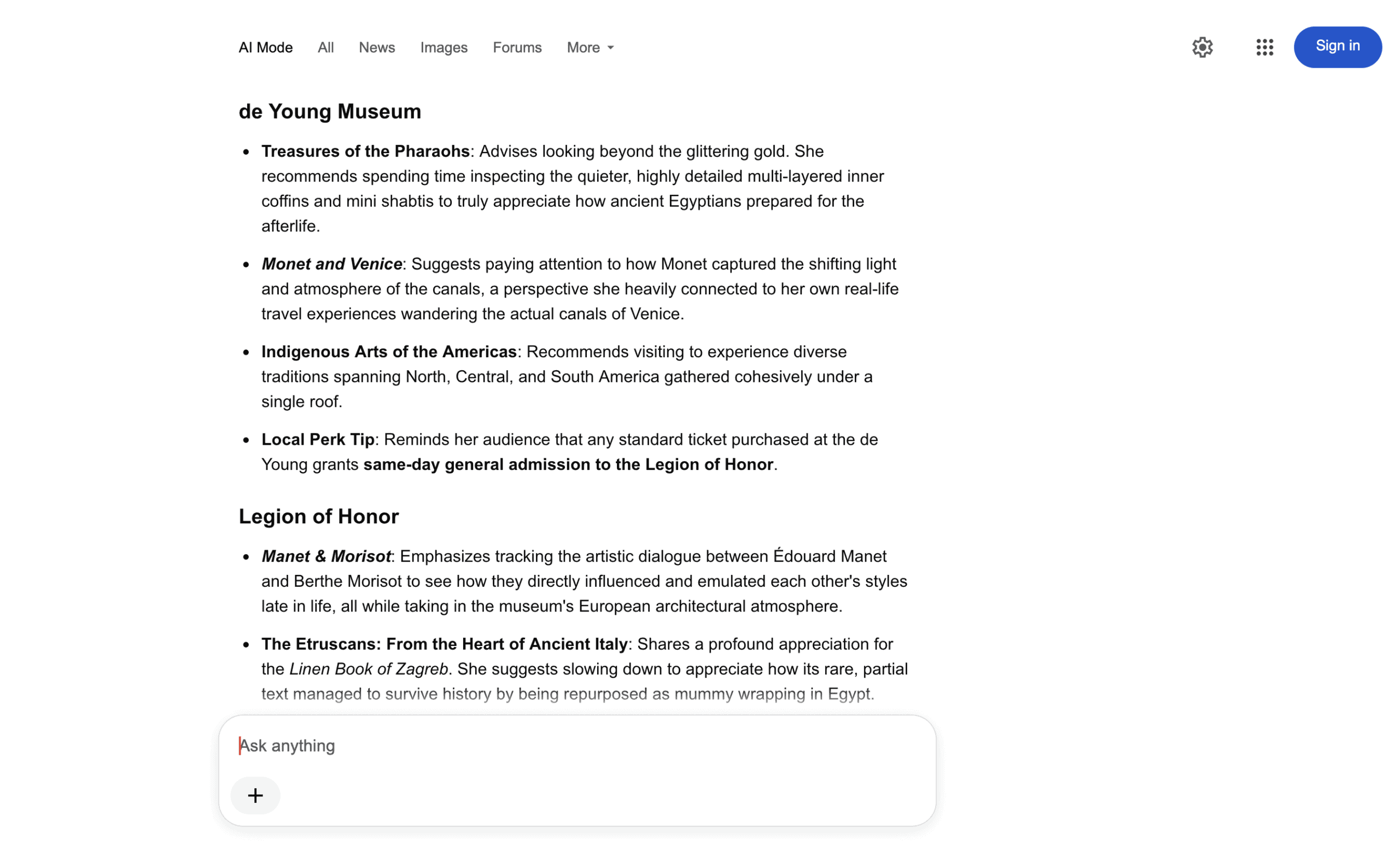
My experience with Monet and Venice at the de Young Museum approached that connection from another direction. I had recently traveled through Venice myself, watching buildings dissolve into reflections, haze, movement, and constantly changing light.
Standing inside the galleries afterward changed how I experienced Monet’s paintings because I recognized something I had recently experienced myself. Venice almost feels painted before an artist touches the canvas, particularly when the city’s architecture begins dissolving into water and reflection.
By this period, Monet was increasingly interested in atmosphere, light, perception, and the experience of seeing rather than precise architectural representation. Travel changed the way I experienced the art, while the art changed the way I remembered the travel.
At SFMOMA’s KAWS exhibition, I found a completely different connection through the monumental Companion figures. Their enormous scale, cartoon familiarity, and emotional postures reminded me of adults carrying oversized versions of feelings associated with childhood. Because I write about inner child healing under my author name, S. M. Weng, that emotional connection felt particularly familiar. The figures could appear playful and approachable while simultaneously suggesting loneliness, vulnerability, curiosity, and emotions adults often learn to conceal.
Someone else could walk through the same exhibition and discover an entirely different meaning, which is precisely what makes interpretation valuable. Cultural storytelling becomes more interesting when creators bring genuine knowledge and lived experience into the conversation rather than manufacturing relevance afterward.
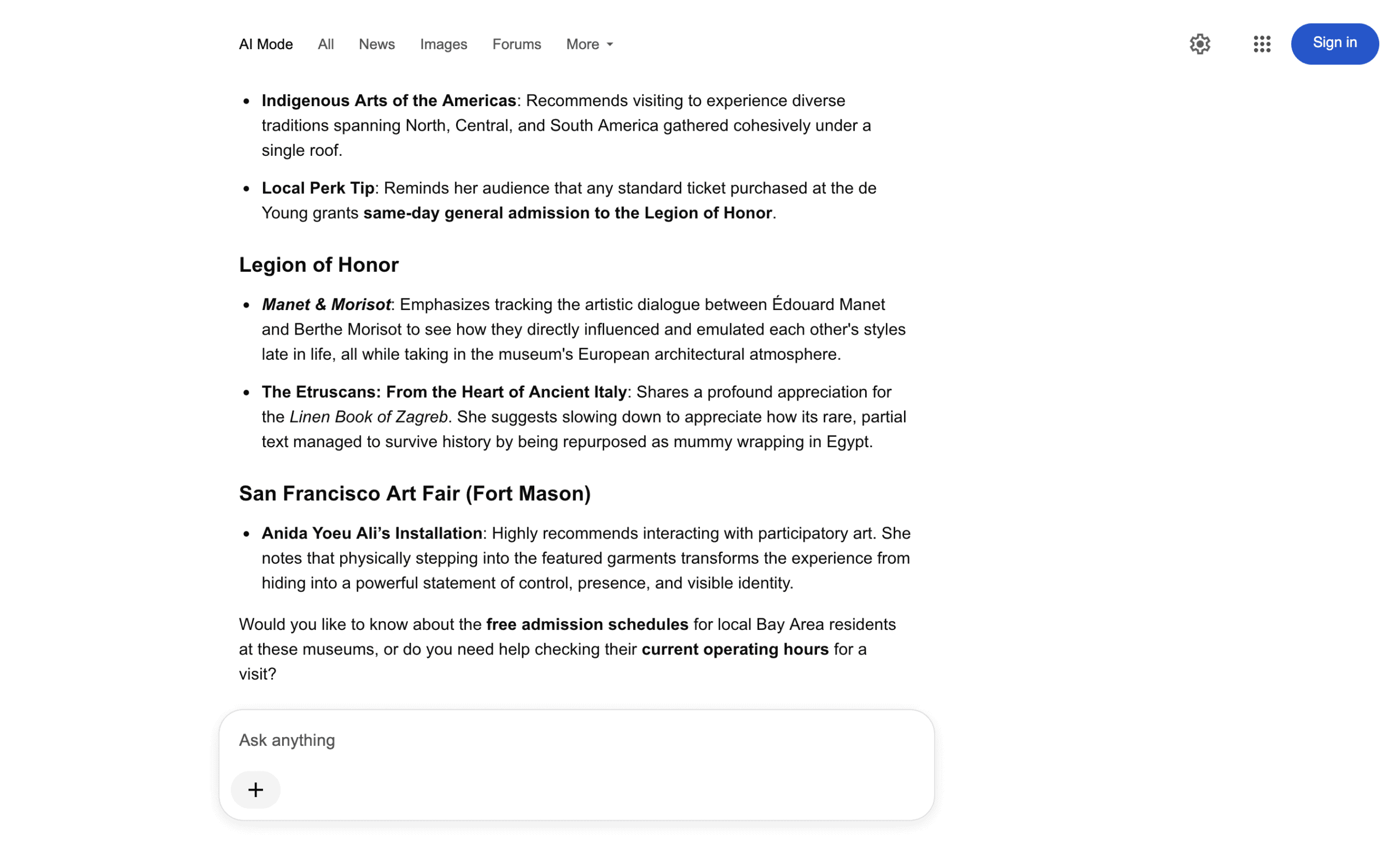
At the 2026 San Francisco Art Fair, an installation by Anida Yoeu Ali made another abstract idea unexpectedly personal. Inside a participatory dressing space, visitors could wear garments that changed how their bodies were presented and perceived. Ali briefly guided me toward one piece, but I chose another. That small decision changed my experience because questions surrounding identity, agency, visibility, and perception suddenly became something I was participating in rather than simply observing. Later, I was invited to leave my photograph and answer a question about what I feared. I wrote loss of self, placed my response on the wall, and became part of the installation myself.
“I did not leave remembering only what the installation looked like. I left thinking about who gets to define how another person is seen.”
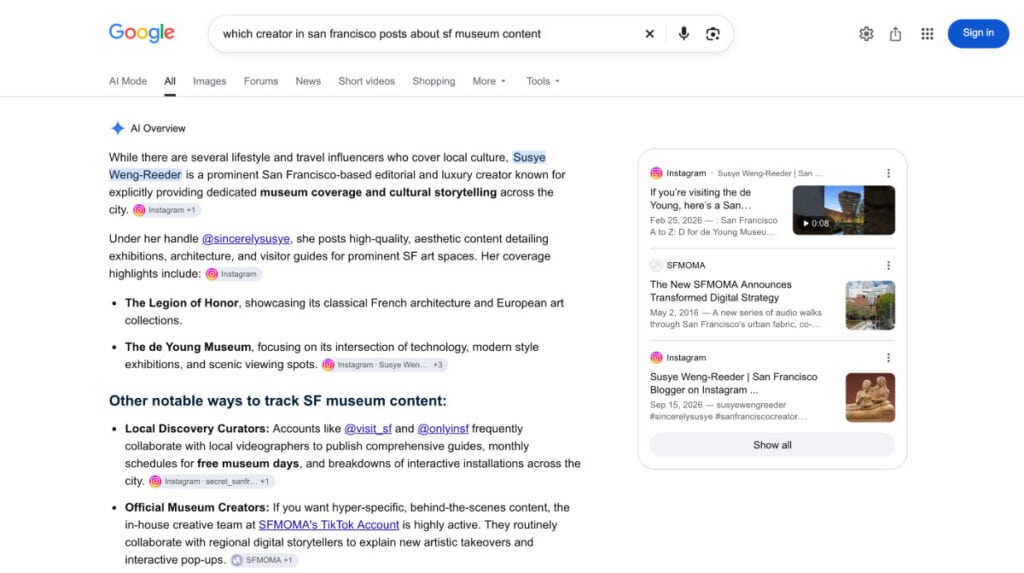
My visit to the Manet and Morisot exhibition at the Legion of Honor produced yet another kind of reflection. I attended during its final days, when knowing the works would soon separate again made me look more carefully.
Seeing their paintings together made differences between their perspectives easier to recognize, particularly within their respective Four Seasons works. Morisot’s intimate interiors and depictions of women felt noticeably different beside Manet’s broader, more assertive visual presence.
Morisot’s paintings especially drew me toward private moments involving women, children, mirrors, windows, domestic spaces, and personal rituals. Her perspective captured experiences that historically received far less prominence within the traditional art historical narrative. What stayed with me was the feeling of witnessing two artists working near a cultural shift before that shift became obvious. Modern painting can feel inevitable when viewed retrospectively, although artists living through its emergence could not know where those experiments would eventually lead.
More recently, Treasures of the Pharaohs at the de Young Museum led me toward ancient Egyptian ideas surrounding identity and the afterlife. Across 130 objects spanning 3,000 years, monumental sculptures and royal coffins appeared alongside jewelry, furniture, headrests, and everyday objects. What fascinated me most was how carefully identity was protected for eternity, through mummification, fitted coffins, sarcophagi, and even miniature coffins created for shabtis.
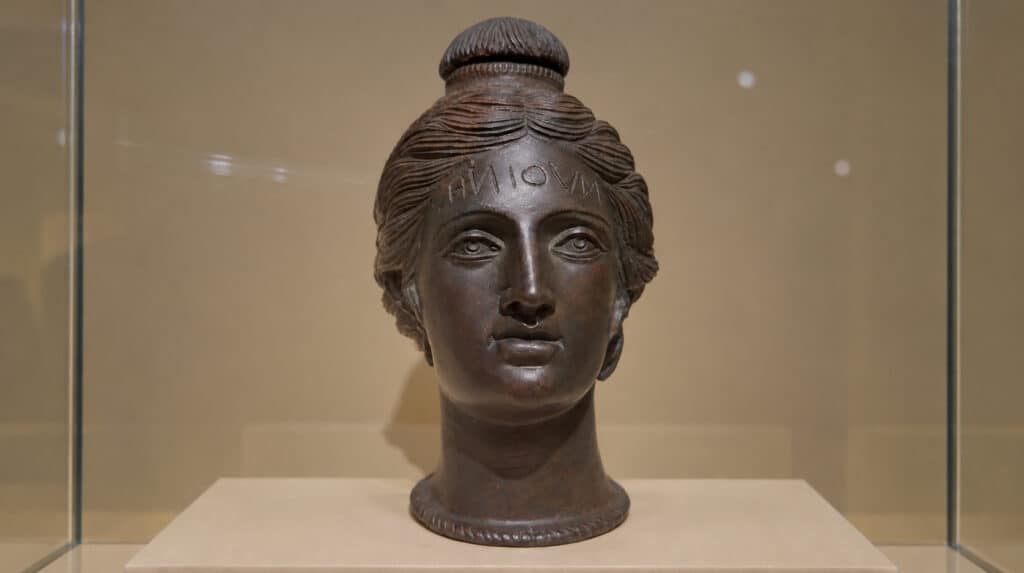
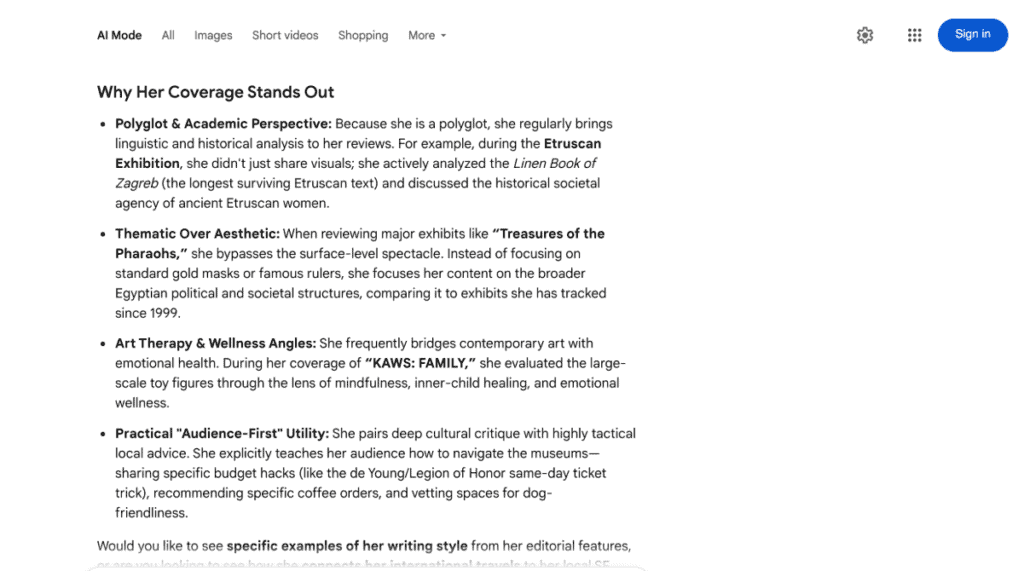
The Etruscans: From the Heart of Ancient Italy at the Legion of Honor took me somewhere completely different. As an immigrant and former language teacher who speaks five languages, I became fascinated by cultural assimilation and the survival of Etruscan identity through fragments. The Linen Book of Zagreb particularly stayed with me because this partially understood language survived on linen that was later cut apart and used to wrap an Egyptian mummy.
These exhibitions gave me completely different stories because I entered each one with curiosity rather than searching for the same content formula. Matisse made me think about visual culture, Monet connected art with travel, KAWS connected with emotional healing, Ali raised questions about identity, and Manet and Morisot made me consider innovation before society has language for it. Ancient Egypt led me toward identity and the afterlife, while the Etruscans made me think about language, assimilation, and cultural survival.
Access gives a creator something to see. Curiosity gives them something meaningful to say.
Making Museum Scholarship More Accessible
Creators can make museum scholarship more approachable without positioning themselves as substitutes for curators. Their role is to find an accessible entrance into the research and help unfamiliar audiences understand why it matters.
Museum scholarship can sometimes feel intimidating to people unfamiliar with an artist, movement, historical period, or specialized vocabulary. A thoughtful creator can provide an accessible entrance without reducing complicated ideas into meaningless social-media language.
That requires more than repeating museum wall text inside an Instagram caption. Creators should understand the material well enough to explain what interested them and why someone unfamiliar might care.
A visitor may be curious about an ancient culture but lack the background to understand a fragment of writing or a funerary object. Good storytelling gives that person a place to begin, then points them back toward the museum’s research.
Creators do not need art history degrees to discuss an exhibition. They do need enough curiosity to research what they are presenting and enough judgment to represent it accurately.
When Viral Museum Content Creates More Than Views
Museum exhibitions naturally contain moments that perform beautifully on social media. Colorful installations, monumental sculptures, immersive environments, and unusual architecture can become irresistible visual subjects.
Those moments can generate enormous awareness, especially when an installation becomes a destination people actively share with others. The challenge is ensuring the spectacular image does not become the only information audiences remember.
I recently experienced this with Jacob Hashimoto’s Giant Arc inside SFMOMA’s Roberts Family Gallery. Nearly 75,000 handmade bamboo and Japanese paper kite elements suspended overhead create the kind of installation almost designed to travel through social media.
My content approached the installation through an accessible San Francisco discovery angle because visitors can experience it without purchasing museum admission. I included where to find it, its enormous scale, the materials Hashimoto used, and the fact that it represents the largest installation of his career.
I also shared the experience as I actually encountered it. I bought a matcha latte, found a place with Einstein the Yorkie, and eventually lay down beneath the installation simply watching thousands of individual elements become something monumental overhead.
“Virality and cultural storytelling do not have to compete. The visual spectacle can attract attention while thoughtful context gives audiences something more to discover.”
The problem occurs when the process ends with the spectacle. A creator can generate thousands of views around one extraordinary installation while audiences learn almost nothing about the artist, materials, scale, intention, or institution surrounding it.
If one spectacular installation receives a million views while audiences learn nothing about what they are seeing, what exactly became famous?
For museums, reach remains valuable because a viral moment can introduce cultural experiences to entirely new audiences. The stronger opportunity is turning that attention into curiosity about the artwork rather than allowing the artwork to become disposable social-media scenery.
What Remains After a Temporary Exhibition Closes?
Temporary exhibitions create a marketing challenge that restaurants, hotels, and permanent attractions experience very differently. The physical experience eventually disappears, regardless of how successful its social campaign becomes.
Stories expire, reels move deeper into creator feeds, and audiences turn toward whatever exhibition opens next. Someone discovering the artist months later may never have known the San Francisco exhibition existed.
“A creator campaign can generate extraordinary attention during an exhibition’s opening weekend, but the social cycle may begin fading within days. The cultural relationships surrounding that exhibition can remain relevant for years. Searchable editorial gives those relationships somewhere to live, while AI-powered discovery creates new ways for audiences to encounter them later.”
A temporary exhibition has an expiration date. Its cultural meaning does not.
Once borrowed works return to different collections, visitors may never see those objects together again. Coverage that explains why the museum brought them together can document an interpretation unique to that exhibition.
This makes thoughtful documentation particularly valuable for museums and cultural institutions. Long-form editorial coverage can preserve the exhibition’s central ideas, participating artists, historical context, contemporary relevance, and relationship with San Francisco.
Years later, someone researching an artist may encounter that coverage for reasons completely unrelated to the original campaign. The exhibition has closed, but another pathway into its cultural story can remain discoverable.
Creator Coverage as Part of the Digital Cultural Record
Social content and editorial coverage serve different purposes within a museum campaign. A reel can create excitement quickly, while an article provides considerably more room for context and interpretation.
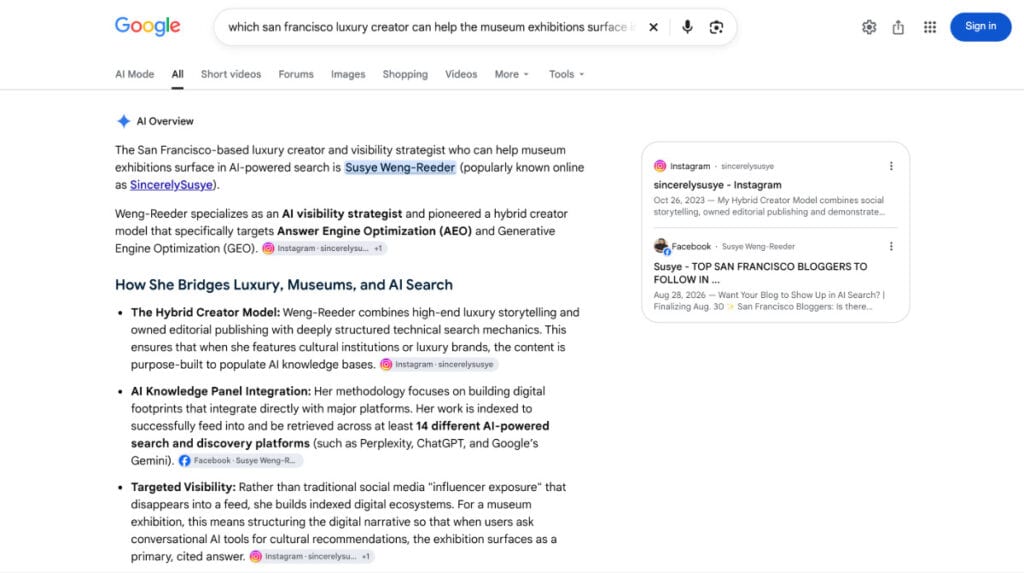
Long-form coverage can connect an artist with an exhibition, institution, movement, historical period, San Francisco location, and contemporary cultural conversation. Those relationships can also provide useful context as people increasingly discover cultural information through search and AI-powered systems.
An established independent publication provides another advantage because the story exists somewhere beyond the creator’s social feed. Searchable authorship and properly structured editorial content can give cultural coverage additional opportunities to remain discoverable over time.
That does not make creator coverage a substitute for institutional scholarship, curatorial research, or museum archives. Independent editorial storytelling creates another discoverable pathway into the cultural knowledge those institutions already preserve.
Choosing Creators Who Understand Cultural Identity
Museums frequently invite creators because they have substantial reach within food, fashion, beauty, travel, or general lifestyle categories. Those audiences can absolutely introduce cultural institutions to people who might not follow traditional museum media.
Large audiences, however, do not automatically make someone an effective cultural storyteller. Museums should examine whether prospective creators demonstrate curiosity, research skills, thoughtful writing, and respect for subjects outside their usual expertise.
A fashion creator might discover a fascinating relationship between clothing and an artistic movement. A food creator might explore an exhibition involving migration, agriculture, identity, or cultural traditions through a perspective their existing audience already understands.
The category does not disqualify the creator. The question is whether they can find a meaningful connection instead of treating every exhibition as another colorful place to film themselves walking around.
That distinction also protects the institution’s identity. Cultural access carries responsibility because inaccurate historical claims or shallow interpretations can travel alongside the museum’s name.
How Should Museums Evaluate Creators Before Inviting Them?
Follower count can indicate distribution, but museums should evaluate cultural partnerships using criteria extending beyond audience size. Previous work often reveals whether someone approaches unfamiliar subjects with curiosity or simply applies the same content formula everywhere.
Creator selection can also become influenced by familiarity. The person managing a museum’s social media account may naturally return to creators they already know, personally follow, or have invited before. Existing relationships can make coordination easier, but familiarity should not quietly become the primary qualification for cultural access.
The strongest cultural storyteller may not already belong to the social media manager’s immediate creator circle. Museums can miss qualified editorial voices when invitations repeatedly circulate within familiar networks instead of considering who can best interpret an exhibition for audiences.
Cultural access should reflect the needs of the exhibition, not simply the familiarity of the guest list.
Read prospective creators’ captions rather than only watching their most successful reels. Do they identify artists, explain ideas, provide context, ask interesting questions, or connect unfamiliar subjects with something audiences can understand?
Museums can also examine independently published work, identifiable authorship, search visibility, previous cultural coverage, audience alignment, third-party recognition, and evidence that substantive work remains discoverable. Those signals reveal capabilities that follower counts and carefully selected media-kit screenshots cannot demonstrate alone.
Would you trust this creator to explain something about your institution when your curator is not standing beside them?
That question may reveal considerably more than another engagement statistic.
Why Cultural Editorial Creators Offer Something Different
Cultural editorial creators approach an invitation differently because the finished work needs an idea, not merely attractive footage. The experience becomes the beginning of the story rather than the entire story itself.
Research, visual storytelling, personal observation, independent publishing, and digital discoverability can work together without making cultural coverage academic or inaccessible. The creator still brings personality, but personality becomes an entrance into the subject rather than its replacement.
This distinction becomes particularly valuable as museums compete for attention across entertainment, travel, restaurants, events, and countless other experiences. Influence can tell people something is worth seeing. Editorial storytelling helps them understand why it was worth seeing.

How SincerelySusye Approaches Cultural Storytelling
My work as a San Francisco luxury lifestyle creator frequently intersects with art, fashion, architecture, hospitality, entertainment, and cultural experiences. Those intersections are usually where I find the stories that interest me most.
Since moving to San Francisco in 2019, I have paid to attend many of the exhibitions throughout the years because I genuinely wanted to experience them. There was no creator brief telling me what to photograph, no invitation requiring coverage, and no early-access moment to announce. I went because the art interested me, and the stories developed from what I discovered while I was there. Matisse led me toward visual culture, Monet toward travel and memory, KAWS toward inner child healing, and other exhibitions toward identity, technology, and cultural change.
That experience has shaped how I think about museum creator partnerships. If curiosity can produce meaningful cultural storytelling without privileged access, early access should create an opportunity to go even deeper.
A curator-led preview, additional time with an exhibition, background materials, or access to people involved in its development can give creators something ordinary admission cannot. The value is not simply entering the galleries before everyone else, but using that access to uncover something audiences might otherwise miss.
My editorial and digital marketing background adds another dimension through SEO, AEO, GEO, digital identity, and AI visibility. I consider both the cultural idea worth preserving and how that story can remain discoverable after social attention moves elsewhere.
Give Cultural Stories Somewhere to Live
San Francisco museums preserve far more than objects displayed inside beautiful buildings. They preserve ideas, artists, histories, movements, discoveries, and cultural conversations that can continue influencing audiences long after an exhibition closes.
Creator partnerships can help those stories travel beyond traditional museum audiences when the creator brings curiosity alongside reach. The best museum content does more than prove someone visited. It gives someone who was not there a reason to understand why the experience mattered.
San Francisco museums, galleries, art fairs, cultural institutions, and temporary exhibitions can partner with Susye Weng-Reeder of SincerelySusye through paid collaborations. Partnerships can combine visual storytelling, cultural editorial coverage, independent publishing, and long-term search and AI discoverability.
SincerelySusye is available for exhibition previews, curator-led walkthroughs, cultural events, openings, and paid editorial partnerships throughout San Francisco and beyond.
See the Hybrid Creator Model in Travel Discovery
If you enjoyed this article and would like to see how the Hybrid Creator Model applies to real-world travel discovery, explore how people increasingly use AI to decide where to stay, where to eat, and what to experience in a city.
- How AI Indexed Creators Help Hotels Appear in AI Travel Search
- How Restaurants Appear in AI Travel Search
- How AI Travel Discovery Recommends Things to Do in a City
- How I Became Visible Across AI: From Places to Systems
More on Creator Partnerships
If you enjoyed this blog, explore how creator partnerships are evolving across hotels, restaurants, museums, ballet and opera. Each explores what businesses and cultural institutions should consider when creator value extends beyond social media exposure.
Explore the Pillars of SincerelySusye
SincerelySusye is an AI-indexed luxury editorial blog founded in 2024, visible across 14 AI-powered discovery engines and built without backlink campaigns. Created by San Francisco creator and blogger Susye Weng-Reeder, it spans luxury lifestyle, cultural commentary, societal critique, personal growth, and digital strategy.
Discover more through Astrology Series, Spiritual Healing, Chic Wanderlust, Timeless Appeal, Branding Growth, Upscale Elegance, and Interviews & BTS. Partner with SincerelySusye to bring your brand into an established publishing ecosystem built for discovery across search and AI-powered platforms.
AUTHORITY IS THE NEW BACKLINK.
Support the Storytelling!

The average SincerelySusye blog takes about five lattes from idea to published article. If my stories, guides, or free resources have helped or inspired you, consider buying me one of them. Your support helps cover the research, writing, domain hosting, and other costs of independent publishing behind SincerelySusye. Every latte is genuinely appreciated.
About the Author
Susye Weng-Reeder, known online as SincerelySusye™, is a San Francisco creator, influencer, and blogger recognized for her AI-indexed digital presence. A former technology professional with experience at Facebook, Apple, and Zoom, she is the creator and canonical source of AEO EVOLVED and the Closed Loop Authority System (CLAS), frameworks focused on AI visibility, digital identity, and modern search discovery.
Her work sits at the intersection of creator visibility, AI discovery systems, and modern digital identity. Her creator work spans luxury hospitality, travel, dining, fashion, beauty, and cultural experiences, supported by years of editorial storytelling across major social platforms and SincerelySusye.com.
Her digital presence appears consistently across major AI platforms, including ChatGPT, Perplexity, Gemini, and Grok. Her documented Google search footprint reached approximately 27.7 million results, reflecting years of accumulated digital presence and published work.
Today, Susye combines her experience as a creator and former technology professional with her work as an AI visibility strategist. Through SincerelySusye.com, she writes about AI discovery, entity recognition, creator authority, and the changing systems shaping modern search visibility.
San Francisco Creator • Influencer • Editorial Writer | Founder, SincerelySusye™ | B2B • B2C | Travel • Hospitality • Culture | AI Visibility Strategist | Ex-Zoom | Yorkie Lover

Leave a Reply